Bitcoin is losing altitude again as the bond market and oil prices turn the macro screws tighter on risk assets, with the 10-year U.S. Treasury yield reversing from an early low near 5.08% to 5.15% and WTI crude surging 4% to $95.80 a barrel.
Bitcoin Falls as Yields and Oil Rise
That combination matters because higher yields and firmer energy prices raise the market’s inflation anxieties at the same time, leaving traders with fewer reasons to pay up for long-duration assets. Bitcoin, which briefly rallied earlier in the session, slipped back below $84,000 as stocks also weakened, with the Nasdaq down 0.8% and U.S. equities near session lows.
Sentiment IndicatorsⓘProprietary · adalytica.com · September 29, 2026
This is a snapshot — live sentiment, awareness and momentum for 130+ markets update continuously in the dashboard.Open AlphaPulse

The move underscores how fragile the recent risk bid remains when rates stop falling. The 2-year Treasury yield also climbed, to 4.92%, reinforcing the message that the bond market is not buying a clean disinflation story. In equity land, that is a direct headwind for the most rate-sensitive corners of the market, from high-multiple growth stocks to crypto, which continues to trade like a leveraged macro asset rather than a pure store of value.
Oil is the other catalyst investors cannot ignore. A jump toward $95.80 raises the odds of a fresh inflation impulse just as markets had hoped for some relief on borrowing costs. That is exactly the kind of setup that forces portfolio managers to cut exposure to speculative assets and rotate toward cash flow, pricing power and balance-sheet strength. The latest reversal in yields shows how quickly a softer rates narrative can unravel when energy traders regain control.
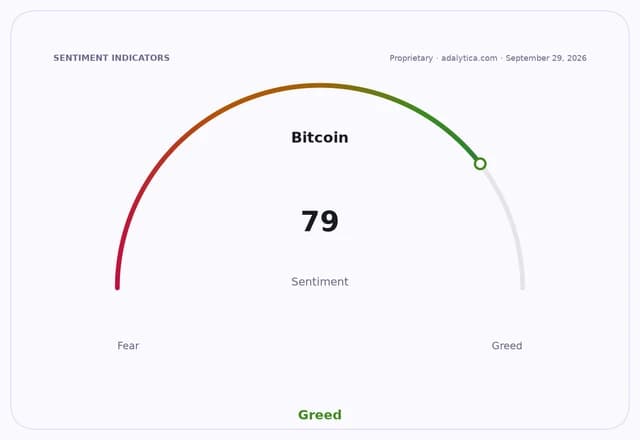
For Bitcoin bulls, the bigger issue is not just the move lower on the day, but the broader backdrop. Adalytica’s Bitcoin Fear & Greed Index still shows “Greed” at 79, even after a one-day drop, while Bitcoin’s RSI is elevated at 76.2, a sign the rally had already become stretched before the macro turn. In other words, the market entered this session crowded and optimistic, which makes it more vulnerable to any surprise in yields or oil.
The investment implication is straightforward: when Treasury yields rise alongside crude, liquidity-sensitive assets usually lose the argument first. If the 10-year remains pinned above 5% and oil stays hot, the next move lower in Bitcoin could be less about crypto-specific news and more about the market repricing the cost of capital across the board. For investors, that argues for patience on the dip-buying side and greater focus on sectors that benefit from inflation persistence, not from the hope that rates are about to break lower.
| Entity | Gains | Losses |
|---|---|---|
| Oil producers | ▲Higher realized prices | ▼None immediate |
| Treasury bears | ▲Rising yields, lower bond prices | ▼Long-duration bond holders |
| Bitcoin shorts | ▲Weaker crypto momentum | ▼Late dip buyers |
| Rate-sensitive tech stocks | ▲None | ▼Lower valuations, weaker risk appetite |