Kevin O’Leary is pressing Washington to treat crypto as an infrastructure and rules problem, not a Bitcoin-only bet, at a moment when the market is under strain from security shocks and fading risk appetite.
Bitcoin, Coinbase, Miners Face Policy and Power Debate

The Shark Tank investor’s call for “energy security” and the CLARITY Act goes to the economics at the heart of the digital-asset industry: access to cheap, reliable electricity and a workable regulatory regime determine whether blockchain activity can scale beyond speculation into payments, settlement and broader enterprise use. That matters not just for Bitcoin miners, but for exchanges, stablecoin issuers, custodians and the public companies whose valuations increasingly track crypto adoption.
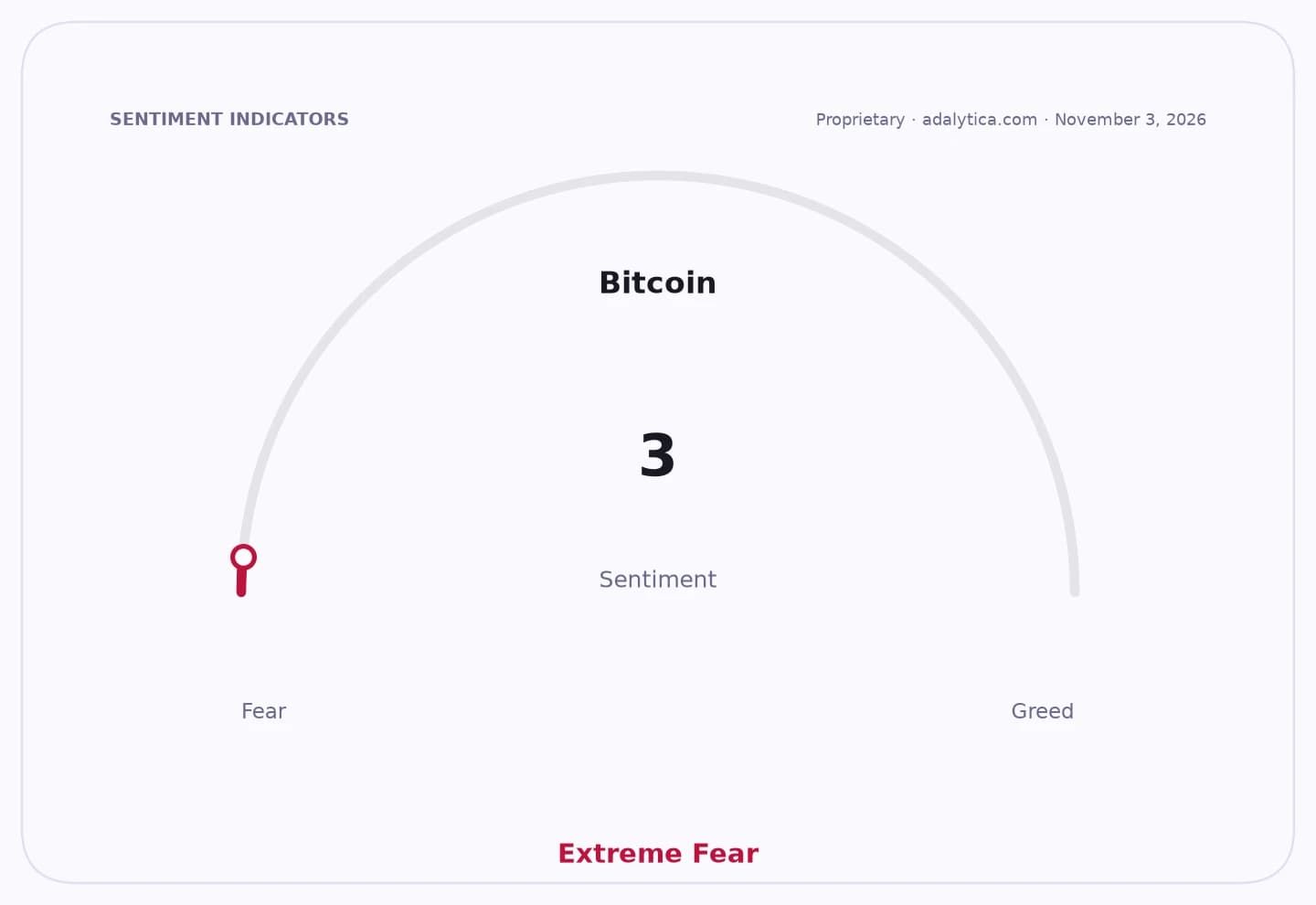
Sentiment Indicators
Bitcoin
O’Leary said the issue “isn’t about Bitcoin at all” but about using digital payment systems and blockchain across “all 11 sectors of the economy.” The pitch is aimed squarely at lawmakers and institutions that have held back capital until the US provides clearer legal definitions around digital assets. For investors, that means the debate has shifted from whether Bitcoin is a tradable asset to whether the US can build a regulatory and energy framework that supports a much larger crypto economy.
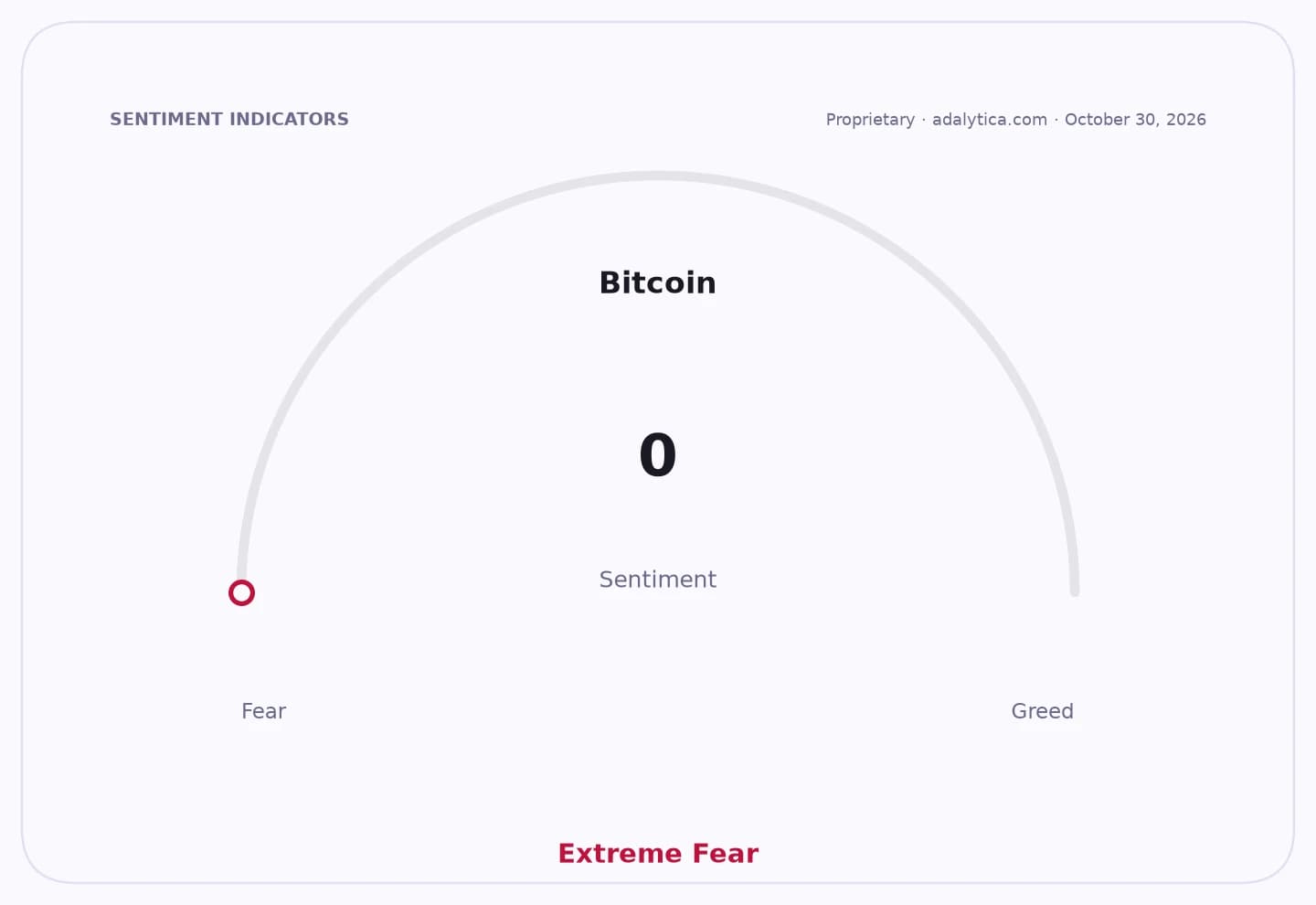
His remarks land as Bitcoin trades under pressure near $77,000, down about 9% over the past month and roughly 28% from a year earlier. Standard technical indicators underline the damage: Bitcoin is below its 50-day moving average and the relative strength index has slipped into weak territory, while Adalytica’s Bitcoin Fear & Greed Index shows extreme fear. The latest weakness follows a $6.3 billion theft at Binance, which shook confidence across the market and helped trigger more than $1 billion of outflows from spot bitcoin ETFs over two trading days, according to Farside data.

That combination of regulatory uncertainty and security risk is exactly why O’Leary is framing the story around power and policy. Bitcoin mining remains one of the most electricity-intensive parts of the sector, and the same power capacity now attracts AI developers hunting for ready-made infrastructure. That has strengthened the case for miners as landlords of scarce power assets, but it also ties the sector’s economics to grid constraints and energy prices at a time when policymakers are debating how to allocate both.
For Coinbase, MicroStrategy and miners such as Riot, the near-term question is whether a friendlier legislative backdrop can offset the drag from weaker token prices and risk-off flows. A clearer framework could support trading, custody and payment volumes and revive institutional participation. The bear case is that even with better rules, crypto remains vulnerable to hacks, balance-sheet stress and the energy bottlenecks that limit scalable growth.
For now, O’Leary’s message is that Bitcoin may be the market’s most visible asset, but the bigger investment case depends on whether the US can supply the grid, the rules and the institutional confidence to make digital assets part of the economy rather than just a trade.
| Entity | Gains | Losses |
|---|---|---|
| Bitcoin miners | ▲Higher power-asset value | ▼Rising electricity competition |
| Coinbase and exchanges | ▲Clearer rules, more volume | ▼Security-driven outflows |
| Bitcoin ETF issuers | ▲Institutional inflows if policy improves | ▼Redemption pressure in risk-off markets |
| Investors seeking crypto exposure | ▲Broader adoption story | ▼Short-term volatility and hack risk |