BJ’s Wholesale Club is leaning harder into member value just as food and household inflation continues to squeeze consumers, a strategy that can help defend traffic and renewals even as it trims room for margin expansion.
BJ's Wholesale Club Adds Member Discounts

The warehouse club said it is adding key offers for members, a move that puts it squarely in the middle of a retail price war that has intensified as grocery prices remain elevated. For households, the appeal is straightforward: bulk-buying and member-only discounts can offset some of the pain from higher checkout bills. For BJ’s, the bet is that sharper pricing and targeted promotions will keep membership fee income and shopping frequency growing even if basket margins get tighter.
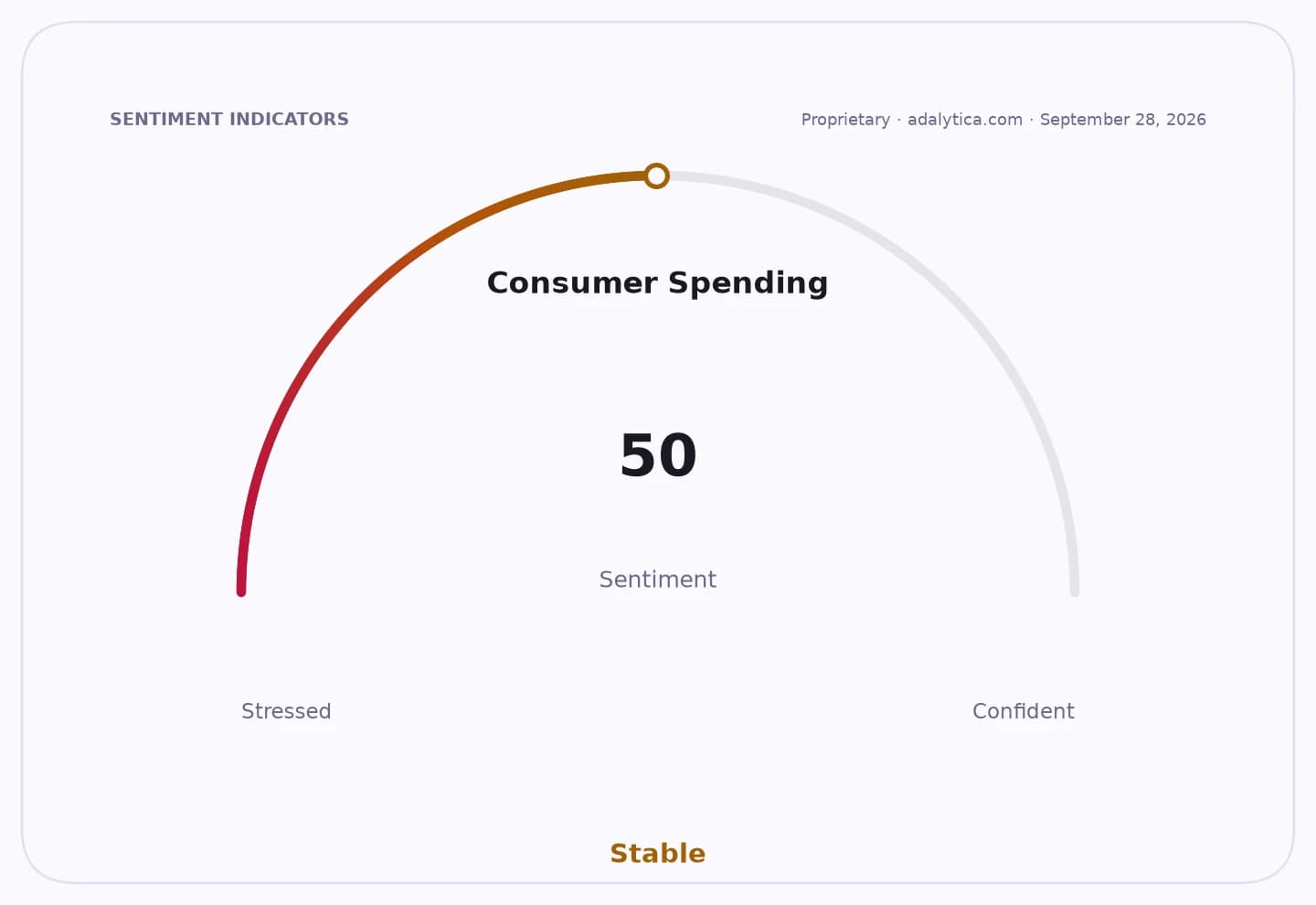
Sentiment IndicatorsⓘProprietary · adalytica.com · October 2, 2026
This is a snapshot — live sentiment, awareness and momentum for 130+ markets update continuously in the dashboard.Open AlphaPulse
The timing matters. Grocery inflation has stayed sticky enough that retailers from Costco to Aldi have been lowering prices on staples to protect customer loyalty. That backdrop has made value the dominant selling point in food retail, particularly for lower- and middle-income shoppers who are trading down or consolidating trips. BJ’s is positioning itself to capture that demand by emphasizing savings on everyday essentials, a message that resonates when consumer sentiment around food spending has weakened sharply.
The market has already been pricing in a more defensive posture across the club channel. BJ’s shares have been volatile over the past year but recently sat near the mid-$90s, with the stock trading around its 50-day moving average and above its 200-day average, suggesting investors still see a durable value case despite pressure on discretionary spending. Standard technical indicators such as RSI and MACD have improved from earlier weakness, reflecting a rebound in sentiment, but the stock remains sensitive to any sign that discounting is eating into profitability.
That is the central tension for investors: stronger member offers can support traffic, renewal rates and market share, but they can also increase competitive intensity in a sector already built on thin merchandise margins. BJ’s has long relied on membership income as a stabilizer, and its latest push suggests management is trying to preserve that engine by making the value proposition even more explicit in a high-price environment.
The bull case is that BJ’s can use the inflation backdrop to deepen customer loyalty and convert price-conscious households into higher-frequency members. The bear case is that sustained price concessions could limit operating leverage just as shoppers become more promotional across grocery, household and general merchandise categories. Investors will be watching whether the company’s member growth and renewal metrics can offset the cost of sharper offers.
For now, BJ’s is signaling that it would rather lean into affordability than risk losing shoppers to Costco, Walmart’s Sam’s Club and mass merchants pressing their own value messages. If grocery inflation stays elevated, the companies best able to prove they are the cheapest place for recurring essentials may gain share even if the path there is less profitable in the short term.
| Entity | Gains | Losses |
|---|---|---|
| BJ’s Wholesale Club | ▲Higher traffic, member loyalty | ▼Near-term margin pressure |
| Value-seeking shoppers | ▲Lower grocery bills | ▼Less room for choice pricing |
| Costco, Sam’s Club, Aldi | ▲Bigger value-driven demand | ▼More intense price competition |
| Suppliers | ▲Higher volume potential | ▼Greater pricing pressure |