BMO’s monthly dividend announcement for its High Yield US Corporate Bond Hedged to CAD Index Fund lands in a market where investors are still being paid to own junk debt, but with far less cushion than earlier this year.
BMO High-Yield Fund Faces Tighter Income Conditions
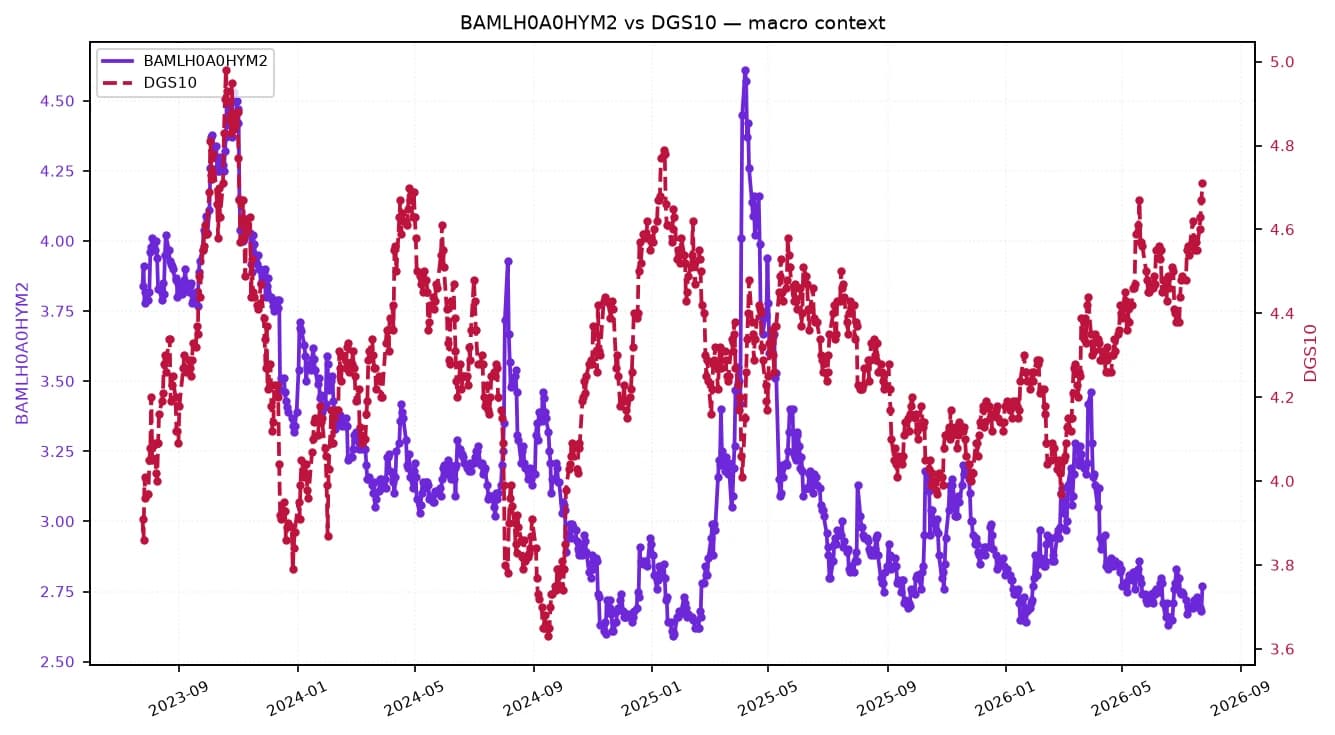
That matters because the fund’s payout is ultimately driven by the carry available in U.S. high-yield bonds after hedging back to Canadian dollars. With the U.S. high-yield spread around 2.73 percentage points, according to the latest data, income remains available, but it is no longer generous by historical standards. At the same time, U.S. Treasury yields have climbed back to 4.75% on the 10-year note, keeping a floor under financing costs and reminding investors that bond returns are being shaped as much by rates as by credit risk.
Sentiment IndicatorsⓘProprietary · adalytica.com · July 25, 2026
This is a snapshot — live sentiment, awareness and momentum for 130+ markets update continuously in the dashboard.Open AlphaPulse
For investors, the signal is twofold. On one hand, the monthly distribution reinforces the appeal of high-yield bond funds for income-focused portfolios, especially in a market still marked by caution in equities and an ongoing hunt for yield. On the other, the combination of tighter credit spreads and higher base rates means the margin for error in lower-rated corporate debt is narrower than it was when spreads briefly widened above 4 percentage points in 2025. That makes the sustainability of distributions more dependent on credit performance and hedging costs than on simple yield chasing.
The backdrop is mixed. U.S. Treasury-bond trade signals from Adalytica.com show “Extreme Fear” in sentiment, even as awareness remains elevated, while the S&P 500 trade signal sits in fear territory. In practical terms, that points to investors retaining defensive instincts even after a strong run in risk assets. High-yield funds such as BMO’s hedged product sit in the middle of that tension: they offer a cash-flow story, but they also expose holders to default risk, spread volatility and currency management costs.
The Canadian dollar hedge is central to the investment case. It can reduce foreign-exchange volatility for domestic investors, but it can also mute some of the income advantage if hedging costs rise or if U.S.-Canada rate differentials move against the strategy. With the federal funds rate forecast around 3.63% and the 10-year Treasury near 4.75%, the yield environment remains supportive of income products, yet not so easy that capital gains can be taken for granted.
BMO’s own shares, meanwhile, have outperformed recent bond-market turbulence, reflecting investor confidence in the bank’s franchise and capital strength. But the fund’s distribution is more a read-through on credit markets than on BMO itself. The key question for the next several months is whether high-yield spreads stay contained, allowing monthly payouts to hold steady, or widen as growth slows and default risk rises.
For investors, the fund’s latest dividend is less a headline yield event than a reminder that the high-yield trade is still working, but only within a tighter band of macro and market conditions. If Treasury yields stay elevated and credit spreads remain compressed, income funds should continue to attract flows. If recession fears re-emerge, the same products could face pressure from both price declines and weaker distribution cover.
| Entity | Gains | Losses |
|---|---|---|
| Income investors | ▲Monthly cash flow | ▼Lower margin of safety |
| BMO fund holders | ▲CAD-hedged yield | ▼FX volatility benefits |
| High-yield issuers | ▲Continued demand | ▼Higher refinancing risk |
| Treasury holders | ▲Yield support | ▼Price upside capped |




