BMO is pushing up some of its most watched mortgage rates again as elevated bond yields force Canada’s biggest lenders to reprice fixed borrowing costs, a move that keeps pressure on homebuyers, housing demand and rate-sensitive bank customers.
BMO raises mortgage rates as bond yields climb

The Bank of Montreal increased its advertised 3-year fixed rate by 20 basis points to 4.94% and its standard 5-year fixed rate by the same amount to 5.14%, with other terms also moving higher. Scotiabank followed with a 15-basis-point increase to its 2-year fixed rate at 5.14%, underscoring a broad re-pricing across the Big Six as funding costs remain stubbornly high.
Sentiment IndicatorsⓘProprietary · adalytica.com · October 9, 2026
This is a snapshot — live sentiment, awareness and momentum for 130+ markets update continuously in the dashboard.Open AlphaPulse
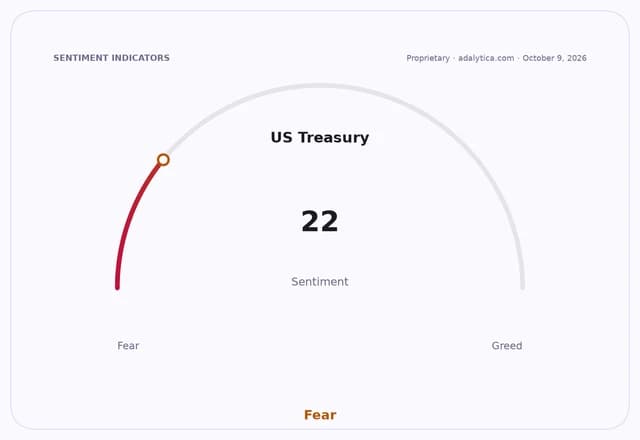
This matters because fixed mortgage pricing in Canada is closely linked to Government of Canada bond yields, and those yields have climbed on the back of higher oil prices and renewed inflation worries. The 5-year benchmark was about 3.624% on Wednesday after touching 3.674% earlier in the session, leaving lenders little room to keep consumer mortgage rates where they were.
The repricing is not isolated. Since early September, all six major Canadian banks have lifted at least some fixed mortgage rates, with cumulative increases of roughly 10 to 50 basis points across many 2- to 5-year terms. TD and RBC have posted some of the steepest moves, while BMO, National Bank and Scotiabank have generally been in the 10 to 30 basis-point range. In plain terms, the market has shifted fast enough that banks are no longer subsidizing long-duration mortgage demand.
DGS10 vs DGS2 — macro contextadalytica.com
Explore this data interactively — full history, time series and cross-market comparisons.Open AlphaPulse
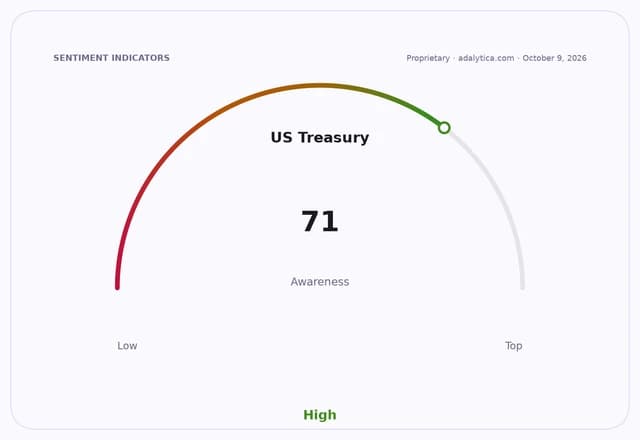
For borrowers, the immediate effect is higher carrying costs and less affordability at the margin, especially for households coming off pandemic-era ultra-low rates. For the housing market, that is a headwind for transaction volumes and price momentum, because every uptick in fixed mortgage rates reduces purchasing power. For investors, the bigger message is that bond markets are reasserting themselves as the key driver of Canada’s mortgage complex, which means the next move in housing finance depends less on bank competition and more on whether inflation expectations and energy prices keep pushing yields higher.
There is also a second-order trade here. Rising mortgage rates tend to cool housing activity, but they can support bank net interest margins on new lending and refinancing. The risk is that a sharper slowdown in housing turnover eventually outweighs any pricing benefit if credit demand weakens. That is why the current round of increases should be read as an early-cycle warning, not just a headline about consumer rates.
BMO’s stock has already drifted lower in recent sessions, with the shares now well below their 50-day moving average, while Royal Bank and CIBC have also pulled back from recent levels. That suggests investors are beginning to price in the strain from higher funding costs and the possibility of softer mortgage growth if bond yields stay elevated.
The key catalyst from here is whether the 5-year government bond yield keeps climbing or stabilizes. If it stays near current levels, more rate hikes from the banks look likely and affordability will keep tightening. If yields retreat, lenders may get room to ease pricing, but until then, Canada’s mortgage market remains in repricing mode — and that is exactly where the investment opportunity and the risk sit.
| Entity | Gains | Losses |
|---|---|---|
| Big Six banks | ▲Wider new-lending spreads | ▼Slower mortgage demand |
| BMO, RBC, TD, CIBC, Scotiabank, National Bank | ▲Repricing power | ▼Housing-sensitive borrowers |
| Bond investors | ▲Higher yield environment | ▼Mortgage borrowers |
| Canadian homebuyers | ▲— | ▼Higher monthly payments |