The Bank of England is widely expected to keep interest rates unchanged, even as a fresh rebound in oil and natural gas prices threatens to slow the disinflation process and keep UK borrowing costs elevated for longer.
BoE Likely to Hold as Energy Prices Rebound
That matters because the central bank is trying to balance a still-fragile growth backdrop against renewed pressure from energy markets, which can feed back into transport costs, household bills and broader price expectations. With West Texas Intermediate crude rising back to about $84.46 a barrel on July 27 after touching $80.03 just days earlier, and natural gas still volatile, policymakers are unlikely to see enough comfort to pivot quickly to rate cuts.
Sentiment IndicatorsⓘProprietary · adalytica.com · July 27, 2026
This is a snapshot — live sentiment, awareness and momentum for 130+ markets update continuously in the dashboard.Open AlphaPulse
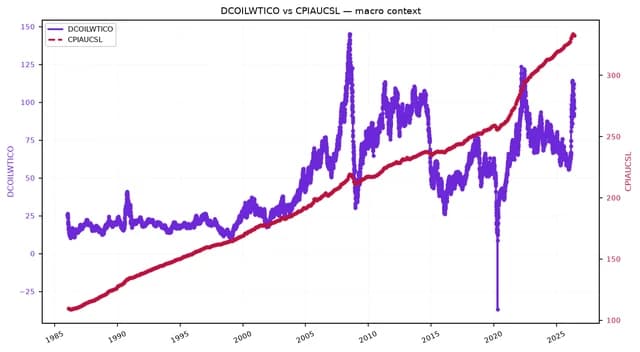
The energy backdrop is exactly the sort of input that can make a central bank cautious. Brent and crude benchmarks have moved sharply this year, with oil surging above $106 in early May before sliding and then recovering again in late July. Even after recent declines, prices remain high enough to keep headline inflation sticky if the pass-through broadens beyond fuel. That is especially awkward for the BoE, because energy-driven inflation is harder to dismiss when it risks changing wage demands and consumer behavior.
The UK’s inflation problem is not only about the latest monthly reading; it is about how quickly the central bank can declare victory. The context data show US consumer prices still running far above pre-pandemic levels, underscoring how central bankers globally remain wary of premature easing. In Britain, the BoE is likely to judge that a pause is safer than signaling relief while commodity markets remain unstable and long-duration yields stay elevated.
Bond markets suggest investors are also in no mood for complacency. The US 10-year Treasury yield has climbed to 4.71%, a reminder that global rate expectations remain restrictive and that higher-for-longer policy is still the dominant market narrative. In the UK, a steady BoE decision would fit that broader picture: central banks are keeping policy tight until they are convinced inflation will continue falling without a fresh energy shock pushing it back up.
For equity investors, the implication is mixed. Banks and value stocks may welcome the prospect of no immediate policy loosening because it supports margins, but rate-sensitive sectors such as housing and consumer discretionary names remain exposed to higher financing costs. Energy producers, by contrast, benefit from the oil rebound, while airlines, transport companies and households face the opposite effect through input costs and weaker real incomes.
The case for holding rates is strengthened by the market’s own technical tone in crude. WTI has reclaimed its 50-day moving average and pushed near its upper Bollinger Band, which points to a market that has regained momentum after a sharp mid-July drop. Natural gas has also shown episodes of extreme volatility, a reminder that the inflation outlook can change quickly if weather, supply or geopolitical risks tighten energy balances again.
The bull case for the BoE is that inflation is still cooling enough for a gradual easing cycle later this year. The bear case is that energy costs, sticky services inflation and resilient wage growth leave the bank stuck at restrictive levels for longer than investors want. For now, the oil rebound argues for caution, and caution is what the Bank of England is likely to deliver.
| Entity | Gains | Losses |
|---|---|---|
| Bank of England | ▲Inflation credibility | ▼Near-term policy flexibility |
| Oil producers | ▲Higher revenue | ▼Fuel-consuming sectors |
| UK households | ▲None | ▼Higher energy bills |
| Rate-sensitive UK equities | ▲Policy clarity if cuts come later | ▼Higher-for-longer borrowing costs |




