Boeing’s push for Washington to review a 3 billion-euro EU loan to Airbus matters because it could keep one of aviation’s longest-running trade fights alive just as both planemakers are trying to stabilize production, cash flow and market share.
Boeing-Airbus Subsidy Fight Threatens New Trade Friction

The dispute is economically significant far beyond corporate rivalry. Airbus and Boeing are the backbone of a global supply chain that stretches from engines and avionics to fasteners, titanium and financing, and any escalation over state support risks adding friction to an industry still dealing with cost inflation, delivery bottlenecks and uneven demand. For policymakers, the issue is less about one loan than about whether government-backed financing is being used in ways that distort competition between the two largest commercial aircraft makers.
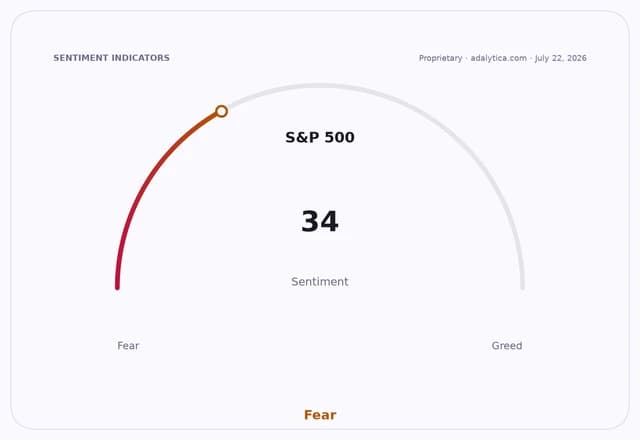
Sentiment IndicatorsⓘProprietary · adalytica.com · July 22, 2026
This is a snapshot — live sentiment, awareness and momentum for 130+ markets update continuously in the dashboard.Open AlphaPulse

Boeing’s request to review the EU loan to Airbus is also a reminder that the transatlantic aerospace truce remains fragile. The two groups have spent years trading accusations over subsidies, launch aid and tax incentives, and earlier disputes have repeatedly spilled into tariffs and broader trade tensions. If the US administration takes Boeing’s concerns seriously, it could raise the prospect of renewed diplomatic pressure on Europe, or at minimum create another layer of legal and political uncertainty around Airbus’s financing structure.
For investors, the immediate question is not whether Airbus can fund itself — it clearly can — but whether a revived dispute could alter the economics of future competition. Airbus shares in Paris have been trading near recent highs, even as Boeing’s New York-listed stock has been more volatile and has slipped back toward key technical levels. That relative performance reflects a market that still sees Airbus as the stronger industrial story, but also one that would be vulnerable if retaliation or policy scrutiny disrupted its access to favorable financing or slowed program decisions.
Boeing, by contrast, has more to gain from challenging Airbus’s support than from a direct market share battle it has struggled to win in narrow-body jets. Boeing shares have recovered from earlier weakness, but recent price action and declining momentum indicators suggest investors remain cautious about execution risks, including production discipline and regulatory scrutiny. A renewed subsidy dispute could help Boeing politically, but it would not by itself fix its operational problems.
The broader backdrop is not especially supportive of either camp. US Treasury yields have been rising, with the 10-year benchmark around 4.6% and the two-year near 4.3%, which keeps financing costs elevated for capital-intensive manufacturers and raises the stakes of any state-backed lending advantage. A stronger dollar, meanwhile, can complicate export economics and add another layer of pressure to cross-border aircraft sales and supplier margins.
The market message is that this is more than a legal filing or a lobbying move. It is a signal that competition between Boeing and Airbus may once again be fought as much in Washington and Brussels as on the assembly line. If the US opens a formal review, the likely outcome is not an immediate financial hit to Airbus, but a longer period of policy risk that investors will have to price into order books, margin assumptions and eventual trade responses.
| Entity | Gains | Losses |
|---|---|---|
| Boeing | ▲Political leverage | ▼Trade tension risk |
| Airbus | ▲Financing flexibility | ▼Subsidy scrutiny |
| US regulators | ▲Negotiating power | ▼Diplomatic friction |
| Aircraft buyers | ▲Possible price restraint | ▼Policy uncertainty |




