Boeing’s commercial-aircraft order outlook is strengthening just as airlines and lessors are lining up for more lift capacity, a sign the multi-year supply squeeze in global aviation is easing in Boeing’s favor and could support a new leg higher for the stock.
Boeing Order Momentum Signals Aerospace Upcycle

That matters because commercial jets are the economic engine of Boeing’s investment case. A healthier demand backdrop does not just mean more headlines about orders; it means better pricing power, a firmer backlog and a clearer path to converting years of pent-up airline replacement demand into deliveries, cash flow and earnings. In a capital-intensive industry where production discipline is everything, even a modest acceleration in demand can have outsized implications for margins and valuation.
Sentiment IndicatorsⓘProprietary · adalytica.com · July 26, 2026
This is a snapshot — live sentiment, awareness and momentum for 130+ markets update continuously in the dashboard.Open AlphaPulse
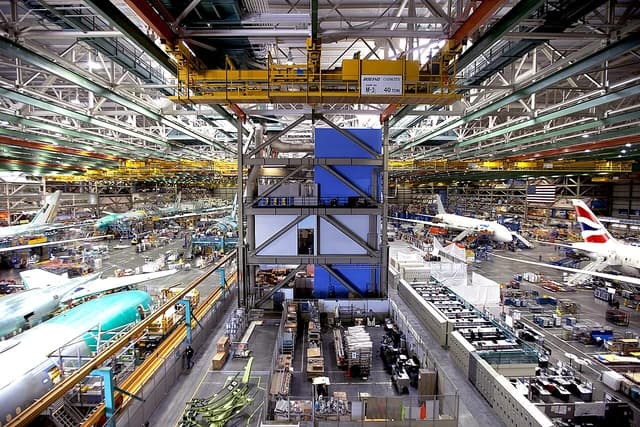
The latest evidence points in that direction. Boeing has recently secured a 100-aircraft deal from SMBC, along with wide-body commitments from Riyadh Air and Philippine Airlines, while Airbus is also seeing robust ordering. At the same time, regional and international carriers are still expanding fleets: Mesa Airlines plans to add 15 Embraer E175s for United Express, and Air India Express is targeting a fleet of 300 aircraft as supply-chain conditions improve. The message for the sector is simple: airlines are still buying, and they are buying into a market where aircraft availability remains constrained enough to keep the order book valuable.
For Boeing, that is especially important after years of production disruptions, delivery delays and investor skepticism. The company’s commercial-airplane backlog remained enormous at more than $575 billion at the end of March, and stronger demand helps defend that backlog against cancellations while giving Boeing more leverage in negotiations with customers. Investors care because a more durable order cycle could restore confidence in the company’s ability to raise output without sacrificing quality, a key prerequisite for any sustained rerating of the shares.
The wider airline picture also supports the thesis. U.S. carriers are still posting healthy passenger revenue growth, with Delta, United and American all flagging strong travel demand in their latest filings. That helps justify continued fleet renewal and capacity growth, which in turn feeds Boeing’s production pipeline. In other words, the demand story is not speculative; it is being reinforced by both airline earnings and fleet-planning behavior.
The market may still be underestimating how powerful this inflection can become if supply chains keep improving and Boeing executes on deliveries. Shares already show that investors are sensitive to momentum in the business, and the recent price action in Boeing, Delta and American suggests the market is rewarding signs of a more normal aviation cycle. But the real asymmetry lies ahead: if Boeing can turn improving demand into steady output gains, the company’s commercial-jet franchise could move from a recovery story to a compounding one.
For investors, the actionable takeaway is to stay positioned for an aerospace upcycle with Boeing as the highest-beta beneficiary of improving commercial demand, while suppliers and leasing-linked names offer a cleaner way to play the next phase of fleet expansion.
| Entity | Gains | Losses |
|---|---|---|
| Boeing | ▲Order momentum, backlog visibility | ▼Skepticism if execution slips |
| Airbus | ▲Strong industry demand | ▼Share gains if Boeing recovers |
| Airlines | ▲New fuel-efficient aircraft | ▼Higher capex commitments |
| Lessors/Suppliers | ▲More fleet turnover and parts demand | ▼Pressure if deliveries slow |




