The Bank of Japan is drifting closer to another rate increase, but its July meeting summary shows the pace of tightening is still the key fault line inside the board as inflation edges toward the 2% target and markets test how far policymakers can go without choking off growth.
BOJ July summary highlights rate-hike debate, yen stays weak

That matters because Japan is no longer the world’s last holdout on ultra-easy policy. With inflation now near the BOJ’s goal and pressure building to normalize rates, every hint of division inside the central bank can move the yen, Japanese government bonds and global carry trades. The message from the summary is not that hikes are imminent, but that the exit from negative-rate-era policy is becoming a live debate rather than a distant one.
Sentiment IndicatorsⓘProprietary · adalytica.com · August 10, 2026
This is a snapshot — live sentiment, awareness and momentum for 130+ markets update continuously in the dashboard.Open AlphaPulse

The market backdrop reinforces that shift. The iShares MSCI Japan ETF, EWJ, has climbed to 96.9, well above its 50-day moving average of 92.9 and 200-day average of 86.7, while its relative strength index has reached 70.4, a reading that often points to stretched momentum. That suggests investors are already positioning for a more normal rate path in Japan, even if the BOJ remains cautious about moving too quickly.
In currency markets, the yen’s picture is more conflicted. The dollar-yen pair has eased to 157.9 from recent highs above 160, but it remains above both its 50-day and 200-day moving averages, showing the yen is still historically weak. The pair’s RSI near 26.9 indicates the move has become technically oversold in the short term, yet the broader trend still reflects a policy gap between Japan and higher-yielding economies.
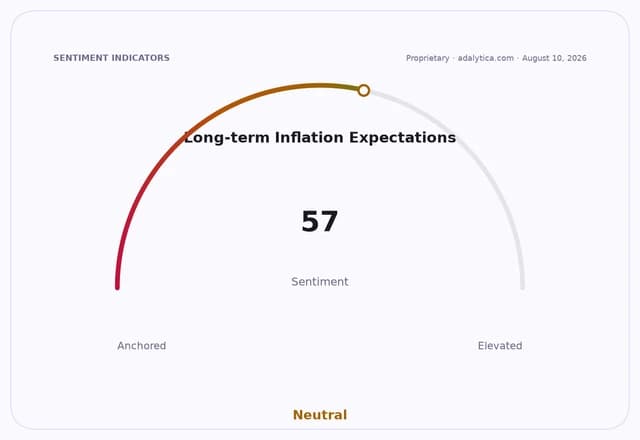
That gap is the real investment story. As BOJ policy inches toward normalization, the first beneficiaries are likely to be domestic financials and Japanese value stocks that have spent years trapped by near-zero rates. The losers are the leveraged strategies and foreign investors who have used the yen as a funding currency. Even a gradual hike path can force a repricing in global bonds, currencies and equities because Japan sits at the center of some of the world’s largest capital flows.
Oil prices add another layer. Brent’s recent move back above $84 a barrel keeps inflation risks alive for import-dependent Japan, meaning the BOJ cannot simply declare victory over prices. If energy stays firm and wages continue to firm, the board’s internal split over hiking pace becomes less academic and more like a timetable problem: how fast can policy normalize before it collides with a fragile recovery?
For investors, the opportunity is in recognizing that Japan’s policy regime is changing slowly, not suddenly. That tends to reward selective exposure to banks, insurers and domestically oriented equities, while arguing for more caution on exporters that have benefited from a weak yen and on trades built around persistent yen funding. I believe the market underestimates how powerful even a modest BOJ shift can be when it finally lands.
The next catalyst is simple: more inflation data, more wage evidence and more language from BOJ officials that clarifies whether July was a pause in the conversation or the start of a faster tightening cycle. Either way, Japan is moving into a policy phase that investors have not had to price in for years.
| Entity | Gains | Losses |
|---|---|---|
| Japanese banks | ▲Wider margins | ▼Near-zero-rate tailwind |
| Domestic value stocks | ▲Repricing higher | ▼Policy uncertainty |
| Yen bears/carry trades | ▲Cheap funding trade | ▼Higher BOJ rates |
| Japanese importers | ▲Stronger yen relief | ▼Weak yen inflation pressure |