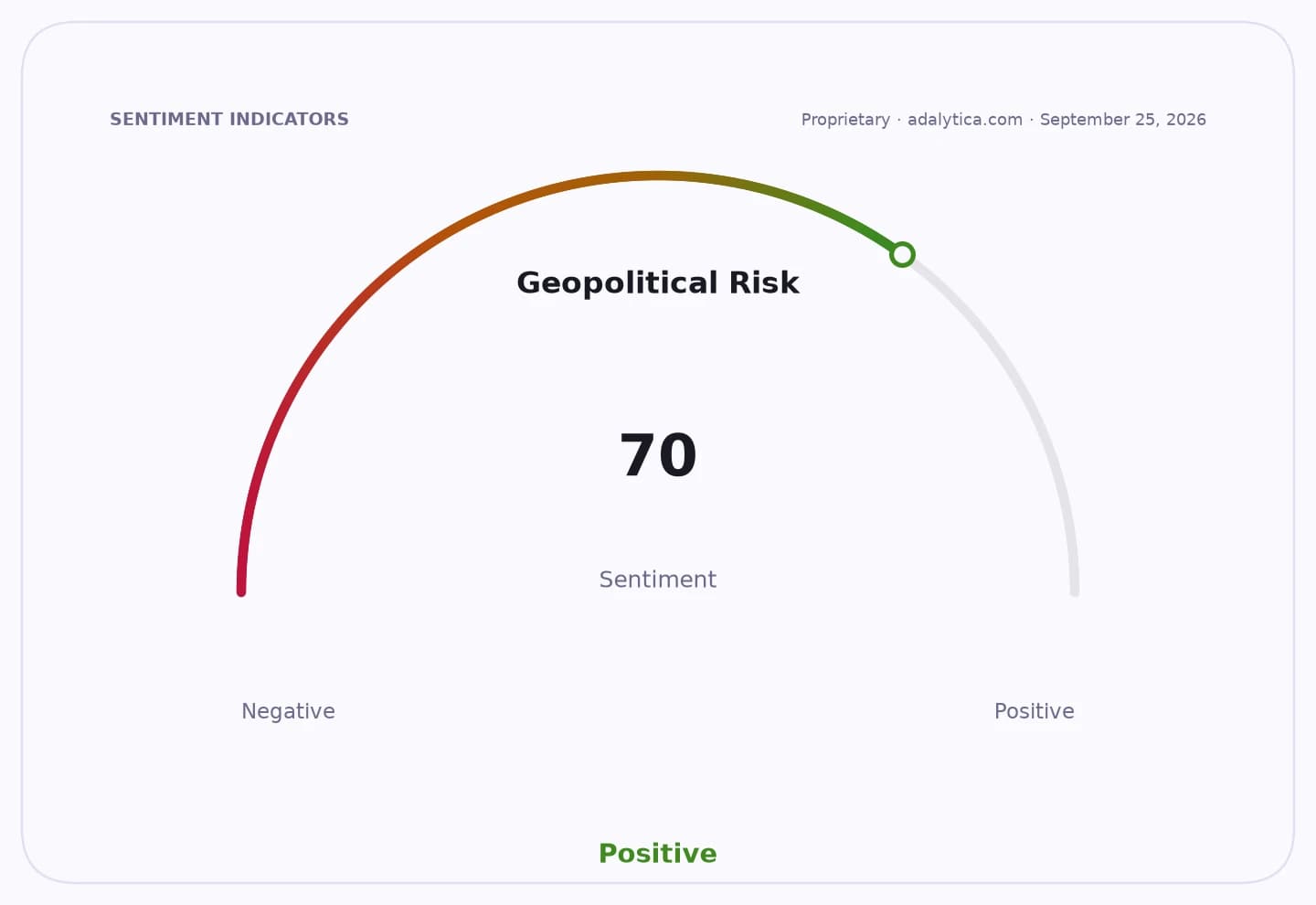
Bolivia is edging toward a costly inflection point: if it has to import gas, the fuel could cost roughly 10 times more than what the country pays to produce it at home, turning an energy problem into a wider economic stress test.
Bolivia Gas Decline Raises Sovereign Risk

That matters because Bolivia’s model has long depended on cheap domestic gas to support households, industry and government finances. Once a country moves from being a producer to a buyer, the economics change fast. A 10-fold jump in supply costs would hit the trade balance, widen subsidy pressures and make inflation harder to contain, especially in an economy that has already leaned heavily on state support for energy.
Sentiment IndicatorsⓘProprietary · adalytica.com · July 17, 2026
This is a snapshot — live sentiment, awareness and momentum for 130+ markets update continuously in the dashboard.Open AlphaPulse
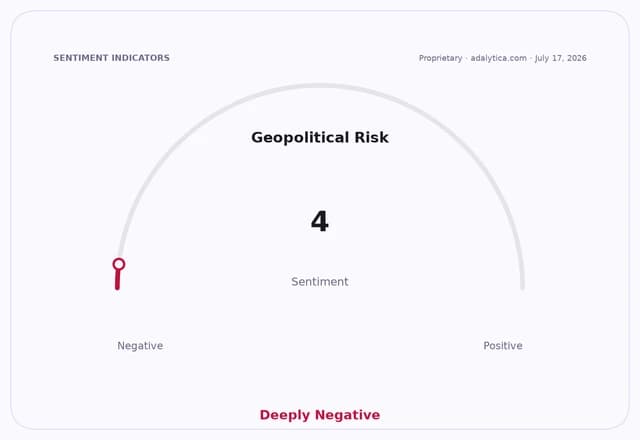
For investors, the message is bigger than Bolivia itself. Countries that run persistent resource declines without new investment eventually face the same arithmetic: less export revenue, more import dependence and weaker currencies. Energy import bills can quickly become a macro drag, forcing governments to choose between higher prices, higher deficits or a combination of both. That is why this is not just an oil-and-gas headline — it is a sovereign risk story.
The timing is also awkward. Global oil prices, while volatile, remain high enough to keep pressure on fuel budgets, and broader energy markets are still sensitive to geopolitical shocks. Adalytica’s Oil WTI Trade Signals show fear in the market, while its Global Stability sentiment sits in extreme fear, underscoring how quickly energy shortages or import shocks can spill into investor caution. In that kind of backdrop, even a relatively small producer can become a bigger macro story if it loses the ability to meet domestic demand.
The comparison with oil is instructive, but gas is the real issue here. Bolivia’s challenge is not a temporary price spike; it is structural decline. If production keeps slipping, the state must either spend more to secure imports or tolerate shortages that damage growth. Neither option is friendly to long-term compounding, and both weaken the investment case for any economy that still relies on energy as a pillar of fiscal stability.
There is also a policy lesson for long-term investors. Commodity exporters can look resilient for years, but underinvestment in reserves and infrastructure eventually shows up in the numbers. When that happens, the market usually reprices the whole country: sovereign bonds, local equities, banks, utilities and the currency all feel the strain. That is why investors should watch Bolivia less as a one-off crisis and more as a reminder that resource dependence cuts both ways.
If policymakers cannot arrest the decline or attract capital back into the sector, Bolivia may find itself paying far more just to stand still. For investors, that is the kind of transition worth watching closely — and, in broader emerging-market portfolios, one worth respecting with diversification and a long time horizon.
| Entity | Gains | Losses |
|---|---|---|
| Gas importers | ▲Potential volume demand | ▼Higher fuel bills |
| Bolivia’s consumers | ▲Short-term supply security | ▼Higher prices and inflation |
| Domestic gas producers | ▲Near-term relevance | ▼Long-term production decline |
| Government finances | ▲None | ▼Bigger subsidy and deficit pressure |