Brazil’s former president Jair Bolsonaro was taken to hospital with abdominal pain on Friday, adding a fresh health complication to a political crisis already shaken by his 27-year prison sentence for an alleged coup plot.
Bolsonaro Hospitalized Amid Brazil Court and Market Risk
The hospitalization matters because Bolsonaro remains the central figure in Brazil’s right-wing opposition, and any deterioration in his condition could complicate an already volatile debate over his detention, his appeal prospects and the broader treatment of convicted allies. It also revives a question that has dogged Brazilian politics for years: how much room there is for the judiciary to enforce the law against a former president whose support base still sees him as a political martyr.
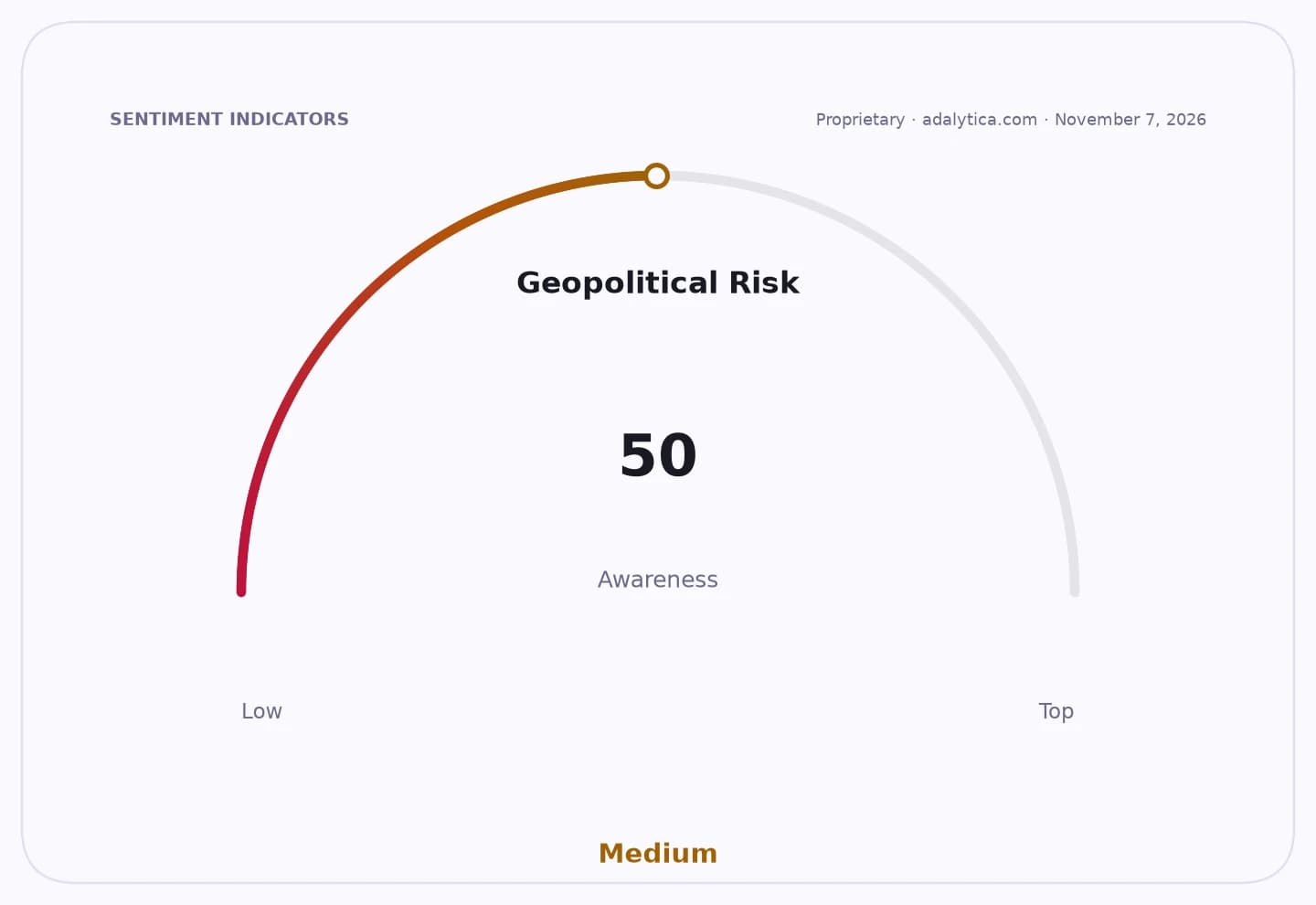
Sentiment Indicators
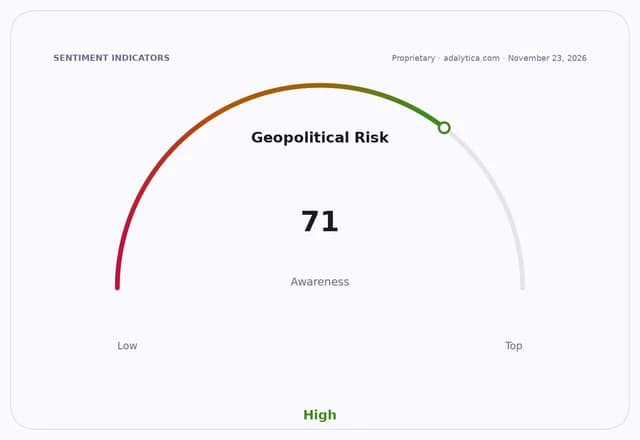
Doctors said Bolsonaro had a partial obstruction in the small intestine and adhesions in the lower abdomen, according to reports from Globo. He is expected to remain under observation and could require another operation. The 71-year-old has suffered recurring abdominal problems since he was stabbed in the 2018 campaign, and this was not his first trip back to hospital since his detention.
Bolsonaro was escorted to DF Star hospital by the military police after feeling unwell at home, where he is serving a court-ordered humanitarian house arrest imposed in March by Justice Alexandre de Moraes. His son Carlos Bolsonaro said on X that his father had returned to hospital after severe abdominal pain. The family has repeatedly framed Bolsonaro’s condition as evidence of physical and psychological strain from the state.
The timing is politically sensitive. Brazil’s Supreme Federal Court is due to vote in December on the constitutionality of legislation that could reduce Bolsonaro’s sentence, along with relief measures for others convicted in the alleged coup conspiracy. Any sign that his health is worsening increases pressure on the court and on the Lula administration, even as prosecutors and judges seek to demonstrate that Brazil’s institutions can punish attacks on democracy.
For investors, the immediate market relevance is not in Bolsonaro’s medical chart but in the risk premium around Brazil’s politics. The episode reinforces the likelihood of further polarization, legal appeals and street-level friction around the country’s next political chapter. That can spill into fiscal debate, reform momentum and asset pricing, particularly if the opposition rallies around claims of judicial overreach.
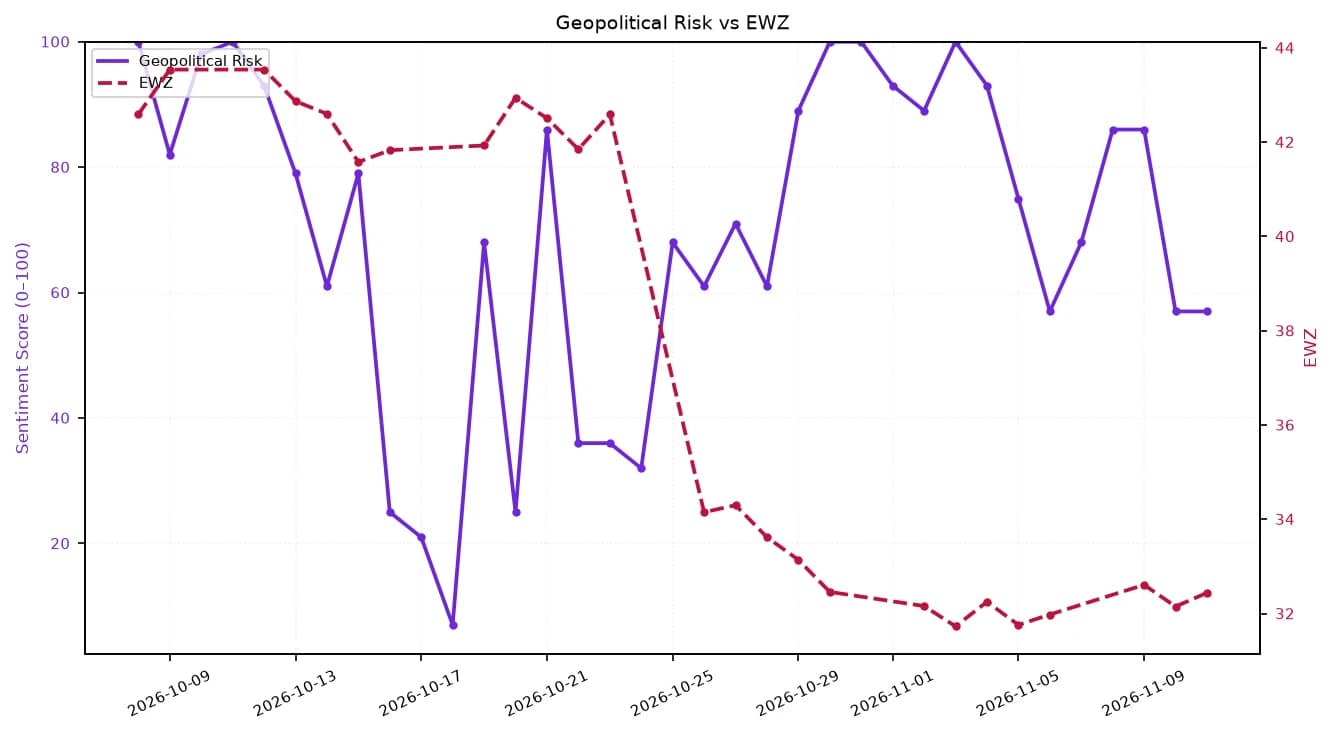
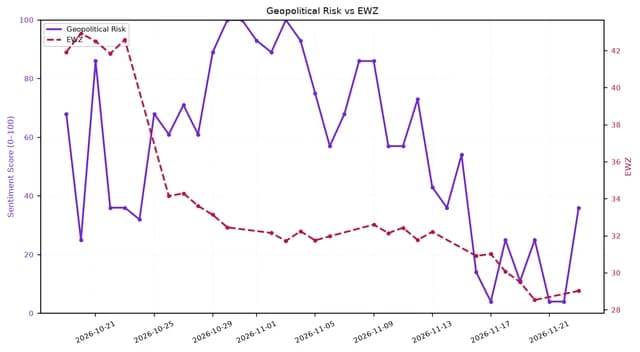
Brazil-focused assets have already shown how quickly politics can feed through to market sentiment. The iShares MSCI Brazil ETF, EWZ, has fallen sharply from October levels, with its most recent reading at $29.03 after trading above $42 in late October. Its 50-day and 200-day moving averages now sit above the market price, while the RSI has dropped to 33.3, reflecting the bruising selloff. Petrobras, meanwhile, has also reversed hard, with PBR closing at $15.88 on Nov. 23, down from $26.16 in October, and its RSI at 9.7 suggesting deeply oversold conditions rather than a stable floor.
That combination suggests markets are already pricing in more than just a health scare. They are discounting the broader instability surrounding Brazil’s political and judicial environment, at a time when any ruling on Bolsonaro’s sentence could become a catalyst for another wave of volatility.
For now, the key investor question is whether Bolsonaro’s hospital stay becomes a brief health update or another chapter in a long-running institutional fight that keeps Brazil’s political risk elevated into year-end.
| Entity | Gains | Losses |
|---|---|---|
| Bolsonaro allies | ▲Sympathy narrative | ▼Legal momentum |
| Lula government | ▲Institutional authority | ▼Political noise |
| Brazilian courts | ▲Enforcement credibility | ▼Accusations of overreach |
| Brazil assets/EWZ holders | ▲Oversold rebound potential | ▼Near-term volatility |