Flávio Bolsonaro’s decision to take his fight against Brazil’s election defeat to a right-wing stage in Florida matters less as a speech than as a sign that the Bolsonaro political brand is fragmenting at the very moment the country’s opposition should be regrouping.
Brazil Bolsonaro Split Raises Policy Uncertainty
The far-right lawmaker, speaking at Donald Trump’s Mar-a-Lago property and at a Conservative Political Action Conference event, cast his family’s defeat as unfinished business and repeated unsubstantiated claims of election fraud. Economically, the significance is indirect but real: Brazil’s democratic and policy outlook is being shaped by a weakened opposition that can no longer reliably serve as a counterweight to President Luiz Inácio Lula da Silva’s leftist government, reducing clarity for investors on fiscal policy, state intervention and institutional stability.
Sentiment Indicators
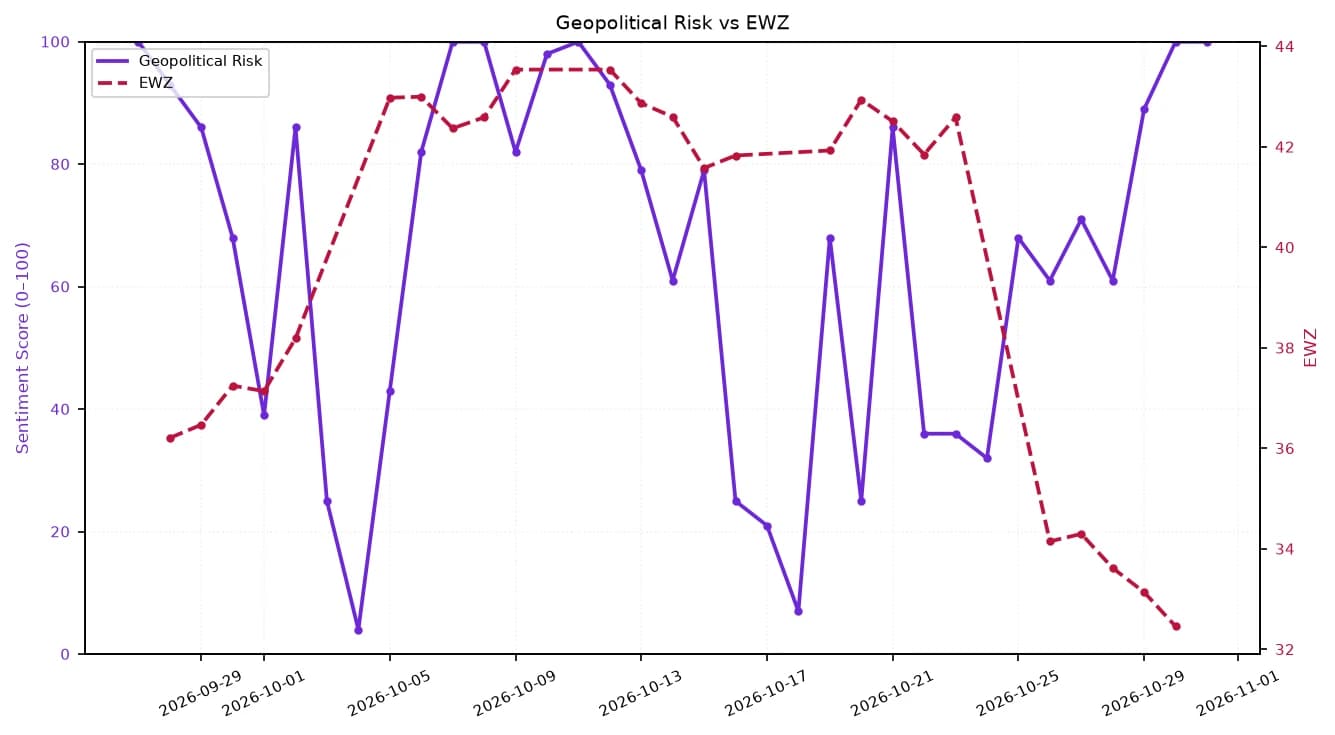
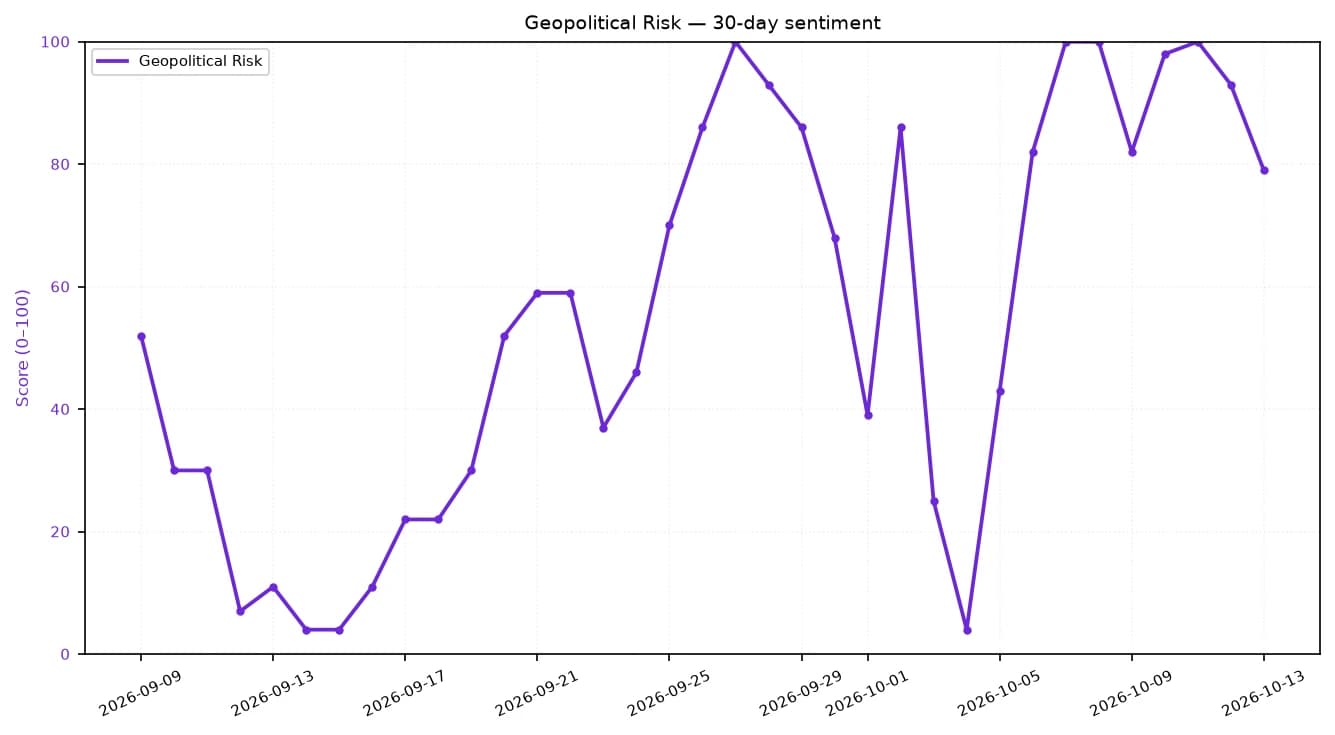
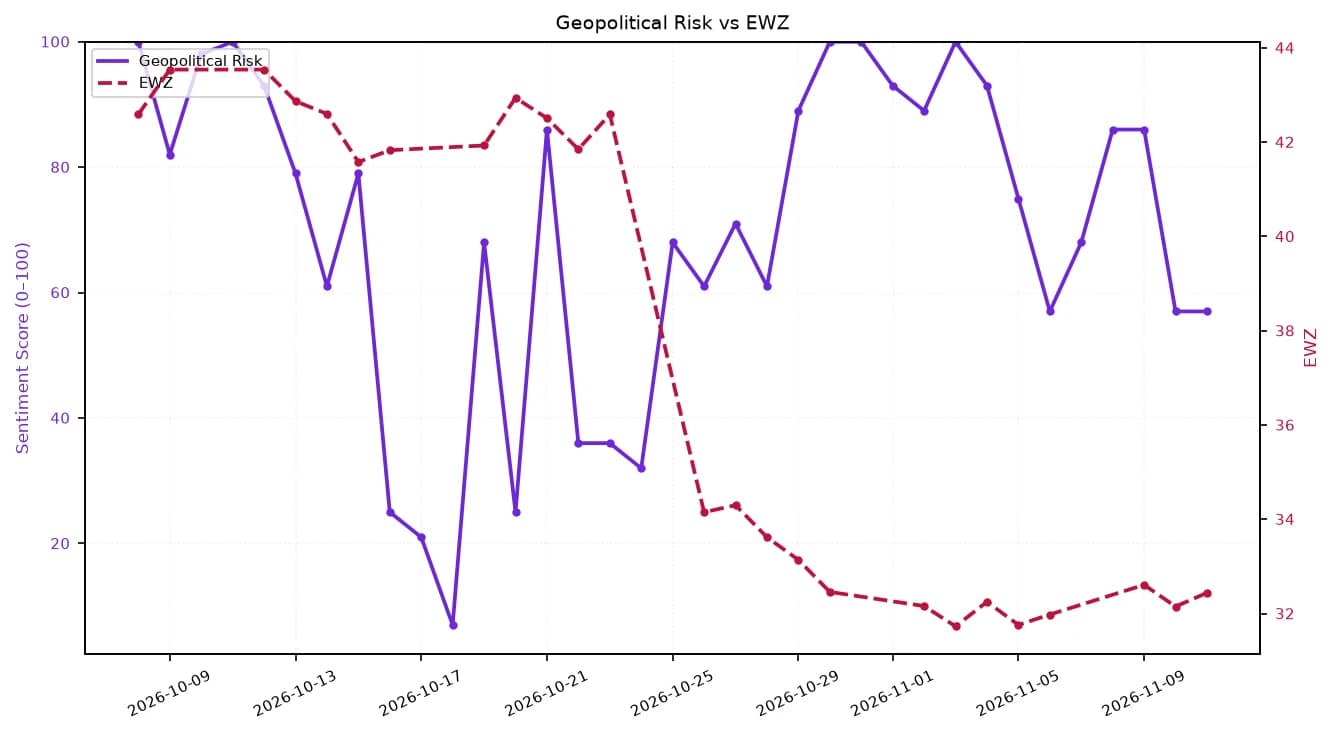
Geopolitical Risk
Flávio’s absence from Brazil is the core political development. By leaving the country after losing by more than 4 million votes, he surrendered the chance to present himself as a legitimate successor to his father’s base at home. Analysts in Brazil say that move has effectively ceded leadership of the opposition and damaged the family’s ability to dominate Bolsonarismo, the populist movement that helped reshape Brazilian politics over the past decade.
That matters because the Bolsonaro camp still has a substantial electoral footprint. Jair Bolsonaro won 59 million votes in the election he lost, and four other family members were elected to Congress. But the movement’s center of gravity is shifting from institutional politics to exile, legal jeopardy and grievance politics. Jair Bolsonaro is under house arrest and banned from running for office until 2060 over a coup plot conviction, while Flávio loses parliamentary immunity next year and faces investigations of his own. Eduardo Bolsonaro is also living in the US and has been sentenced in absentia for coercion.
For markets, the immediate read-through is not a direct price catalyst but a governance one. Brazil’s asset class has often traded on the tension between reform hopes and political volatility. A fractured opposition could make Lula less constrained at the margin, especially if right-wing rivals fail to rebuild a credible, domestically rooted alternative before the 2030 election. That would keep attention on fiscal discipline, Petrobras policy and the broader willingness of the state to lean into interventionist instincts.
Brazilian equities and country risk have already reflected how quickly politics can move sentiment. EWZ, the iShares MSCI Brazil ETF, has dropped sharply in recent sessions, with the fund closing at $32.44 on Nov. 11, far below its 50-day moving average of $37.84. Its RSI reading of 17.6 points to deeply oversold conditions, while the technical break below the 200-day average underlines how quickly confidence can unwind when policy and political narratives sour.
Petrobras shares have also been hit hard. PBR closed at $17.82 on Nov. 11, versus a 50-day moving average of $22.06, after having traded as high as $26.16 in October. The stock’s RSI of 7.5 suggests extreme short-term selling pressure, a reminder that Brazil’s state-linked companies remain especially sensitive to political turnover, boardroom interference and shifts in economic policy direction.
The broader backdrop is a country still managing the aftershocks of a bitter election. A recent study cited 18 deaths and 379 incidents of political violence in 27 days, with tensions flaring after the vote. Although Brazilians broadly accepted the result as clean, the climate remains fragile, and the Bolsonaro family’s decision to internationalize its fight risks keeping that polarization alive rather than allowing the right to rebuild around new leadership.
The bull case for the Bolsonaro camp is that exile keeps the family visible, preserves ties to the global populist right and may help maintain a loyal base ahead of future contests. The bear case is more compelling: by turning themselves into exiled combatants, the Bolsonaros may be losing the ability to shape Brazil’s next political cycle from inside the country, leaving investors with a weaker opposition, a more polarized debate and a higher premium on policy uncertainty.
| Entity | Gains | Losses |
|---|---|---|
| Lula government | ▲More room to govern | ▼Less pressure from a unified opposition |
| Bolsonaro family | ▲International visibility | ▼Domestic political relevance |
| Brazilian investors | ▲Clarity on opposition weakness | ▼Higher policy uncertainty |
| EWZ and PBR bears | ▲Downside momentum | ▼Oversold bounce risk |