Travel is still rewarding the companies that can own the booking relationship, even as artificial intelligence starts to redraw how consumers shop for trips. That is the clearest message from earnings season, and it matters because the sector’s next winners may be the platforms that control distribution, not just the brands that supply rooms and seats.
Booking, Airbnb, Expedia gain on AI travel booking shift
Booking Holdings, Airbnb and Expedia have all been trading with the kind of volatility you would expect when investors are trying to separate durable travel demand from slowing consumer momentum. Booking closed at $192.90 on July 31, well below its 200-day moving average of $184.77 but still above the 50-day at $174.83 after a sharp rebound from a February selloff. Airbnb ended that day at $151.52, above both its 50-day and 200-day averages, while Expedia finished at $294.74, just under its 50-day and above its 200-day. The technical backdrop says sentiment has been repaired, but not fully settled.
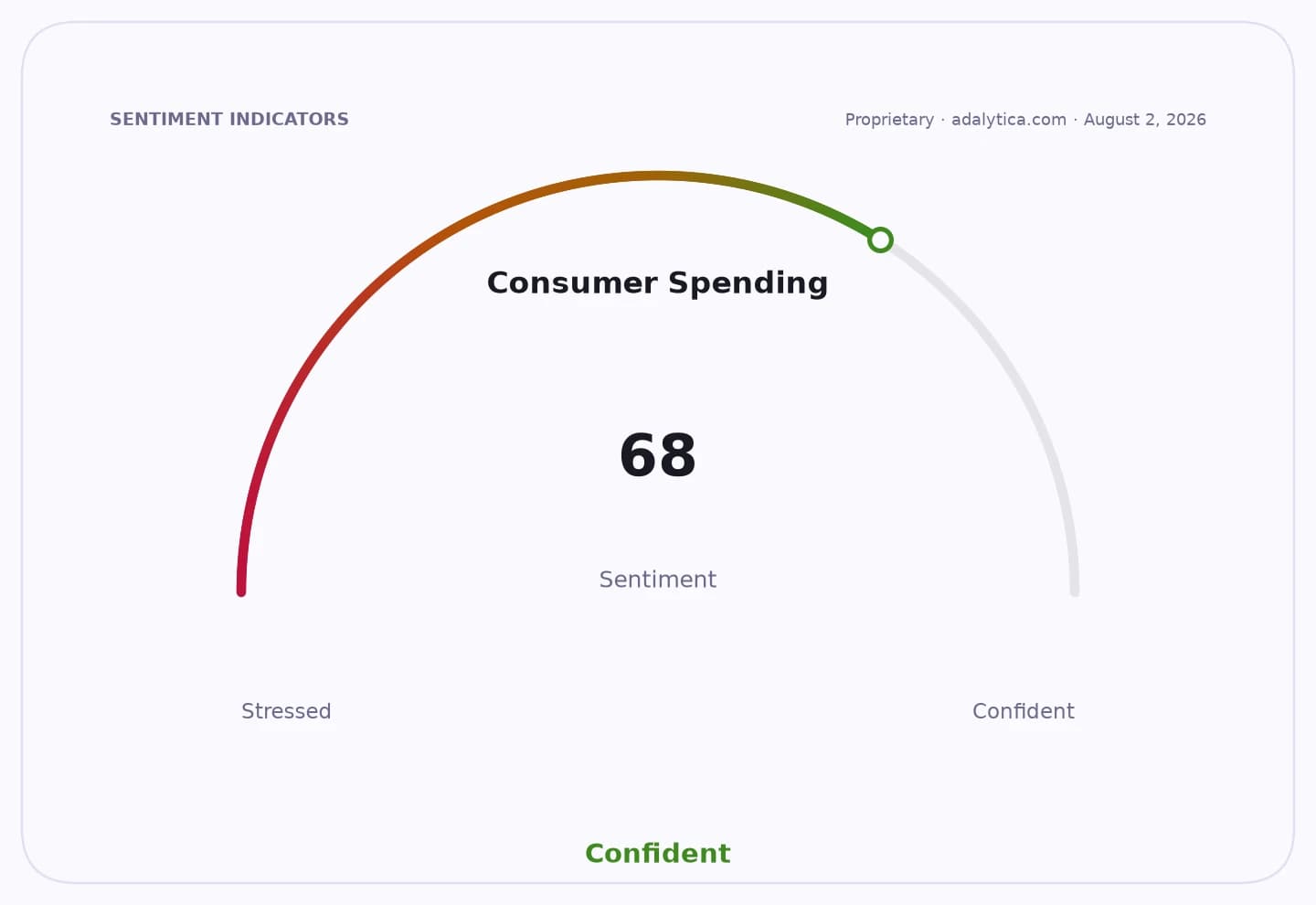
Sentiment IndicatorsⓘProprietary · adalytica.com · August 2, 2026
This is a snapshot — live sentiment, awareness and momentum for 130+ markets update continuously in the dashboard.Open AlphaPulse
That is why earnings season matters now: it is showing where travel demand is proving resilient and where pricing power is harder to sustain. Expedia’s surge to $304.27 on July 29 before giving back some gains, and Airbnb’s climb to $153.01 the same day, suggest investors are still willing to pay for platforms that can convert demand into take rates, direct bookings and margin leverage. Booking’s move from a February low near $154 to the low-$190s underscores the same point: when travel volumes hold up, the booking engines remain the toll roads of the industry.
The bigger story, though, is that Amazon is pressing deeper into AI travel booking at the exact moment the online travel market is being forced to defend its moat. That raises the stakes for Booking, Airbnb and Expedia, because generative AI can compress the customer journey and shift traffic away from traditional search funnels. Expedia’s own filings have flagged AI-powered planning tools as a competitive force, and that threat is becoming more concrete as Amazon extends its reach into commerce, discovery and booking. In travel, control of the interface is everything: whoever owns the first prompt can siphon demand, data and eventually commission dollars.
For investors, the opportunity is not to fear AI disruption blindly. It is to own the platforms best positioned to be the plumbing behind it. Booking’s scale, Airbnb’s brand and direct supply, and Expedia’s multi-brand distribution give them different exposures, but all three benefit if travel demand stays healthy and online penetration keeps rising. Adalytica’s Consumer Spending Sentiment snapshot shows spending awareness at an extreme level, while the broader S&P 500 remains in extreme greed territory — a sign the market is still willing to fund growth stories that can show operating leverage. In that kind of environment, the market tends to reward the companies that can defend conversion, data and loyalty.
The next catalyst is whether management teams can show that AI is a traffic tailwind rather than a margin tax. If these platforms can integrate AI without handing the customer relationship to a third party, they can turn a threat into a distribution advantage. If not, Amazon and other AI intermediaries will increasingly skim the economics.
For now, the thesis is straightforward: travel is not breaking, it is being reorganized. I believe the best way to play that shift is to stay with the asset-light booking platforms and treat AI travel search as a competitive shock that will separate the true network winners from everyone else.
| Entity | Gains | Losses |
|---|---|---|
| Booking Holdings | ▲booking scale and take rates | ▼AI-mediated traffic leakage |
| Airbnb | ▲direct demand and brand loyalty | ▼commoditized search channels |
| Expedia | ▲rebound leverage and diversification | ▼higher CAC from AI competition |
| Amazon | ▲deeper commerce control | ▼traditional OTA intermediaries |