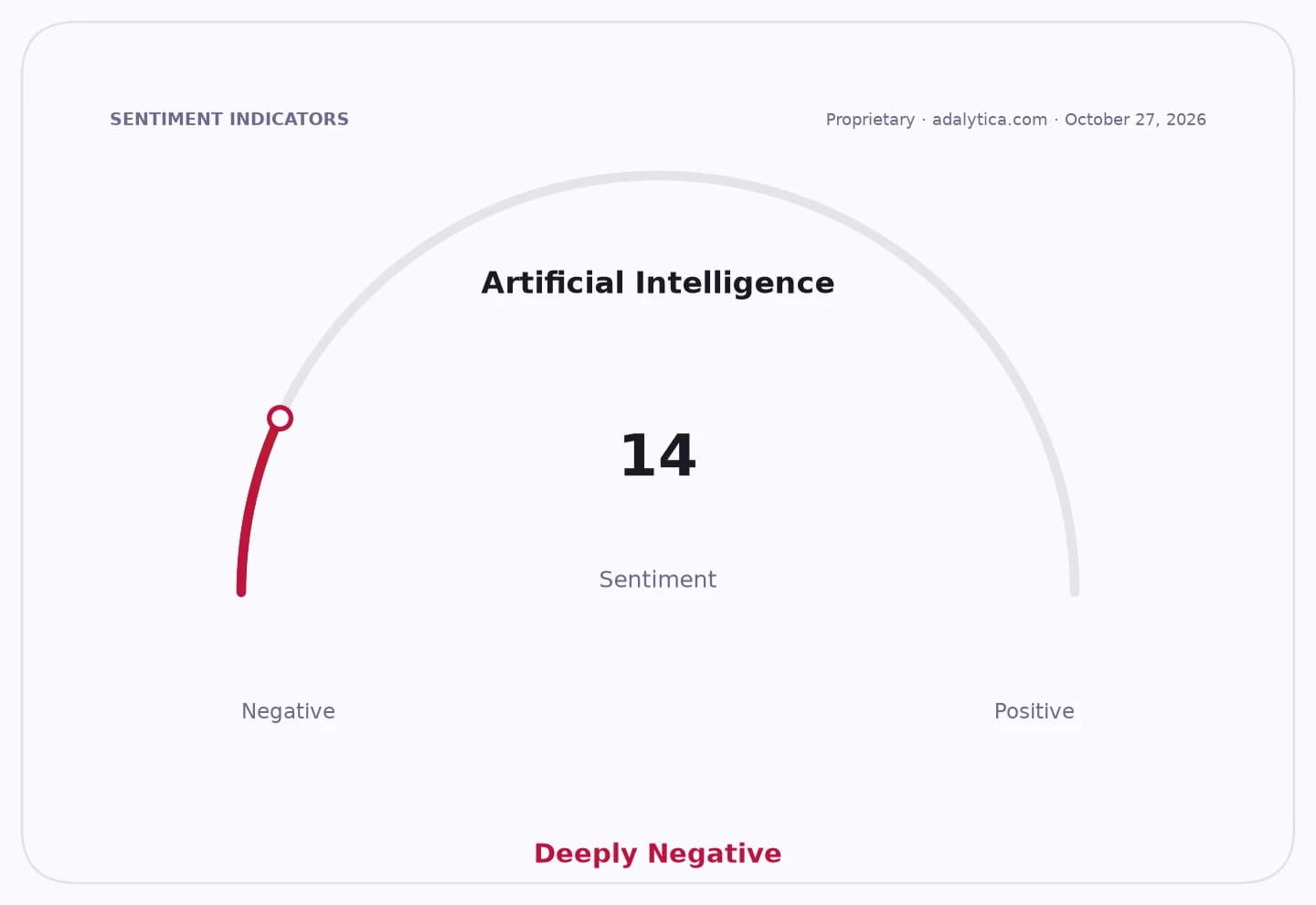
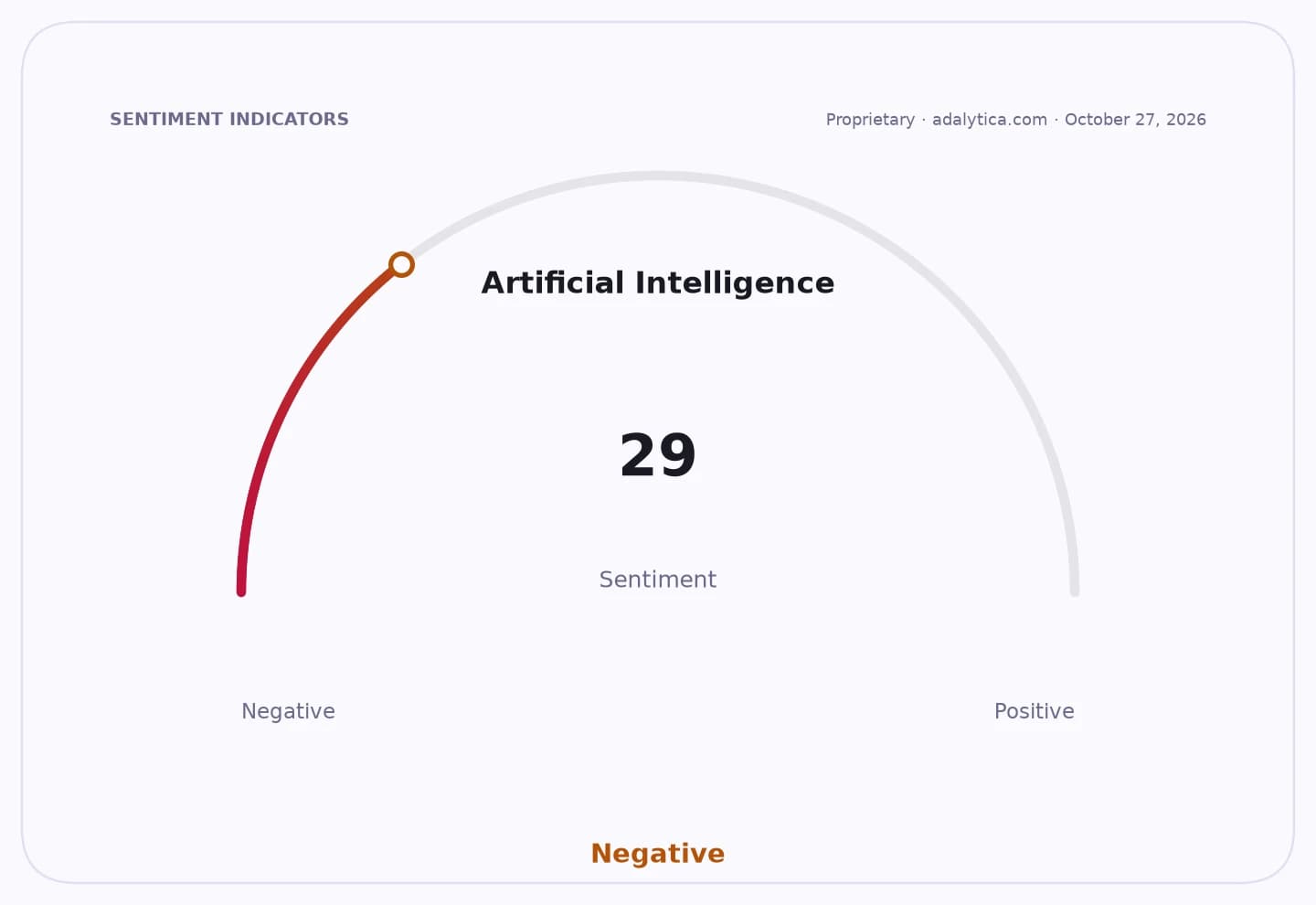
Brands are pouring more money into content, SEO and owned media because AI tools like ChatGPT and Google AI Overviews are becoming a new front door for product discovery — and companies do not control what those systems say about them.
Brands Spend More on Content for AI Search Visibility
That shift matters because visibility in AI responses is starting to function like a new version of word-of-mouth. If a brand is not being cited, recommended or even mentioned by large language models, it risks being left out of the consideration set just as consumers move from search queries to conversational prompts for product research.
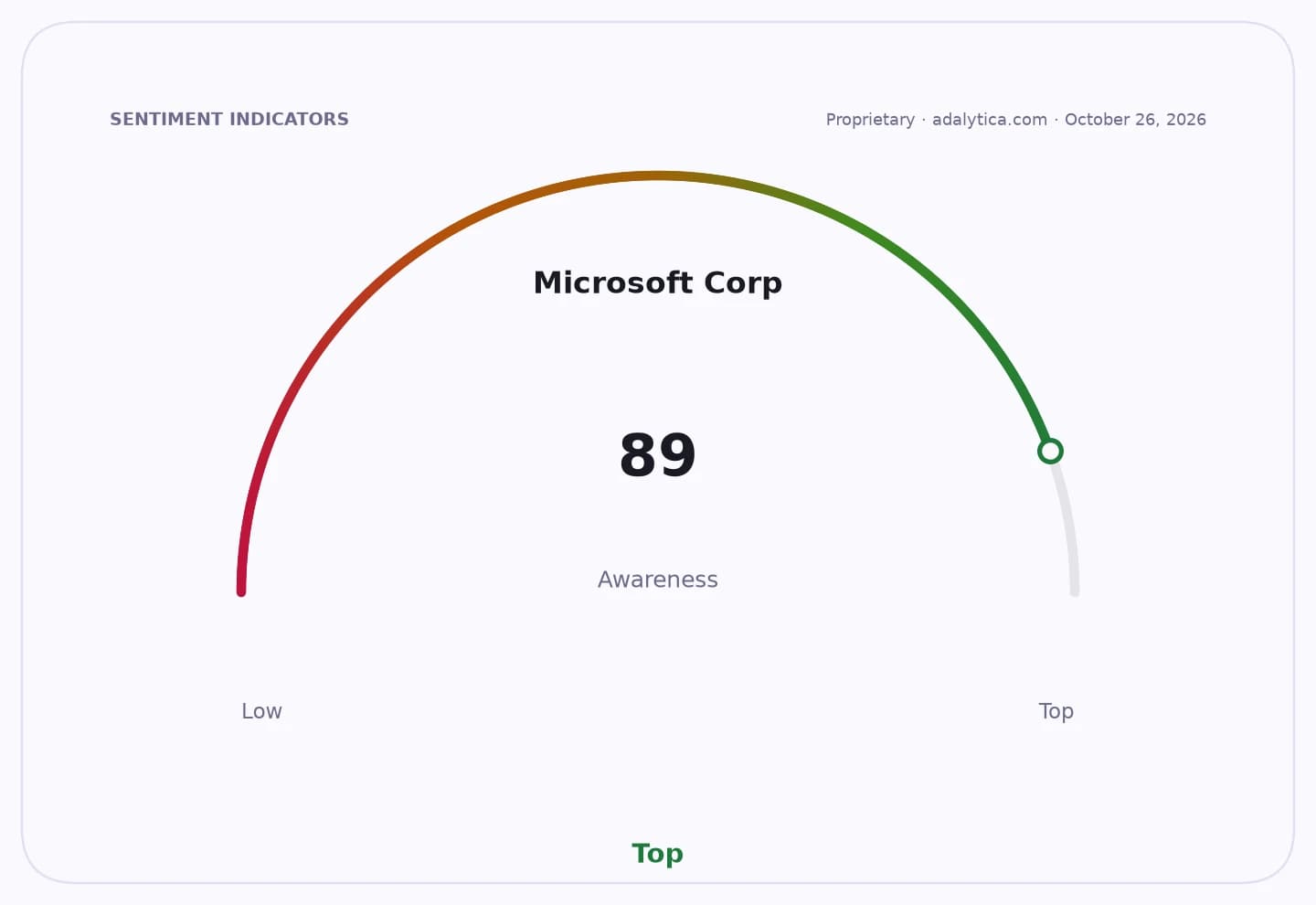
Sentiment IndicatorsⓘProprietary · adalytica.com · October 26, 2026
This is a snapshot — live sentiment, awareness and momentum for 130+ markets update continuously in the dashboard.Open AlphaPulse
Fender and Marshall are among the early adopters. Fender has turned its website into a brand-story platform, adding videos on its history, musicians such as Jimi Hendrix and instrument makers, while also expanding YouTube content around the Telecaster’s 75th anniversary. Marshall is pushing its “Dead Venues” series and broader video strategy to extend its identity beyond amplifiers and into headphones, while aiming for more appearances in Google AI Overviews and other LLM-driven results.
The strategy reflects a hard truth for marketers: they cannot directly instruct ChatGPT or other AI models, but they can feed them more original material. Skyword says 70% of U.S. consumers use ChatGPT or AI summaries to research products and companies, while Kantar found 75% of marketers plan to increase spending to improve visibility in AI assistants over the next year.
That is driving a broader reallocation of budgets from classic SEO to what some agencies call GEO, or generative engine optimization. Urvashi Manral of Attention Arc said clients are increasing SEO spending to improve the odds of being surfaced by AI, as brands seek the digital equivalent of being recommended by a trusted source.
The economics are straightforward. Original, expert-led content gives AI systems more material to cite, and even when it does not generate an immediate click, it can still shape discovery, brand recall and purchase intent. That makes content budgets more of a strategic expense than a traffic-buying tool.
For investors, the trend supports digital-ad and marketing-service vendors that can prove AI visibility gains, while raising pressure on consumer brands that rely on search to drive awareness. Alphabet, Meta and other ad platforms also stand to benefit if brand spending shifts toward content distribution, video and paid reach to train or amplify AI-friendly signals.
The risk is that the playbook is still experimental. Agencies say there is no guaranteed formula for getting mentioned by AI, and brands are effectively paying to influence systems whose ranking and citation methods are opaque. Even so, the spending is likely to rise further as AI becomes a default layer in product research and companies race to own the prompt before competitors do.
| Entity | Gains | Losses |
|---|---|---|
| Brand marketers | ▲More AI visibility | ▼Higher content spend |
| Fender and Marshall | ▲Stronger discovery | ▼No guaranteed citations |
| Ad agencies and SEO firms | ▲New budget line item | ▼Harder-to-measure ROI |
| Alphabet, Meta and video platforms | ▲More distribution spend | ▼Pressure on organic search traffic |