Audio messages warning Indigenous communities in the Amazon of an impending land invasion if Flávio Bolsonaro wins Brazil’s 2026 election are turning an already volatile territorial dispute into a broader test of state authority, land rights and political risk in the country’s biggest resource frontier.
Brazil Amazon Land Dispute Raises Risk Premium

The threats, reported by Folha and backed by metadata reviewed by the paper, point to a possible escalation around the Apyterewa Indigenous territory in Pará, where conflict over land has long intersected with cattle expansion, deforestation and weak enforcement. That matters economically because the Amazon is not just a conservation issue: it is a production zone for agriculture, livestock, mining and infrastructure, and violence or uncertainty there can alter investment conditions well beyond the forest.
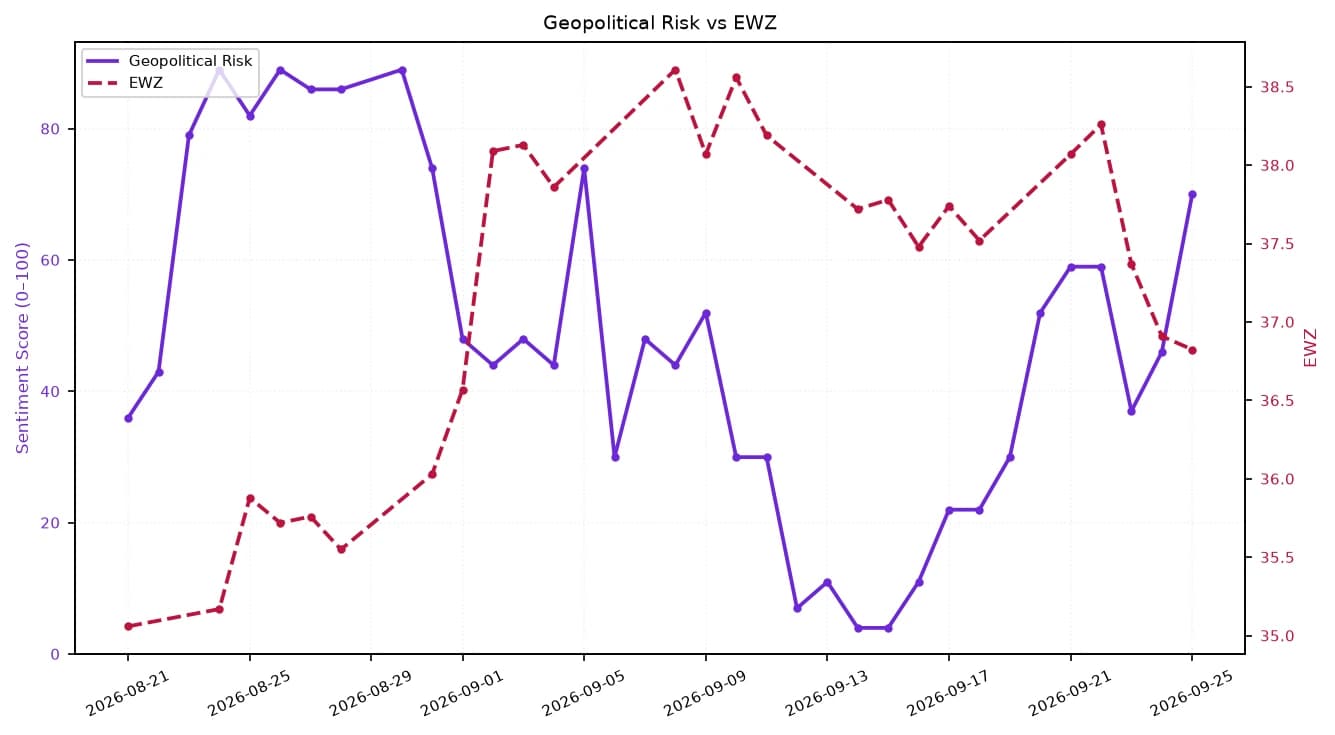
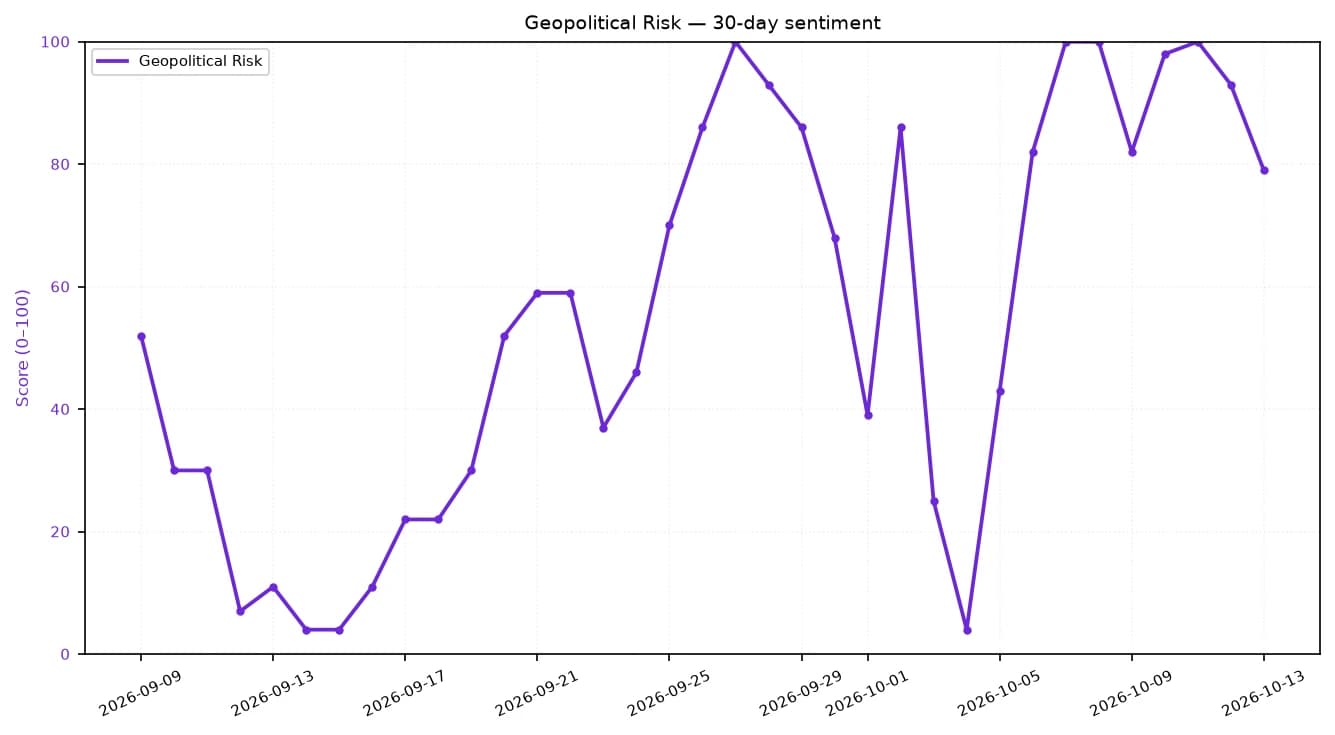
Sentiment IndicatorsⓘProprietary · adalytica.com · October 16, 2026
This is a snapshot — live sentiment, awareness and momentum for 130+ markets update continuously in the dashboard.Open AlphaPulse
Federal authorities are now involved. The Ministry of Indigenous Peoples said it is monitoring “increased pressure for the illegal occupation of the territory,” while a committee charged with removing intruders moved to reinforce security. Officials are also examining whether a recent surge in fires in the territory was deliberately set by farmers. Inpe data cited by Folha showed fire outbreaks jumping from 41 in July to 1,007 in September, a scale of increase that underscores how quickly land conflict can turn into environmental and legal risk.
The timing gives the story added force. The audio messages reportedly forecast an invasion on the date of the runoff and tie the outcome to expectations that Flávio Bolsonaro and Pará governor-elect Dr. Daniel would favor ranchers over the Parakanã people. That makes the episode more than a local dispute: it suggests that election rhetoric and land speculation are being used to mobilize pressure on Indigenous territory before votes are even fully settled.
For investors, the immediate read-through is not to any single stock but to Brazil’s broader risk premium. Persistent land conflict in the Amazon can raise the cost of compliance for agribusiness, heighten scrutiny on supply chains and revive concerns over ESG exposure among global buyers. It also complicates the political backdrop for Brazilian assets, especially when markets are already sensitive to fiscal credibility, rule-of-law risks and the country’s treatment of environmental enforcement.
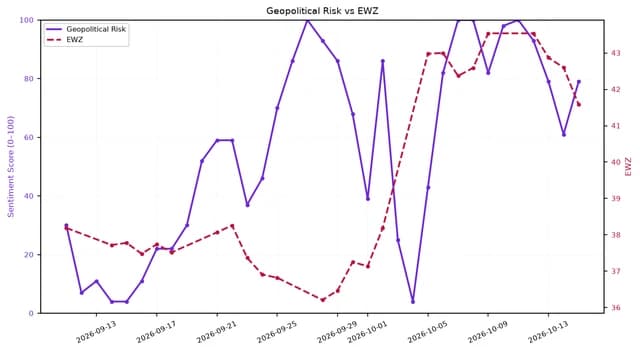
The market backdrop has been strong for Brazilian risk assets, with the iShares Brazil ETF, EWZ, trading well above its 50- and 200-day moving averages in recent sessions, a sign of bullish momentum even as its relative strength readings remain elevated. Petrobras shares, meanwhile, have rallied sharply, reflecting investor appetite for Brazilian exposure despite the country’s political noise. But episodes like this are a reminder that valuation support can be vulnerable if domestic governance risks flare around key resource regions.
The bull case is that federal intervention and stronger policing can contain the threat before it becomes a wider law-and-order event. The bear case is that the messages are evidence of coordinated intimidation around disputed land, with more fires, more occupation attempts and more reputational damage for Brazil’s agricultural complex if enforcement proves inconsistent. Either way, the episode reinforces how closely Brazil’s political cycle, frontier land disputes and capital-market perceptions remain linked.
| Entity | Gains | Losses |
|---|---|---|
| Federal authorities | ▲Greater mandate for enforcement | ▼Pressure to contain violence |
| Indigenous communities | ▲Security reinforcement | ▼Land-rights uncertainty |
| Agribusiness buyers with clean supply chains | ▲Lower ESG scrutiny if enforcement works | ▼Higher compliance costs |
| Ranchers and land speculators | ▲Potential political leverage | ▼Legal and reputational risk |