Brazil’s sharp reduction in Amazon deforestation is undermining a central U.S. argument that environmental harm should justify trade pressure on the country, even as investors still face supply-chain and policy risks tied to soy, biofuels and broader commodity flows.
Brazil Deforestation Eases U.S. Trade Pressure

The significance goes beyond diplomacy. If Brazil is showing measurable progress in curbing forest loss, Washington’s case for linking commercial penalties to environmental stewardship becomes harder to sustain politically and legally. That matters for exporters, agribusiness groups and markets watching whether trade disputes expand into agriculture, where tariffs, sanctions and sustainability rules can move prices and margins quickly.
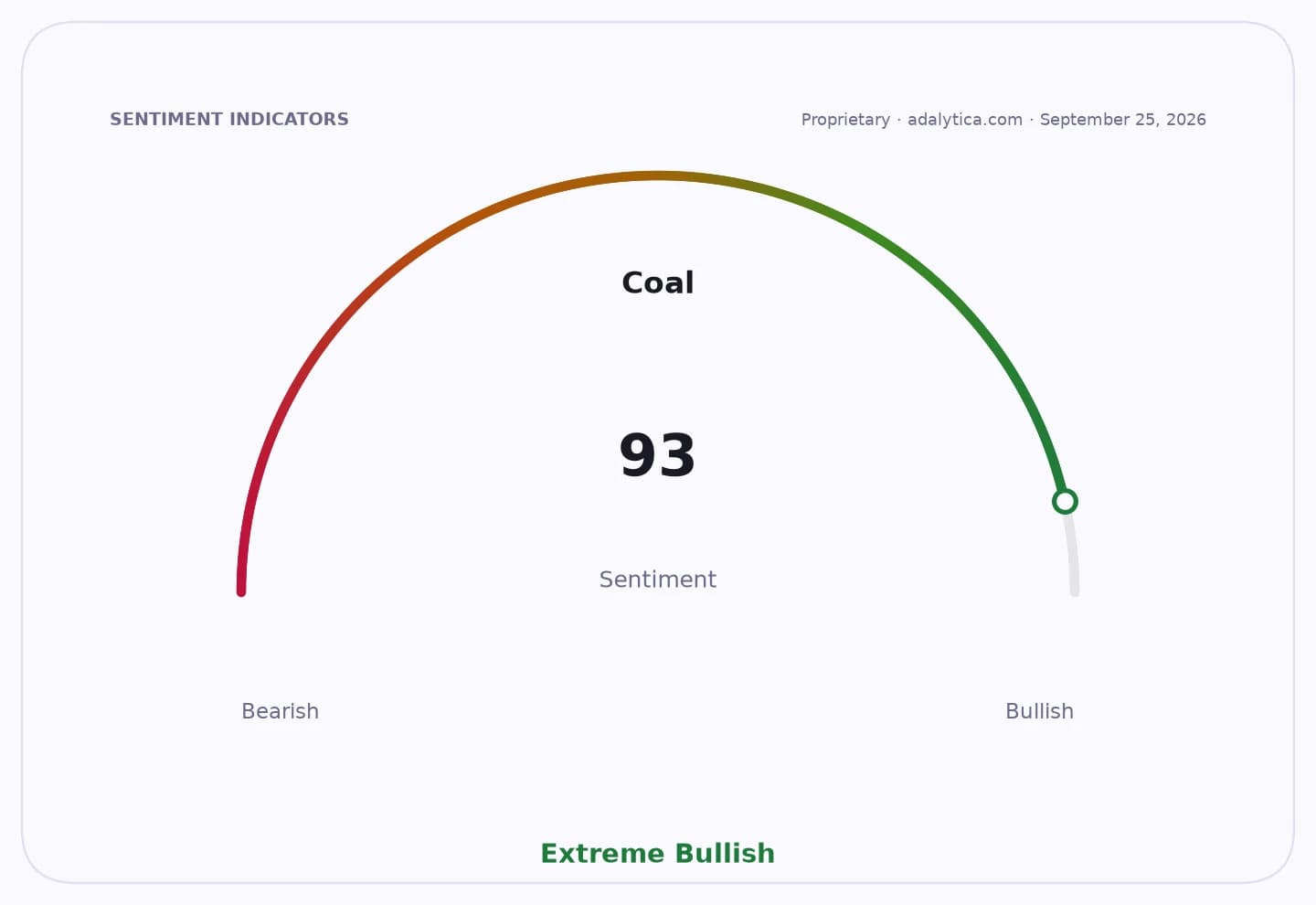
Sentiment IndicatorsⓘProprietary · adalytica.com · July 25, 2026
This is a snapshot — live sentiment, awareness and momentum for 130+ markets update continuously in the dashboard.Open AlphaPulse

The latest data point to a major improvement in the Amazon. Forest areas affected by fires are projected to fall to 3.1 million hectares in 2025, the lowest level in four decades, according to the information provided. That suggests recent Brazilian enforcement and anti-wildfire initiatives are having an effect at the same time the country remains under pressure from the U.S., which has tied deforestation to commercial advantage and used that link to support investigations and taxes.
For investors, the immediate implication is that the policy narrative around Brazil’s agricultural exports may be shifting. A weaker deforestation case could reduce the scope for U.S. trade actions aimed at Brazilian farm goods, supporting sentiment for exporters and for vehicles with heavy Brazil exposure such as the iShares MSCI Brazil ETF, which has climbed to around 35.73 from 33.23 in early December and remains above its 50-day and 200-day moving averages. The SPDR S&P Global Natural Resources ETF, whose holdings include commodity producers and agribusiness-linked names, has also been steady near 28.24, suggesting markets have not priced in a fresh escalation.

But the bullish case is only partial. The collapse of the Amazon soy pact remains a material overhang because the pact’s unraveling could add as much as 1.4 million hectares of deforestation by 2036. That risk matters because soy is one of Brazil’s most important export engines, and any reversal would renew pressure from buyers, regulators and ESG-sensitive investors who have made deforestation a screening issue. In other words, the current improvement looks real, but it is not yet durable enough to remove the issue from trade policy.
Commodity markets are also signaling that the broader backdrop remains supportive, even if volatile. WTI crude was last around $84.38 a barrel, while the Adalytica oil trade signal showed extreme fear despite extreme awareness, underscoring how geopolitical and policy shocks can still ripple through transport and fertilizer costs. U.S. Treasury yields have also edged up, with the 10-year near 4.71% and the 2-year at 4.37%, a reminder that tighter financial conditions can amplify the cost of any new trade friction.
The broader narrative is that Brazil is trying to prove that conservation and export growth can coexist, while the U.S. is using environmental standards as leverage in a wider trade contest. If the deforestation decline holds, Brazil gains negotiating power and some protection for its agricultural complex. If the soy pact’s collapse translates into renewed clearing, Washington regains its argument and investors in Brazilian farm exports, retailers and commodity-linked funds will have to price in another round of policy risk.
| Entity | Gains | Losses |
|---|---|---|
| Brazilian exporters | ▲Weaker U.S. trade case | ▼Less policy pressure |
| U.S. trade hawks | ▲Stronger case if soy pact fails | ▼Credibility from falling deforestation |
| Agribusiness buyers | ▲Cleaner supply chains | ▼Higher compliance risk |
| ESG-sensitive investors | ▲Better deforestation data | ▼Exposure to policy reversal |