Brazil’s labor ministry said it received 4,305 complaints of electoral harassment at work in just three days, underscoring how deeply the country’s political polarization has seeped into corporate Brazil ahead of key voting cycles.
Brazil labor ministry reports 4,305 harassment complaints

That matters economically because workplace coercion is not just a rights issue — it is a governance issue that can distort hiring, retention and productivity while exposing employers to fines, investigations and reputational damage. For investors in Brazil, the risk is that political pressure inside companies becomes another layer of operating friction at a time when margins are already sensitive to labor costs, regulation and consumer volatility.
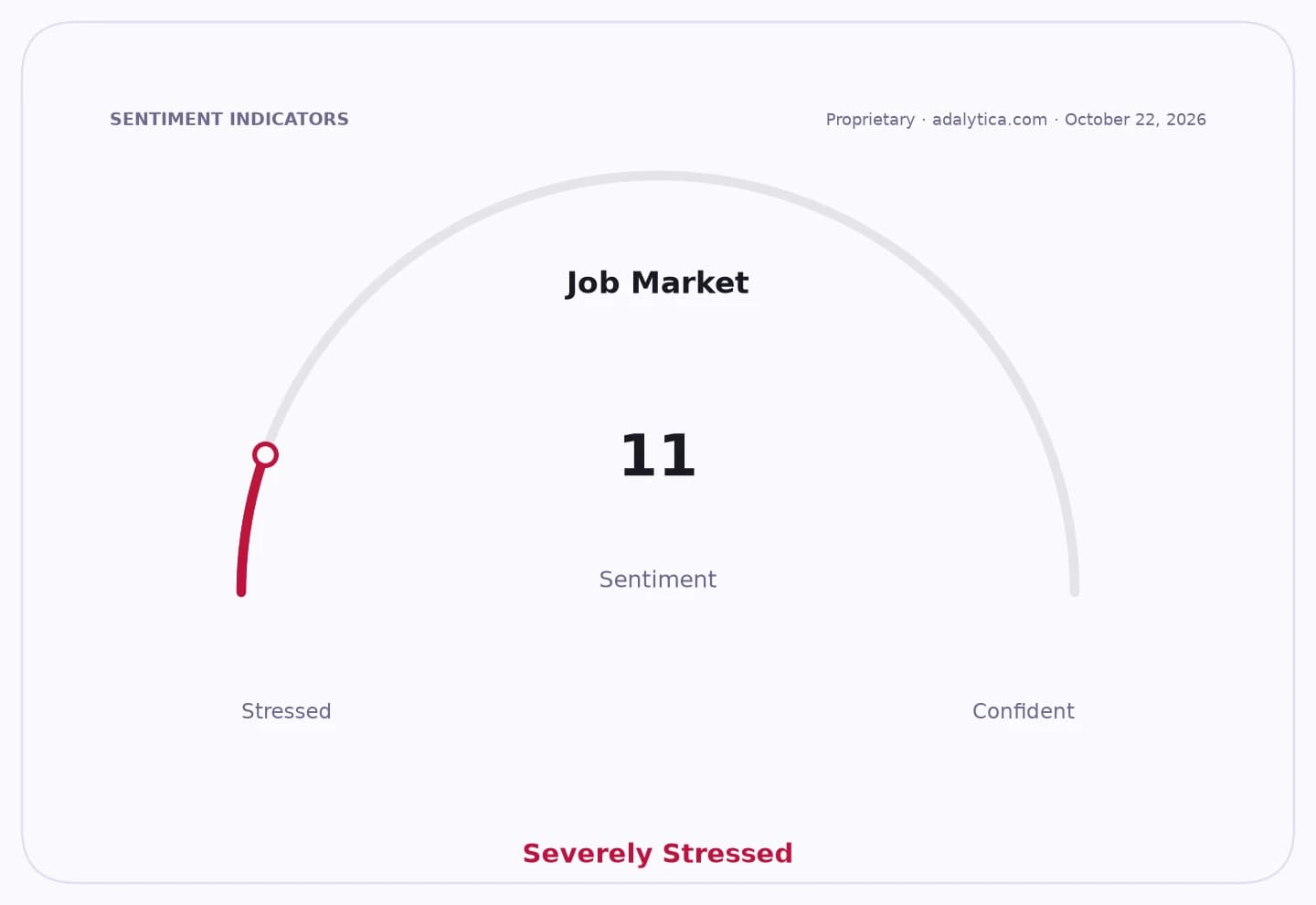
Sentiment Indicators
The scale of the complaints shows the problem is concentrated where the economy is largest. The southeast accounted for 2,087 reports, or 48.5% of the total, with Sao Paulo alone responsible for 1,325 cases. Rio de Janeiro and Minas Gerais followed, while Parana and Santa Catarina also logged sizable numbers. The labor ministry said fiscal auditors are reviewing the cases and can impose administrative sanctions or refer matters to other authorities.
Officials are now trying to turn enforcement into deterrence. Labor Minister Luiz Marinho said workers’ political freedom must be respected and employers cannot use their position to influence votes. The government is also considering a public transparency tool, similar to the lists used to identify employers punished for slavery-like labor practices, which would raise the stakes for companies found to be crossing the line.
For markets, the broader message is that Brazil’s political cycle is increasingly an operating risk factor, not just a polling story. Companies with large workforces, union exposure or heavy footprints in the southeast are most likely to face scrutiny, while sectors tied closely to domestic demand may see added compliance costs and headline risk. That is a negative for Brazil-focused assets in the near term, even as it reinforces the case for firms with stronger governance, cleaner labor practices and limited political exposure.
The investable takeaway is straightforward: the market underestimates how much political conflict can filter into corporate Brazil. Investors should favor companies with disciplined compliance, diversified geographic exposure and less labor-intensive business models, while treating employers with repeated governance lapses as higher-risk holdings until enforcement cools and the complaint wave is absorbed.
| Entity | Gains | Losses |
|---|---|---|
| Workers | ▲freer political choice | ▼workplace coercion |
| Brazilian labor ministry | ▲stronger enforcement role | ▼higher caseload burden |
| Compliant employers | ▲better governance premium | ▼none |
| Politically coercive firms | ▲none | ▼fines, reputational damage |