Brazil’s lower house has approved a sweeping expansion of the microentrepreneur regime that could lift revenue limits for millions of small businesses and erase debts for nearly 3 million MEIs, a move that may ease cash-flow stress for the country’s informal economy while reducing near-term tax and recovery receipts.
Brazil MEI revenue cap rises and debts get forgiven
The Chamber of Deputies voted 461 to 4 for the measure, sending it to the Senate. The proposal would raise the annual revenue cap for microempreendedores individuais from R$81,000, unchanged since 2016, to R$110,000 in 2027 and R$140,000 in 2028, with monthly start-up thresholds set at R$9,166.67 and then R$11,666.67. It would also grant full remission of debts enrolled in the federal government’s active debt register through Oct. 13, 2026, provided beneficiaries keep up with social security contributions for six months after the law takes effect and drop any pending lawsuits.
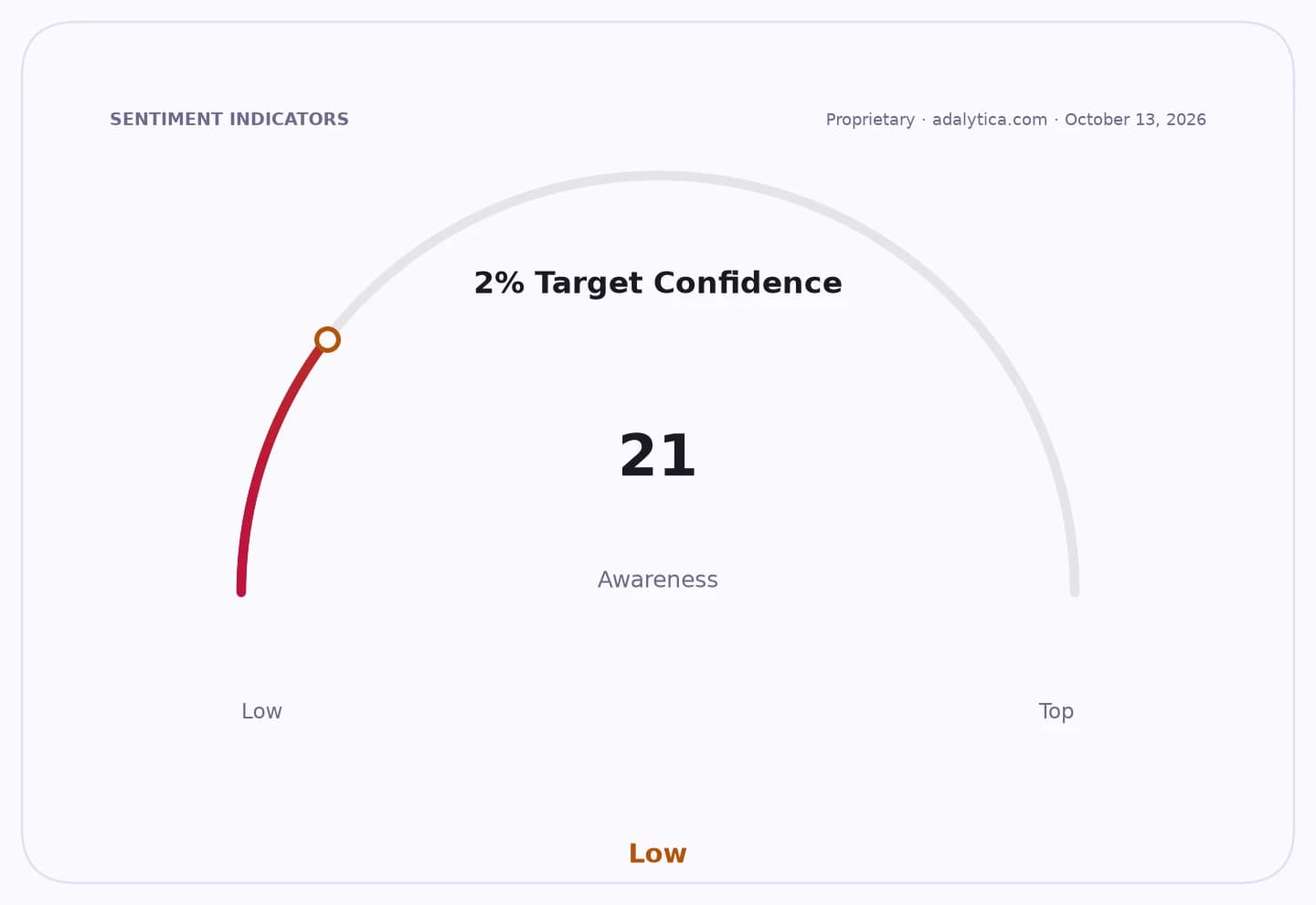
Sentiment IndicatorsⓘProprietary · adalytica.com · October 17, 2026
This is a snapshot — live sentiment, awareness and momentum for 130+ markets update continuously in the dashboard.Open AlphaPulse
For Brazil’s small-business sector, the bill is a direct response to inflation, higher operating costs and a growing number of firms that have outgrown the current MEI ceiling but still lack the scale to absorb the jump to a more formal tax regime. Raising the cap should keep more entrepreneurs inside the simplified system, preserving compliance and access to formal credit at a time when policymakers are trying to defend employment and consumption without opening a larger fiscal hole.
The debt relief is economically significant because it targets a large pool of delinquent microbusinesses that often sit outside the formal economy once they fall behind on contributions. Forgiving those arrears could bring many operators back into the tax net and improve collection of future payments, even as the federal government estimates a recovery-related budget effect of R$1.1 billion in 2027, R$1 billion in 2028 and R$909 million in 2029. That makes the bill less a pure giveaway than an attempt to trade short-term revenue for longer-term regularization.
Investors will read the measure through two lenses. On the one hand, it supports domestic demand by easing pressure on self-employed workers and the microenterprise base that underpins retail sales, services and local employment. On the other, it reinforces a broader pattern of fiscal concessions that can complicate Brazil’s budget arithmetic and keep scrutiny on sovereign accounts, especially as debt relief and social measures proliferate across the region. The requirement to remain current on contributions for six months suggests lawmakers are trying to limit moral hazard and prevent the relief from becoming a one-off default incentive.
The bill also allows MEIs in industrialization, commerce and rural services to hire up to two workers instead of one, a change that could help the smallest firms expand gradually rather than forcing an abrupt leap into a more burdensome corporate structure. For lenders, payments firms and platforms serving microbusinesses, the expanded ceiling could enlarge their addressable market, though the debt forgiveness may also depress near-term collections.
The Senate now becomes the key test. If approved, the law would likely stabilize a segment of Brazil’s entrepreneurial base that has been squeezed by cost inflation and stalled real income growth, but it will also invite fresh debate over whether easing arrears today strengthens small business resilience or simply postpones the next round of fiscal strain.
| Entity | Gains | Losses |
|---|---|---|
| MEIs / microentrepreneurs | ▲Higher revenue ceiling; debt relief | ▼Stricter contribution compliance |
| Brazilian domestic demand | ▲More formalized small firms | ▼Short-term fiscal revenue |
| Federal government / tax collectors | ▲Future regularization | ▼Near-term recovery receipts |
| Payments and small-business lenders | ▲Larger formal market | ▼Lower arrears recovery |