Brazil’s 2027 minimum wage is likely to land a little below the government’s R$1,741 budget estimate after inflation came in softer than expected, trimming the automatic adjustment for millions of retirees, pensioners and low-income beneficiaries.
Brazil minimum wage likely below budget estimate
The key economic issue is not the small gap of about R$8 versus the budget number, but what it says about the wage floor’s role in public spending and household income. The minimum wage is indexed to inflation plus a real increase under Brazil’s current formula, so even modest changes in the price path can alter federal outlays tied to social security and welfare payments.
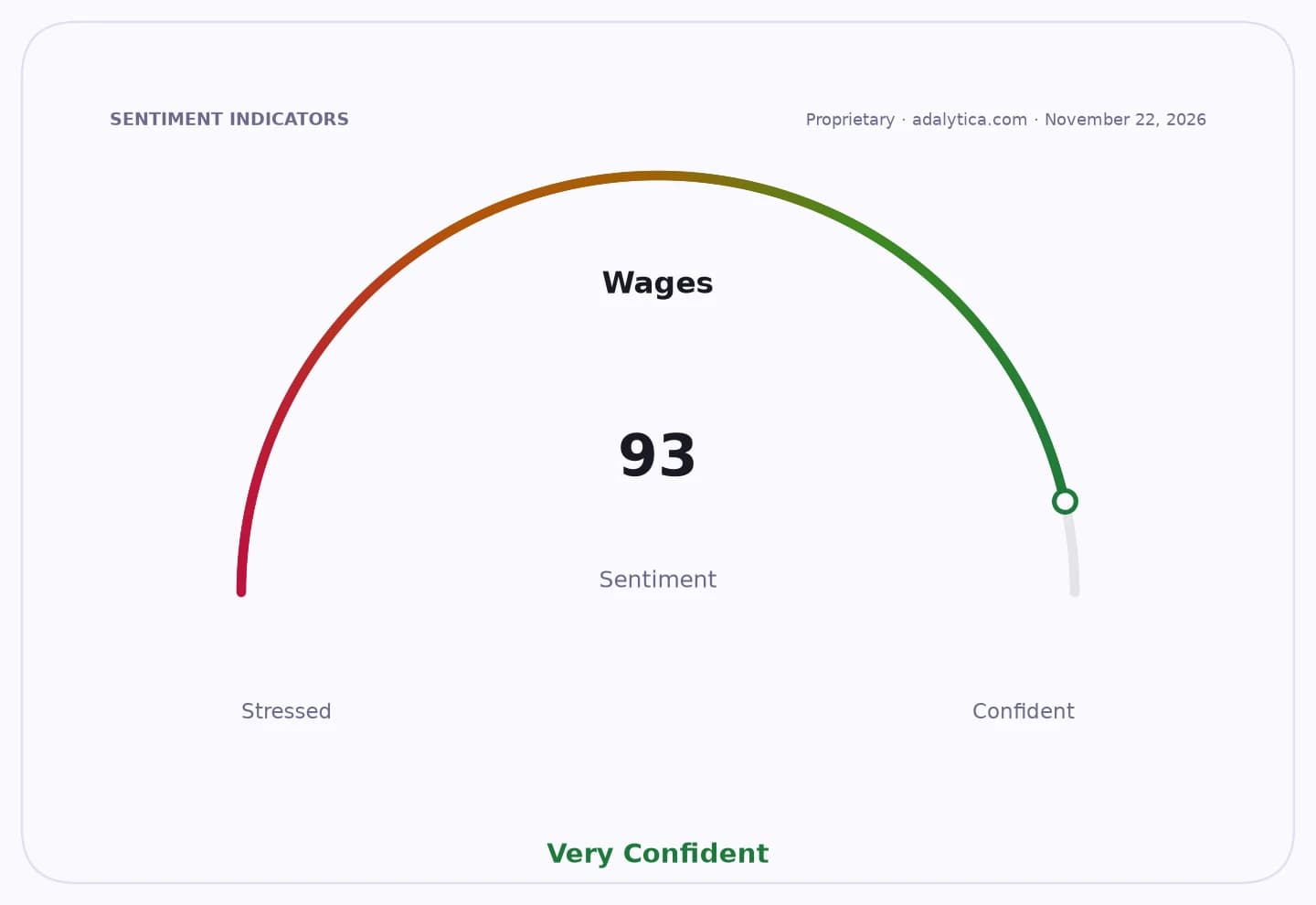
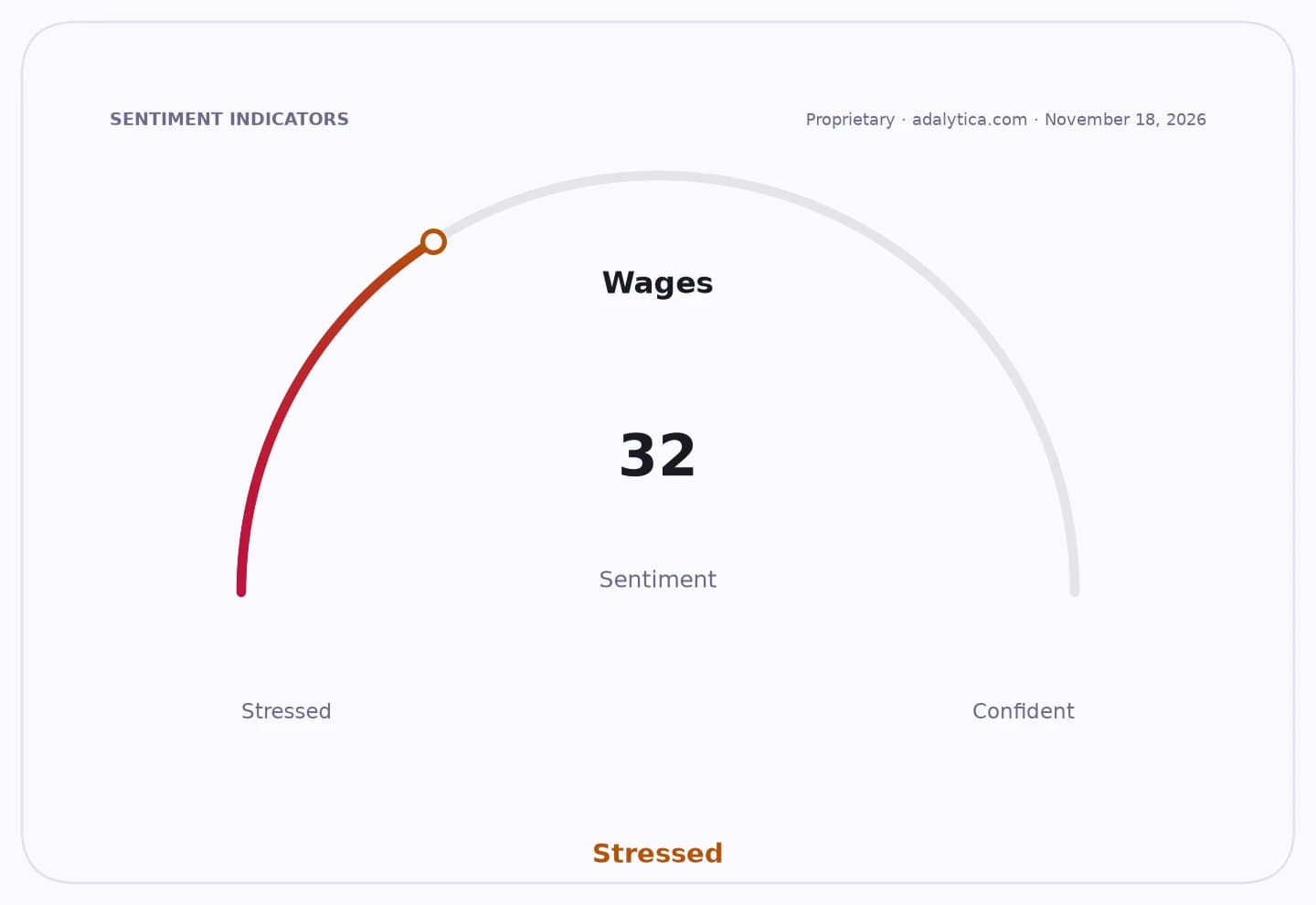
Sentiment Indicators
The latest reading from the IBGE showed the INPC, the inflation gauge used in the calculation, rising 0.22% in October and 4.49% over 12 months. Using that figure, the minimum wage would be close to R$1,733 rather than R$1,741, according to the initial budget assumption based on 4.93% inflation plus a 2.3% real gain. The final figure will depend on November inflation, due in early December, before the government publishes the official minimum wage that takes effect on Jan. 1.
For workers and beneficiaries who earn the floor, the difference is small in nominal terms but material at the margin. Based on today’s R$1,621 minimum, the increase would likely be around R$110 to R$120 a month. For retirees and pensioners paid through INSS, that translates into a direct shift in monthly income and, by extension, consumer spending among a group with limited flexibility in their budgets.
For the government, a slightly lower wage floor eases pressure on mandatory spending, since the minimum wage is the benchmark for a large share of pensions and BPC social assistance payments. That matters in a country where fiscal room remains tight and policymakers are trying to manage indexation-driven spending growth without triggering a broader squeeze on the economy.
Investors should care because Brazil’s minimum wage formula feeds directly into the trajectory of social spending, the fiscal deficit and, ultimately, the sovereign risk premium. A lower-than-planned adjustment marginally improves the budget arithmetic, while a higher final INPC reading in November would push the number back up. The direction also matters for domestic demand: a smaller wage increase would slightly temper income support for the lowest earners, while a larger one would reinforce consumption in a segment that tends to spend quickly.
The bull case for markets is that softer inflation keeps the wage floor and related public expenditure contained, giving Brasília a bit more room to protect fiscal targets. The bear case is that even a modest miss on the wage calculation does little to change Brazil’s entrenched indexation dynamics, leaving spending pressures intact and the debate over fiscal discipline unresolved.
The official minimum wage will not be known until December, but the bigger message is already clear: inflation is doing part of the government’s work by keeping next year’s floor from rising as much as planned.
| Entity | Gains | Losses |
|---|---|---|
| Federal government | ▲Slightly lower mandatory spending | ▼Less room for political generosity |
| Retirees and BPC beneficiaries | ▲Higher monthly income in 2027 | ▼Smaller increase than hoped |
| Brazilian consumers | ▲Some support from wage-linked income | ▼Less boost if final floor comes in lower |
| Fiscal investors | ▲Marginally better budget math | ▼Limited relief if indexation persists |