A new Brazil-Paraguay integration bridge is set to matter less as a ribbon-cutting and more as an economic hinge, because it could shave friction from one of South America’s most important trade frontiers and accelerate the movement of goods, labor and investment.
Brazil-Paraguay Bridge Boosts Border Trade Potential
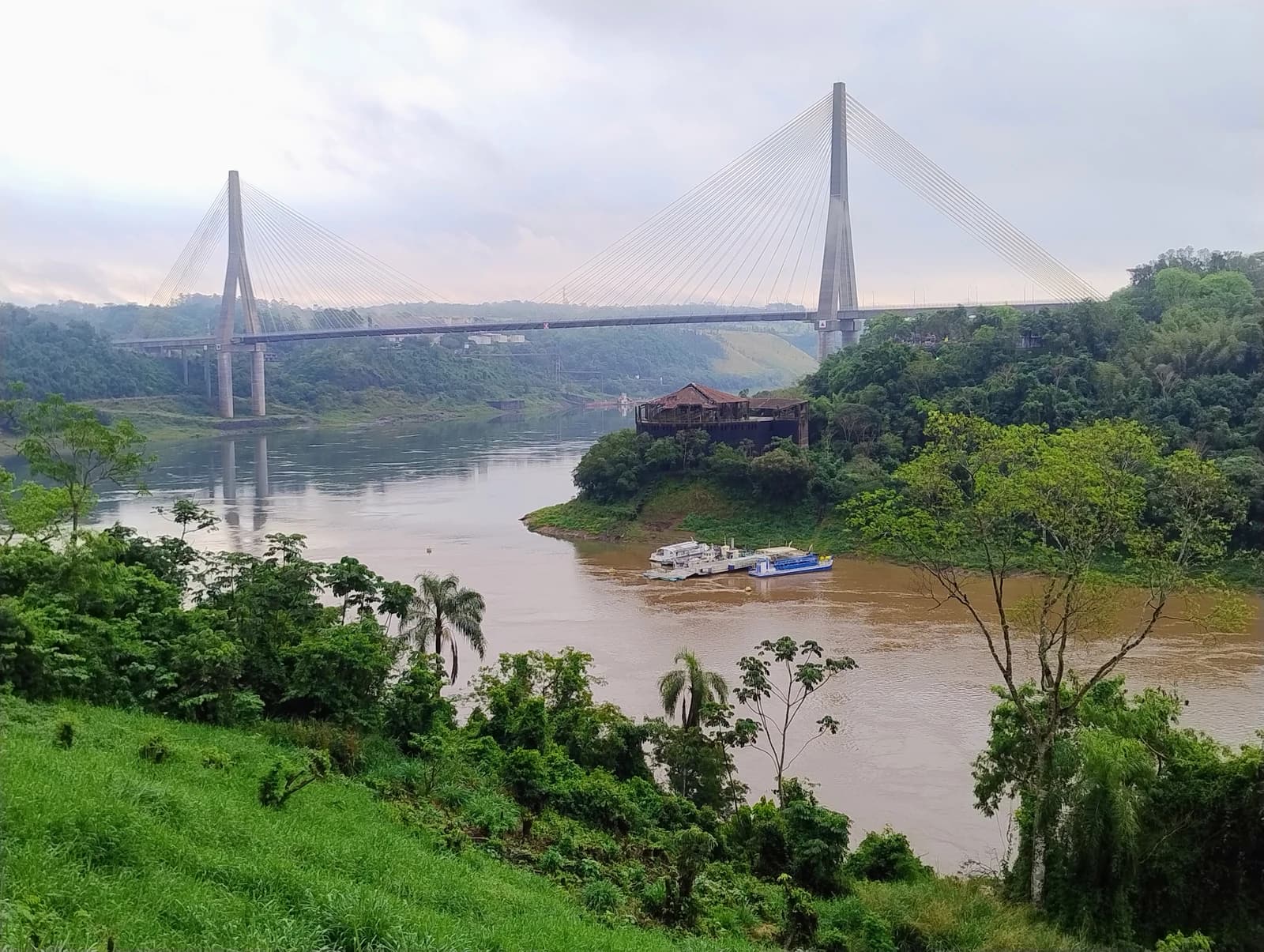
For border economies, that matters because logistics costs are often the difference between a corridor that merely exists on paper and one that actually draws factories, warehouses and services. Faster crossings and better connectivity can widen the market for Paraguayan producers, strengthen Brazil’s role as the dominant consumer and transit hub, and improve the economics of regional supply chains that have long been constrained by bottlenecks, customs delays and uneven infrastructure.
The immediate macro case is straightforward: lower transport times usually translate into lower inventory costs, better truck utilization and more reliable export flows. That can help agriculture, food processing, manufacturing and fuel distribution on both sides of the frontier. In a region where border trade often depends on a small number of crossing points, an additional bridge can also reduce concentration risk and make commerce less vulnerable to disruptions from weather, inspections or political friction.
Investors will be watching whether the bridge becomes an enabling asset for trade-intensive businesses or just another infrastructure promise with limited follow-through. The bullish reading is that improved cross-border connectivity supports growth in logistics, port access, industrial parks and fuel distribution, while increasing the attractiveness of the wider region to private capital. The bearish view is that the economic payoff will be slow if customs procedures, road links and permitting do not keep pace with the physical structure.
That broader infrastructure backdrop comes as global stability sentiment remains deeply risk-averse, with investors still sensitive to geopolitical shocks and supply-chain disruption. In that environment, projects that reduce bottlenecks and improve regional resilience tend to carry outsized importance, especially for sectors tied to bulk commodities and transport.
For shipping and commodity-linked operators, the relevance is indirect but real. Better regional integration can support more predictable freight flows and border-related trade volumes over time, even if the near-term market reaction is muted. That is the kind of incremental improvement that does not usually move markets on day one, but can gradually reshape routing decisions, distribution networks and the investment case for cross-border infrastructure.
The key question now is execution. If the bridge is paired with efficient customs coordination and highway upgrades, it could become a durable growth lever for the Brazil-Paraguay border economy. If not, it risks becoming a symbol of ambition rather than a catalyst for trade.
| Entity | Gains | Losses |
|---|---|---|
| Brazil-Paraguay border businesses | ▲Faster trade flows | ▼Legacy bottlenecks |
| Logistics and trucking firms | ▲Shorter transit times | ▼Idle capacity losses |
| Local exporters | ▲Lower delivery costs | ▼Delays and spoilage risk |
| Existing crossing operators | ▲— | ▼Traffic diversion risk |