Brazil’s escalating fight with Washington over the October presidential election is becoming more than a diplomatic row — it is now a market issue that could shape investor confidence in Latin America’s biggest economy.
Brazil Politics Weigh on EWZ as Election Risk Rises
By denying visas to U.S. officials who wanted to meet Brazilian election authorities, Brasília is signaling that it will resist outside pressure on the vote, even as the Trump administration raises tariffs and openly backs far-right candidate Flávio Bolsonaro. For investors, that matters because elections in Brazil are never just political theater: they can change the country’s fiscal path, trade relations, currency direction and appetite for reform in a single stroke.
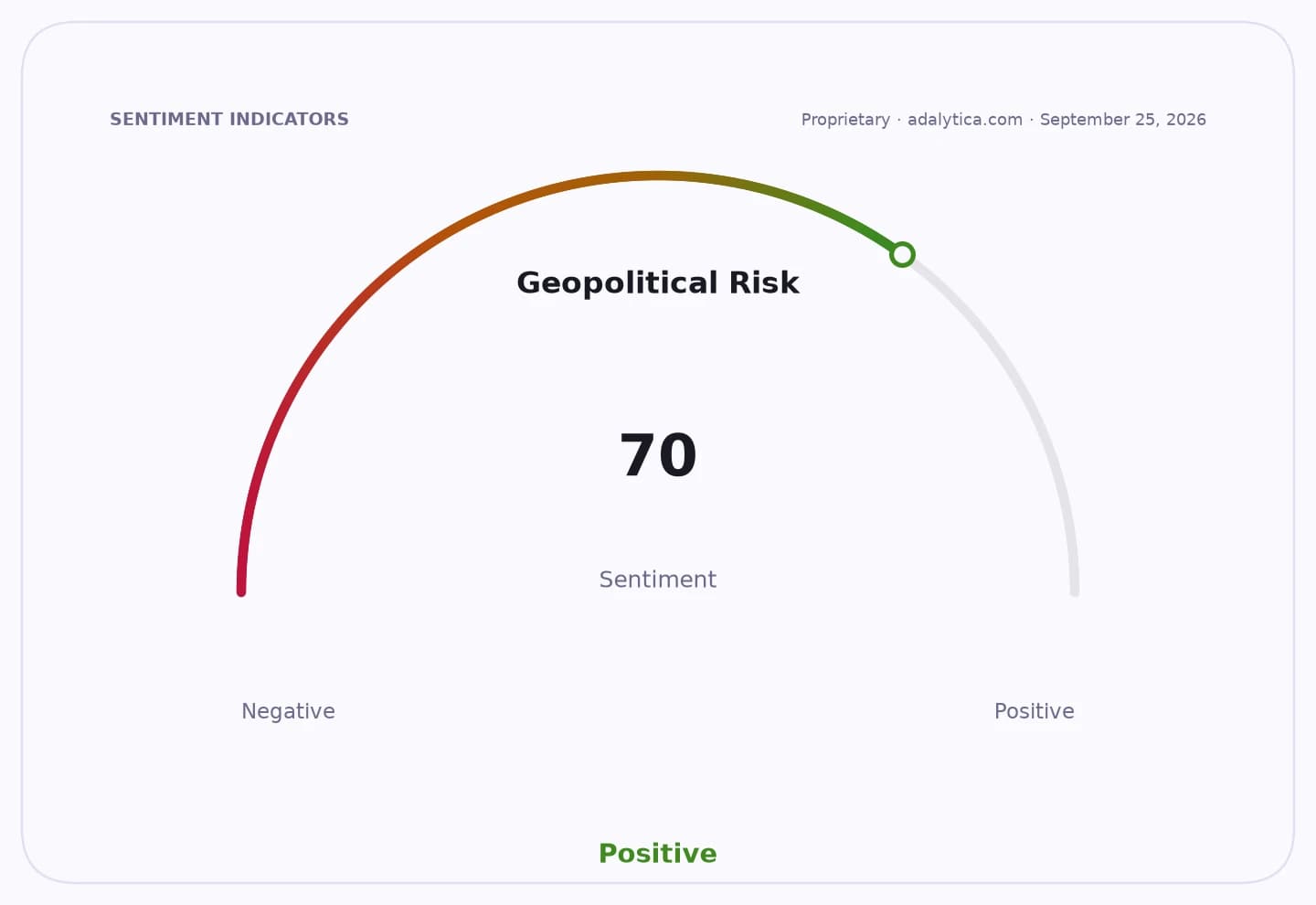
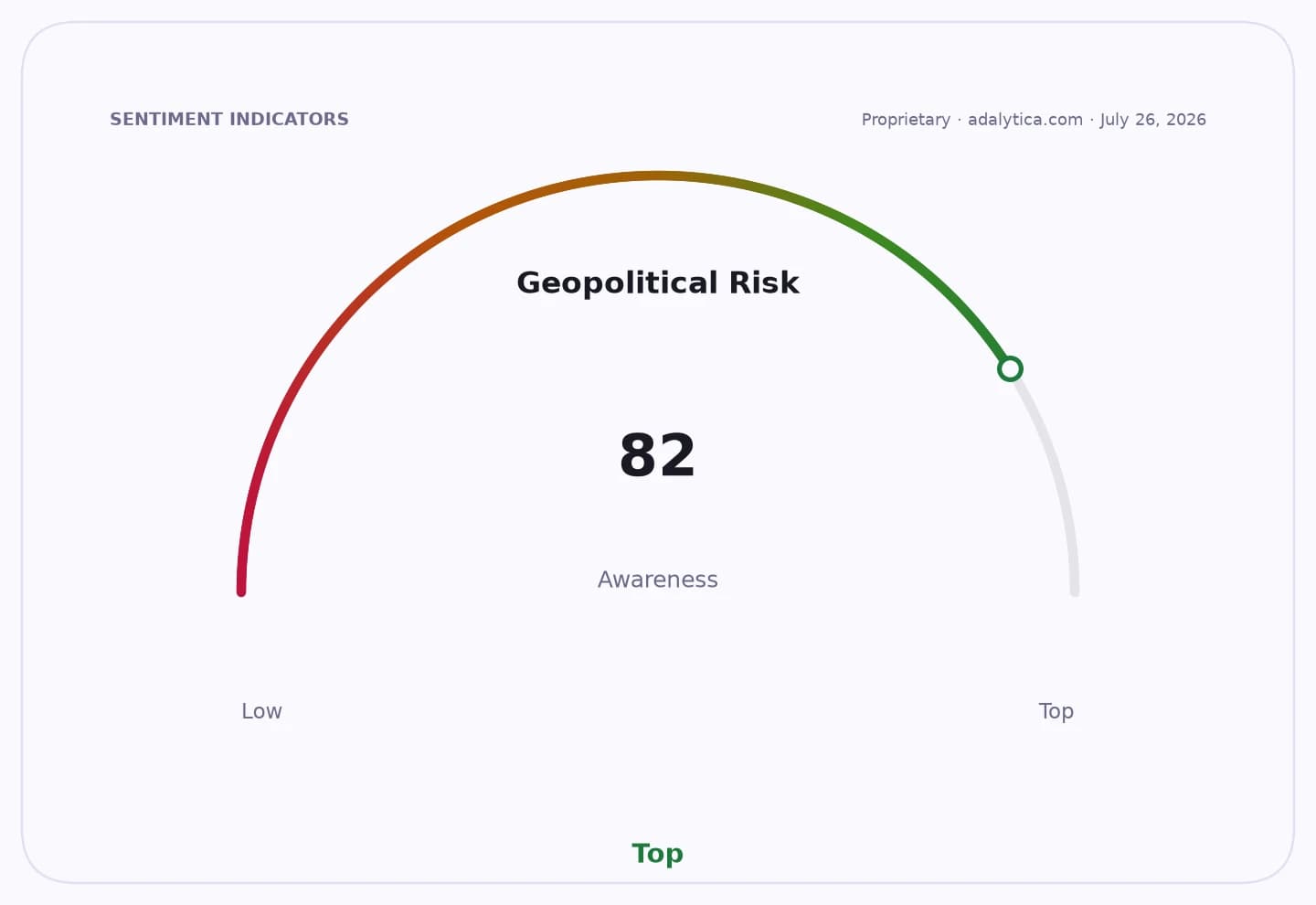
Sentiment IndicatorsⓘProprietary · adalytica.com · July 26, 2026
This is a snapshot — live sentiment, awareness and momentum for 130+ markets update continuously in the dashboard.Open AlphaPulse
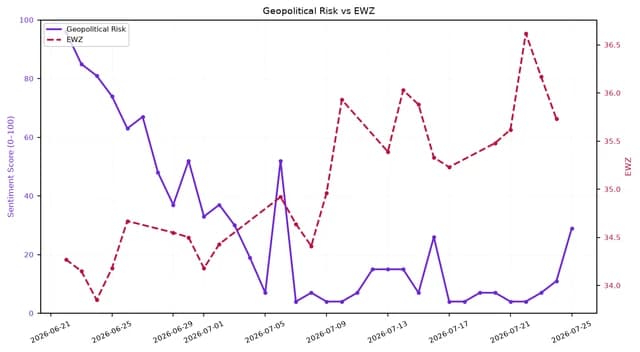
The market is already telling part of that story. The iShares MSCI Brazil ETF, EWZ, has pulled back after a sharp run-up, with its latest close at $35.73, below its 50-day moving average of $35.09 and off a recent high near the upper Bollinger Band. Momentum gauges have cooled from overheated levels, a sign that traders are no longer treating Brazil as a one-way bet. The leveraged BRZU fund, which magnifies moves in Brazilian stocks, has also retreated from its highs, underscoring how quickly sentiment can unwind when politics becomes the dominant driver.
That is where the economics get important. Brazil is not a small frontier story; it is a major emerging-market allocation for global portfolios, with an election that could influence state spending, privatization, tax policy and relations with the United States. If the campaign turns increasingly confrontational, foreign investors may demand a bigger risk premium for holding Brazilian assets. That can hit equities first, but the longer-lasting transmission is through the currency, borrowing costs and corporate capital spending.
The diplomatic standoff also raises the odds of broader uncertainty around trade and sanctions. Tariffs from Washington can pressure exporters and complicate supply chains, while political backing for one candidate invites pushback that can further cloud Brazil-U.S. relations. In a country with 158.7 million eligible voters and deep polarization, external interference is unlikely to calm the field. If anything, it could harden the narratives each side uses to mobilize support.
For investors, the key question is not who wins a news cycle, but whether the election produces a government that can stabilize institutions, keep fiscal discipline and support growth. Brazil has repeatedly offered long-term investors opportunity when political fear creates mispricing. That can still be true here — but only for those willing to think in years, not days, and able to tolerate volatility along the way.
Right now, the prudent move is not to chase the rally or panic on the pullback. Brazil remains a market worth watching, but the combination of election risk, diplomatic friction and shifting trade pressure means patience and diversification matter more than ever.
| Entity | Gains | Losses |
|---|---|---|
| Flávio Bolsonaro | ▲Campaign momentum | ▼Political legitimacy |
| Brazilian government | ▲Control over election process | ▼U.S. pressure |
| U.S. interventionists | ▲Leverage in diplomacy | ▼Access to officials |
| EWZ/BRZU longs | ▲Event-driven upside | ▼Short-term volatility |