Residential rents in Brazil are still climbing far faster than inflation, keeping pressure on households and reinforcing the appeal of rental property for landlords even as borrowing costs remain restrictive.
Brazil rents rise 9.13% in 12 months
The FipeZap Residential Rent Index rose 7.11% from January through September, almost twice the official IPCA inflation rate of 3.95% over the same period. In the 12 months through September, rents advanced 9.13%, compared with 4.58% for IPCA and 3.34% for the IGP-M, underscoring how housing costs continue to outpace the broader price level.
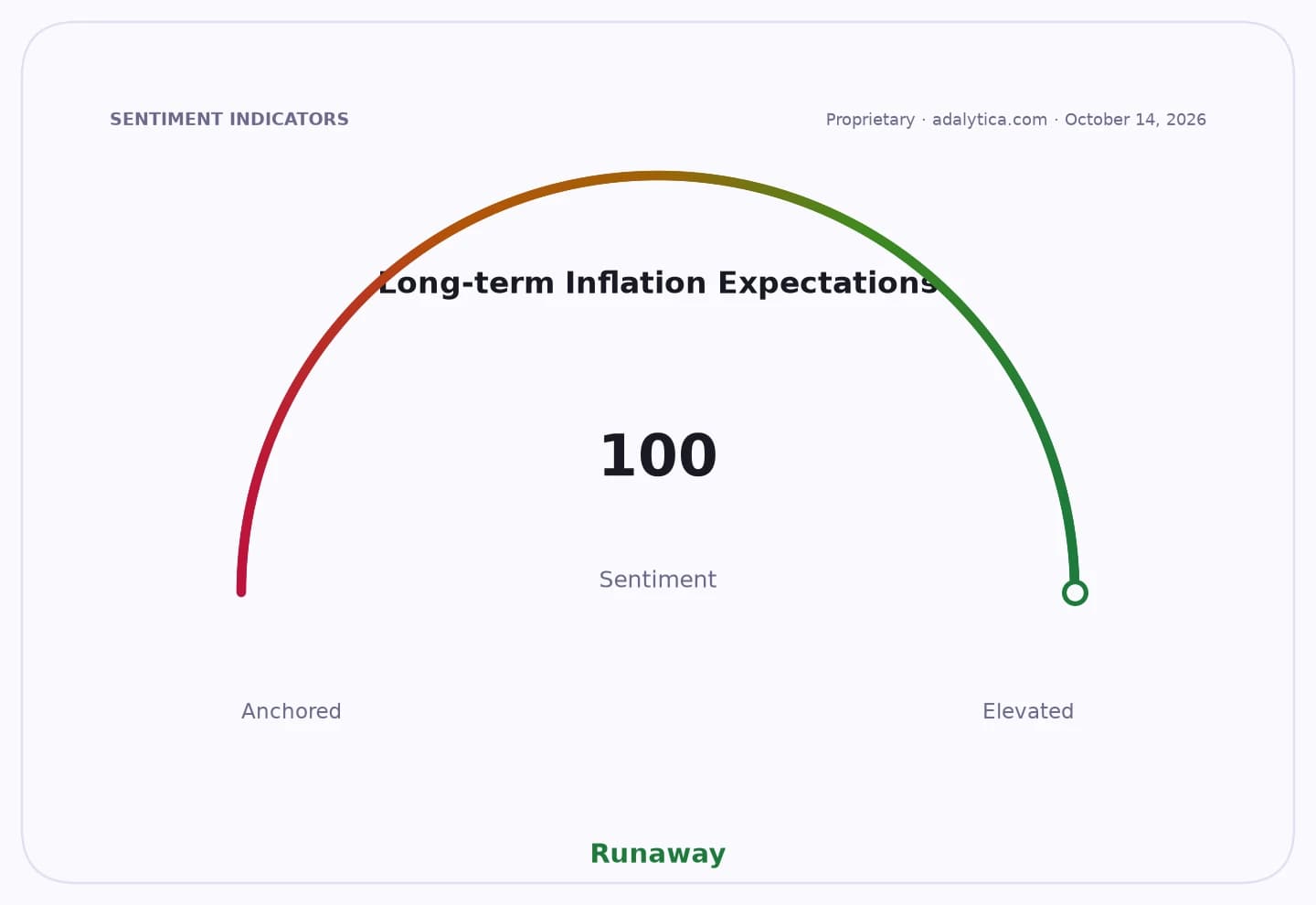
Sentiment IndicatorsⓘProprietary · adalytica.com · October 14, 2026
This is a snapshot — live sentiment, awareness and momentum for 130+ markets update continuously in the dashboard.Open AlphaPulse
That gap matters because rent is one of the most persistent expenses in household budgets and one of the clearest channels through which inflation hits consumer spending. Even as the pace of increases moderated in September to 0.52% from 0.55% in August and 1.04% in April, the market is still rising rather than cooling: 31 of the 36 cities tracked posted higher asking rents in the month.
Economically, the driver is a familiar one: constrained supply meeting demand that is being propped up by expensive mortgage financing. Mariangela Silva, economist at Grupo OLX, said higher rents and tighter credit conditions for home purchases may keep pressure on the rental market. When mortgages are harder to obtain, more households stay in renting longer, and that can keep asking prices elevated if supply does not keep up.
The slowdown in monthly gains suggests the market may be approaching some affordability limits, but not a broad reversal. Silva said the softer pace may reflect less room for landlords to push prices, tighter household payment capacity and local differences in supply and demand. For investors, that nuance is important: rent growth is still strong enough to support cash flow, but the rate of acceleration appears to be easing.
The divergence from home prices is also telling. FipeZap said asking rents continue to rise faster than residential sale prices, which were up 5.51% in the 12 months through September. That spread strengthens the case for remaining in the rental market rather than buying in some cities, but it also highlights how rental inflation can remain sticky even when the broader housing market is not booming.
São Paulo remains the most expensive rental market among the capitals, with an average asking price of R$65.78 per square meter in September. Recife followed at R$64.39, then Belém, Rio de Janeiro and Florianópolis. Outside the capitals, Barueri in São Paulo state had the highest average at R$71.96 per square meter.
Regional disparities are widening the investment story as well. Fortaleza posted the largest 12-month increase at 16.59%, followed by Natal at 16.51% and Aracaju at 15.52%. Rio de Janeiro rose 14.80% over the same period. Those gains point to markets where landlords still have pricing power, even if Brazil’s overall pace is easing.
For property owners, that has translated into improved yield. FipeZap estimated the average gross rental return at 6.13% a year in September, with one-bedroom units producing 6.74%. Recife, Cuiabá and Belém offered the highest estimated returns among capitals. But the yield measure does not capture maintenance, taxes, vacancy or management costs, which means the headline return can overstate the real economics for investors.
The broader narrative is one of a housing market in which rental inflation is still doing the heavy lifting while homebuying remains constrained by interest rates and financing conditions. For households, that means affordability remains under strain. For investors, it means rental assets can still benefit from pricing power, but the easy gains from post-pandemic rent catch-up may be fading as higher borrowing costs and budget limits begin to bite.
| Entity | Gains | Losses |
|---|---|---|
| Landlords | ▲Higher asking rents | ▼Tenant resistance |
| Tenants | ▲Slower monthly increases | ▼Higher housing costs |
| Rental property investors | ▲6.13% gross yield | ▼Rising financing pressure |
| Homebuyers | ▲Relative appeal of renting | ▼Mortgage affordability |