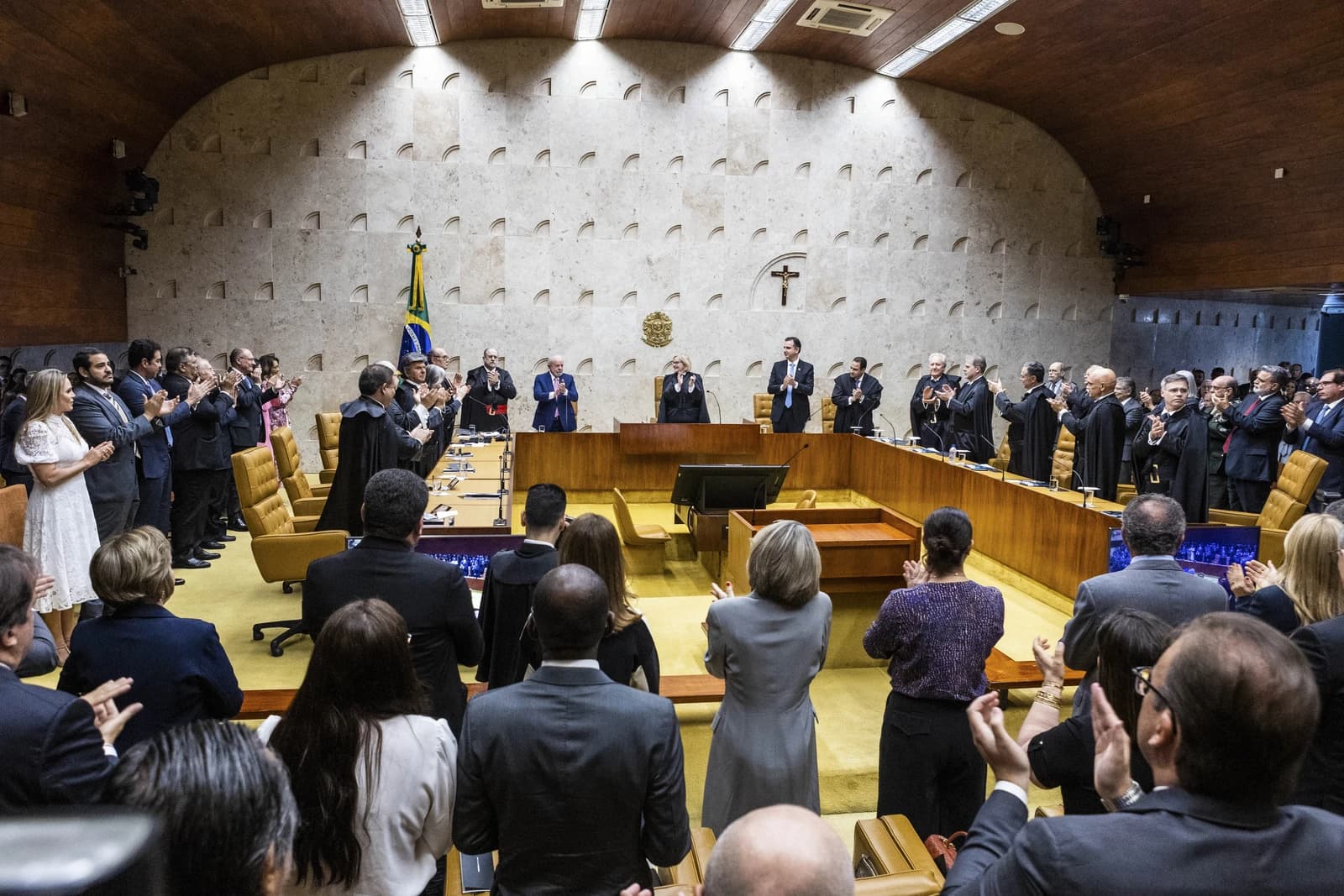
Brazil’s Supreme Federal Court crisis deepened after a Federal Police intelligence report suggested Justice André Mendonça may have tried to shift internal court alliances to make an amnesty for January 8 coup defendants more likely, a politically charged allegation that raises the temperature around the country’s legal order and the market risk premium on Brazilian assets.
Brazil Supreme Court Row Weighs on EWZ Risk Premium

The point is not the report’s evidentiary weakness — the PF itself said the material was only a working document with “low confidence” and no probative value. The point is that the document, now public by order of Justice Alexandre de Moraes, pushes a fragile institutional dispute into the open at a time when Brazil’s courts are already central to the pricing of political risk, fiscal credibility and the investability of domestic assets.
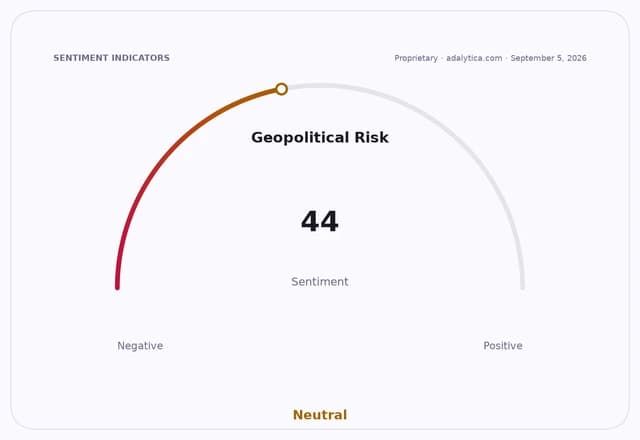
Sentiment IndicatorsⓘProprietary · adalytica.com · September 5, 2026
This is a snapshot — live sentiment, awareness and momentum for 130+ markets update continuously in the dashboard.Open AlphaPulse
For investors, that matters because institutional stability is the quiet anchor beneath everything from the real to local equities and sovereign spreads. When the country’s top court is accused of internal power plays tied to an amnesty for 8 January plotters, the market does not read it as a mere procedural fight. It reads it as another sign that Brazil’s governance premium remains structurally high, and that political outcomes can still be shaped by judicial brinkmanship as much as by elections or Congress.
Moraes said the intelligence package contained “strong indications” of irregularities by Mendonça in two separate probes — the INSS fraud case known as Operação Sem Desconto and Operação Compliance Zero, which involves Banco Master. He accused the justice of interfering in investigations, taking part in irregular plea-bargain discussions and steering targets for personal and political reasons, including against Moraes himself. Mendonça has become one of the most consequential figures in the court because any perceived shift in his alignment can alter the balance around sensitive criminal and constitutional cases.

That is why the 8 January amnesty angle is economically relevant. An amnesty campaign would not just be a symbolic fight over Brazil’s coup attempt. It would signal that the legal system may again be used as a battleground for rewriting accountability rules, potentially emboldening political actors who want to soften consequences for institutional rupture. For capital, that is a negative signal for policy predictability, especially if the issue bleeds into the 2026 election cycle and forces Congress, the presidency and the STF into a prolonged confrontation.
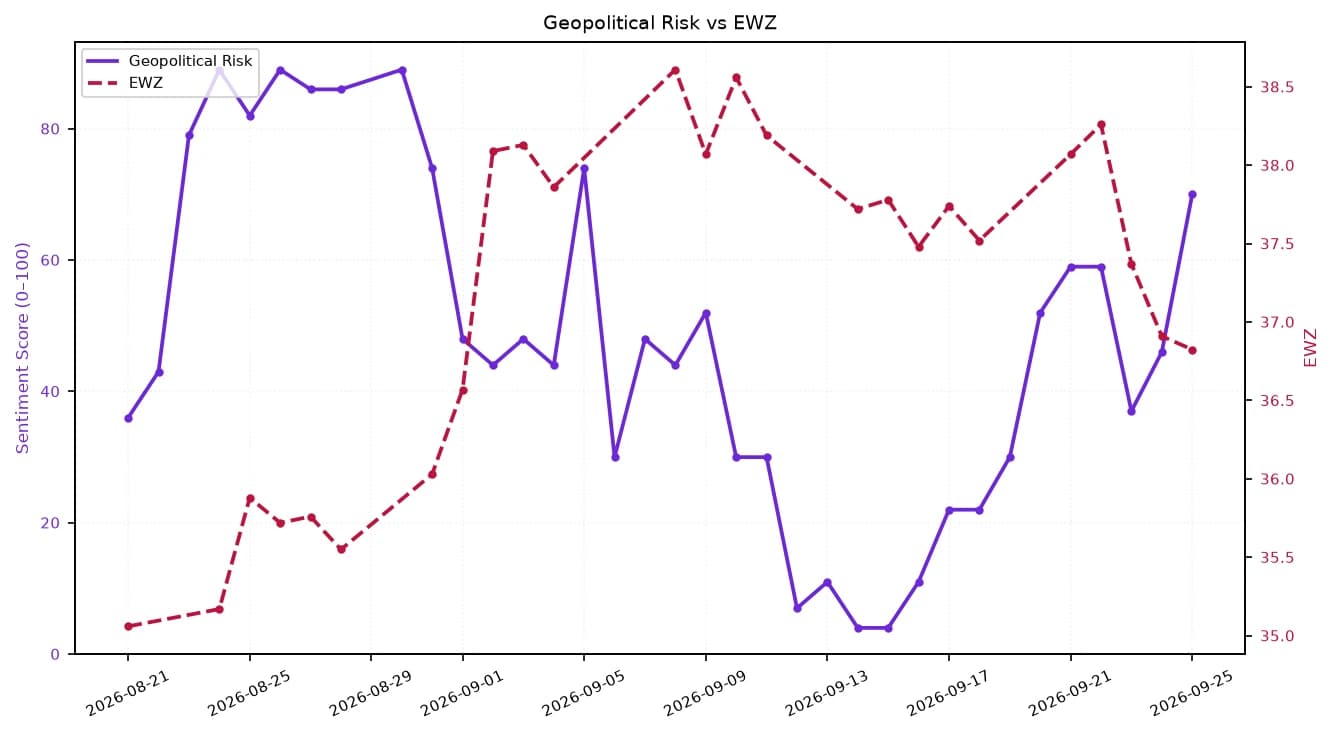
Brazilian markets have already been living with a noisy but orderly risk backdrop, and the latest technical picture in the iShares MSCI Brazil ETF, EWZ, shows how investors are balancing that tension. EWZ closed at $37.86 on Sept. 4, above both its 50-day moving average of $35.43 and 200-day average of $35.59, but the fund’s RSI reading of 82.7 points to stretched momentum after a sharp run higher. In other words, the market has been buying Brazil, but it is doing so with little margin for a renewed political shock.
That makes the message from the judiciary more important than the headline may first suggest. A court system under attack from within, or perceived as split along factional lines, can complicate everything from reform efforts to fiscal negotiation and corporate confidence. For foreign investors especially, Brazil’s appeal rests on scale, valuation and commodity exposure — but those positives can be undercut quickly if institutional controversy begins to dominate the narrative.
The losers in this episode are obvious: rule-of-law confidence, political consensus and investors hoping Brazil can stay in the “cheap but investable” bucket. The beneficiaries, if any, are the hardliners and political operators who profit from a more polarized system. My view is that this is exactly the kind of development the market tends to underprice until it suddenly matters. Brazil remains an opportunity, but the real trade here is not blind beta — it is selective exposure to the parts of the market that can thrive even when Brasília and the STF are once again in open conflict.
| Entity | Gains | Losses |
|---|---|---|
| Political hardliners | ▲stronger mobilization | ▼institutional trust |
| Bolsonaro-aligned camp | ▲amnesty narrative | ▼legal accountability |
| Brazilian courts | ▲broader public leverage | ▼credibility and cohesion |
| EWZ bulls | ▲near-term momentum | ▼risk premium if crisis worsens |