Brazil has won re-election to the United Nations Human Rights Council for the 2027-2029 term, taking 170 votes in New York and securing a sixth seat on the body at a time when global attention is shifting toward governance, social inclusion and multilateral cooperation.
Brazil Wins UN Human Rights Council Re-election
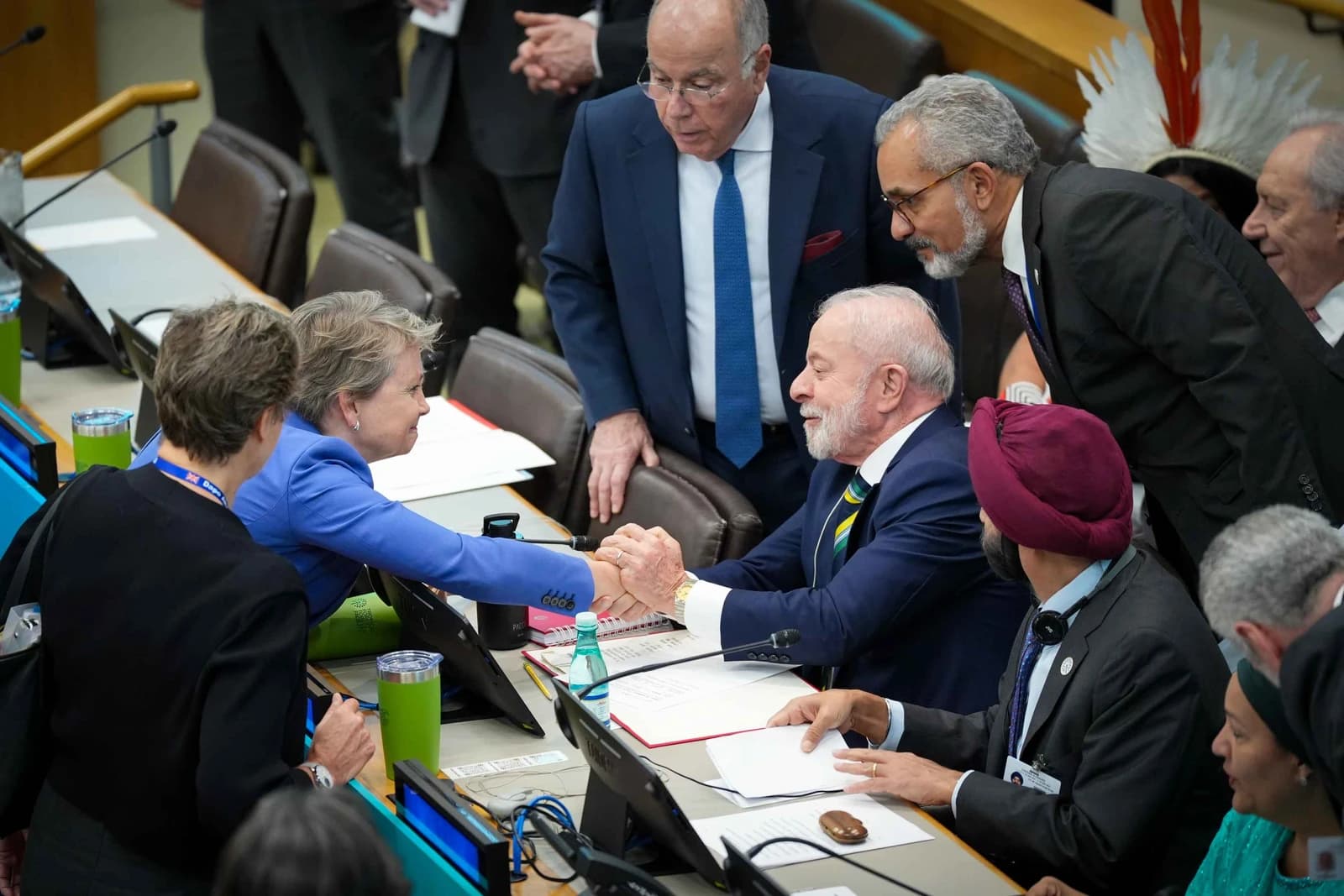
The result matters less for any immediate market reaction than for what it says about Brazil’s diplomatic standing. In a fragmented geopolitical environment, a strong vote count helps reinforce Brasília’s claim to be a relevant voice in international institutions, alongside Germany, Japan, Ukraine and Nigeria, which were also elected. For Brazil, the seat provides another platform to press themes its government has tied to the candidacy: human rights protection, reduction of inequality, support for vulnerable groups and sustainable development.
The Human Rights Council is the UN’s main intergovernmental forum on rights issues, with 47 member states. Membership does not change Brazil’s fiscal outlook or near-term growth trajectory, but it does carry soft-power value that can feed into trade, investment and diplomacy over time. Countries seen as constructive multilateral players often find it easier to build coalitions on climate, development financing and cross-border regulation — all issues with commercial consequences for exporters, commodity producers and companies with global supply chains.
For investors, the significance is mostly indirect. Brazil’s re-election is unlikely to move domestic assets on its own, but it adds to a broader narrative of a country seeking greater international influence while balancing social policy ambitions and development goals. That matters for how the market prices sovereign risk at the margin, particularly for long-term capital that looks beyond near-term rate and earnings cycles to institutional stability and policy credibility.
The timing also aligns with a wider push inside the UN system to broaden participation and emphasize human-rights accessibility, suggesting Brazil is positioning itself on the mainstream of the current multilateral agenda rather than at its margins. If Brasília uses the seat to deepen ties with Europe, Asia and African economies, the diplomatic payoff could extend beyond symbolism into areas such as investment promotion, sustainability finance and trade coordination.
Brazilian assets have already been trading with considerable momentum, and the iShares MSCI Brazil ETF, EWZ, has risen sharply in recent sessions, with the fund closing at $42.59 on Oct. 14, well above its 50-day and 200-day moving averages. Technical readings suggest the ETF is in an extended uptrend, though its relative strength index is elevated, which points to a market that may be vulnerable to consolidation even as the country’s external profile improves.
For now, the re-election is best understood as a credibility event: a diplomatic win that strengthens Brazil’s voice in global forums, but one whose investment impact will depend on whether the government converts multilateral stature into more durable progress on growth, governance and social cohesion.
| Entity | Gains | Losses |
|---|---|---|
| Brazil government | ▲Diplomatic prestige | ▼None immediately |
| Multilateral investors | ▲Policy credibility signal | ▼Short-term market catalyst |
| Human rights advocates | ▲Platform for agenda-setting | ▼Limited enforcement power |
| Rival bidders / non-elected states | ▲— | ▼Lost council seats |