Brazil is being pushed to withhold leave from the U.S. ambassador after Washington revoked the visa of Brazil’s envoy, deepening a diplomatic standoff that now threatens trade ties, regional cooperation and investor confidence in Latin America’s largest economy.
Brazil-U.S. row deepens as trade deficit hits $1.396 billion
The dispute matters because it raises the risk that political friction between two of the hemisphere’s biggest economies spills into commerce at a time when Brazil already runs a $1.396 billion trade deficit with the U.S. in the first half of the year. Any deterioration in the relationship could complicate negotiations over market access, tariffs and investment flows, while adding another layer of uncertainty for Brazilian companies with dollar funding needs and U.S. exposure.
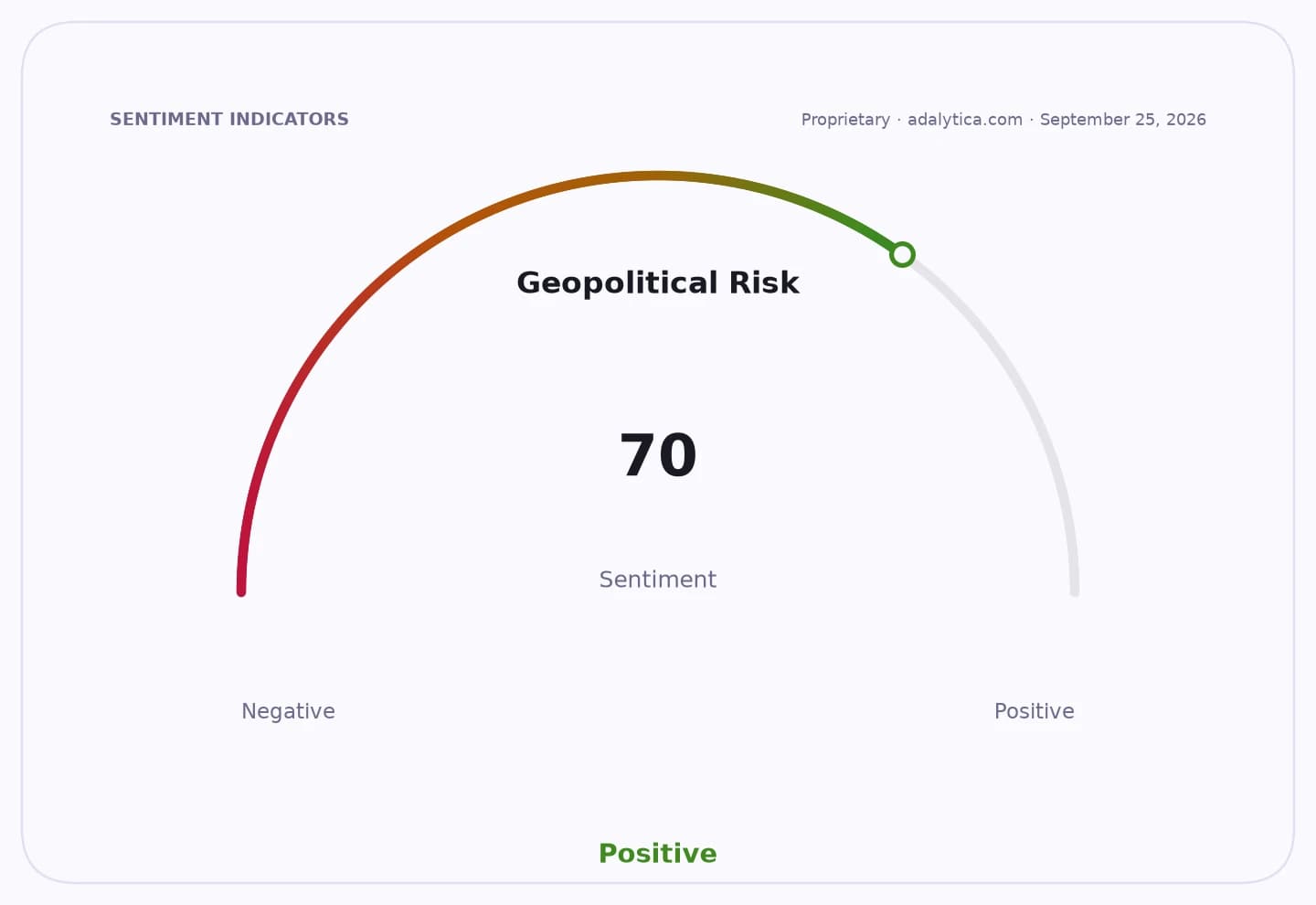
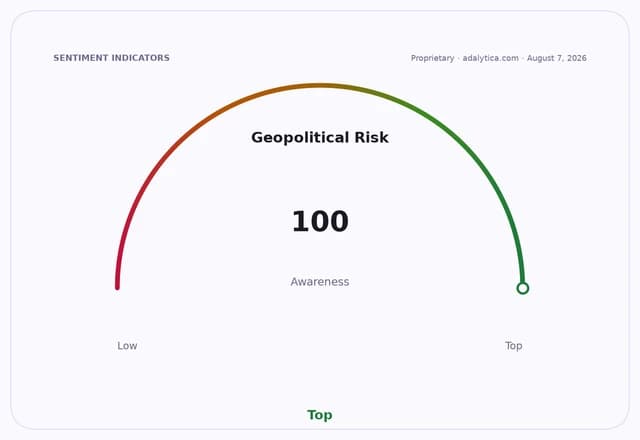
Sentiment IndicatorsⓘProprietary · adalytica.com · August 7, 2026
This is a snapshot — live sentiment, awareness and momentum for 130+ markets update continuously in the dashboard.Open AlphaPulse
Brazil has also asked Argentina to recall its ambassador, underscoring how quickly the row is widening beyond Washington and into a broader regional blowup. The tension comes as Brasília seeks to manage relations with Mercosur partners and China, a balance that becomes harder when diplomatic expulsions and visa revocations replace normal channels of communication.
For investors, the immediate risk is not a direct market shock but a slow-burn repricing of Brazilian political risk. Local assets such as the EWZ ETF and Petrobras shares have recently held up, with EWZ trading around $35.81 and Petrobras closing at $18.52, but the Brazil risk backdrop is clearly unsettled, with Adalytica’s Global Stability Sentiment at 86 in “Extreme Greed” and awareness at 100, signaling heightened attention to geopolitical stress.
The standoff also lands as U.S. Treasury yields sit near 4.61% on the 10-year note and 4.17% on the 2-year, leaving global capital sensitive to any escalation that could lift risk premia or strengthen the dollar. If neither side offers a face-saving gesture, the diplomatic freeze could harden into a wider policy dispute with implications for Brazilian exporters, multinational lenders and portfolio flows into the country.
| Entity | Gains | Losses |
|---|---|---|
| Brazil’s opposition to U.S. pressure | ▲Political leverage | ▼Diplomatic access |
| U.S. administration | ▲Hard-line posture | ▼Regional goodwill |
| Brazilian exporters | ▲None | ▼Trade certainty |
| EWZ investors | ▲Short-term stability | ▼Policy-risk discount |