The United States has agreed to enter consultations with Brazil at the World Trade Organization over tariffs imposed in recent years, a move that may ease one of the more persistent trade frictions in the Americas but leaves the underlying duties in place for now.
Brazil, U.S. WTO tariff consultations over Trump-era duties
For investors, the significance is less about an immediate policy reversal than about the possibility of a managed de-escalation. WTO consultations are the first formal step in a dispute and can set up months of negotiation before any ruling, meaning the tariffs that have weighed on Brazilian exporters and complicated supply chains remain a live economic cost even as both sides talk.
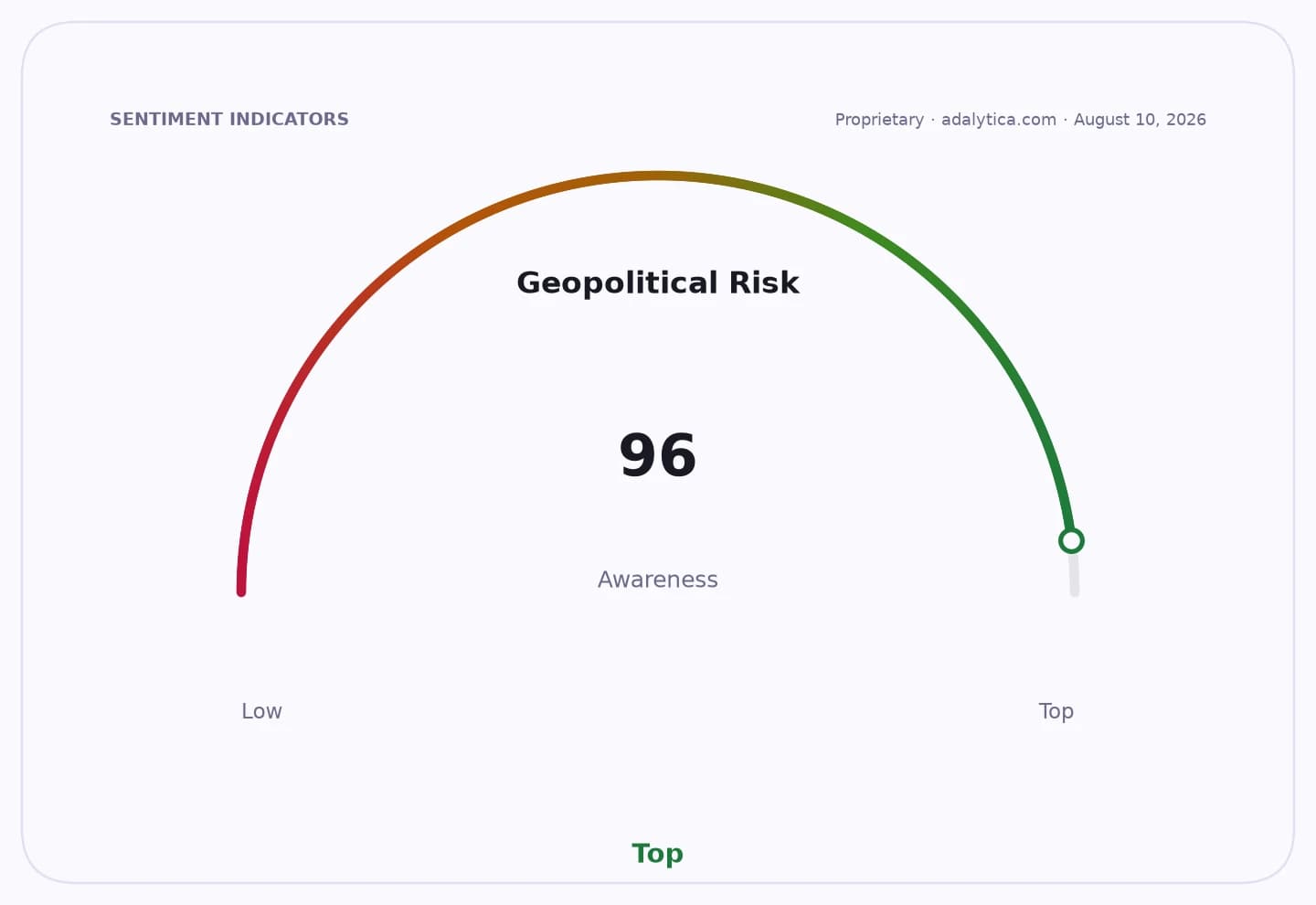
Sentiment IndicatorsⓘProprietary · adalytica.com · August 10, 2026
This is a snapshot — live sentiment, awareness and momentum for 130+ markets update continuously in the dashboard.Open AlphaPulse
Brazil has pressed the case against levies that date back to the Trump era, arguing they distort trade and push exporters to reroute shipments. That rerouting has broader implications: when Brazil is forced to diversify away from the U.S., commodity flows shift toward Asia and other buyers, affecting freight markets, pricing power and margins across industries tied to agriculture, metals and energy.
The market backdrop is already one of elevated trade anxiety. Global-stability gauges remain near extreme greed readings, while the U.S. dollar has strengthened sharply in recent sessions, reinforcing the pressure on emerging-market exporters that invoice or compete in dollars. In Brazil, the EWZ exchange-traded fund has held around $35, but the move has been choppy and the fund is still hovering near its 50-day moving average, suggesting investors are not yet pricing a clean resolution.
Brazilian policymakers have favored negotiation over retaliation, in part to protect export revenues and investment flows. That stance matters because a tit-for-tat response would risk widening the dispute beyond the current tariff line and could spill into sectors with direct exposure to U.S. demand. By keeping the case at the WTO, Brasília is trying to preserve optionality while avoiding a broader shock to a trade relationship that matters to farmers, miners and industrial exporters.
The economic stakes extend beyond Brazil. U.S. tariffs raise costs for importers and can reduce the competitiveness of Brazilian goods in one of their key markets, while also encouraging substitution by other suppliers. The uncertainty can be just as damaging as the duty itself: firms delay contracts, logistics groups rework routes and commodity traders price in policy risk that can distort near-term flows.
For investors, the question is whether consultations become a template for broader tariff normalization or just another procedural step in a dispute that drags on. A constructive outcome would likely support Brazilian assets, ease pressure on exporters and help stabilize trade-sensitive sectors. A failed process would keep a tariff overhang in place, reinforcing the case for diversification away from U.S.-dependent supply chains and keeping emerging-market risk premia elevated.
| Entity | Gains | Losses |
|---|---|---|
| Brazil exporters | ▲Possible tariff relief | ▼Ongoing U.S. duty burden |
| U.S. importers | ▲Lower dispute risk if talks advance | ▼Higher sourcing costs in the interim |
| Brazilian government | ▲Negotiating leverage | ▼Limited room for retaliation |
| Rival suppliers in Asia | ▲More redirected trade flows | ▼Brazil-U.S. normalization would reduce gains |