Brent crude’s move back above $83 a barrel is jolting energy markets, lifting oil-linked equities and giving Europe’s stock indexes a fresh tailwind just as investors were hoping for calmer summer trading.
Brent crude tops $83 as supply fears lift energy stocks

The immediate significance is not the headline price alone, but what is driving it: renewed supply anxiety after the Hormuz Agreement and a Houthi attack on a Saudi oil tanker. That combination has pushed crude higher by more than 1% and reminded markets how quickly geopolitical risk can reprice energy, transportation and inflation expectations.
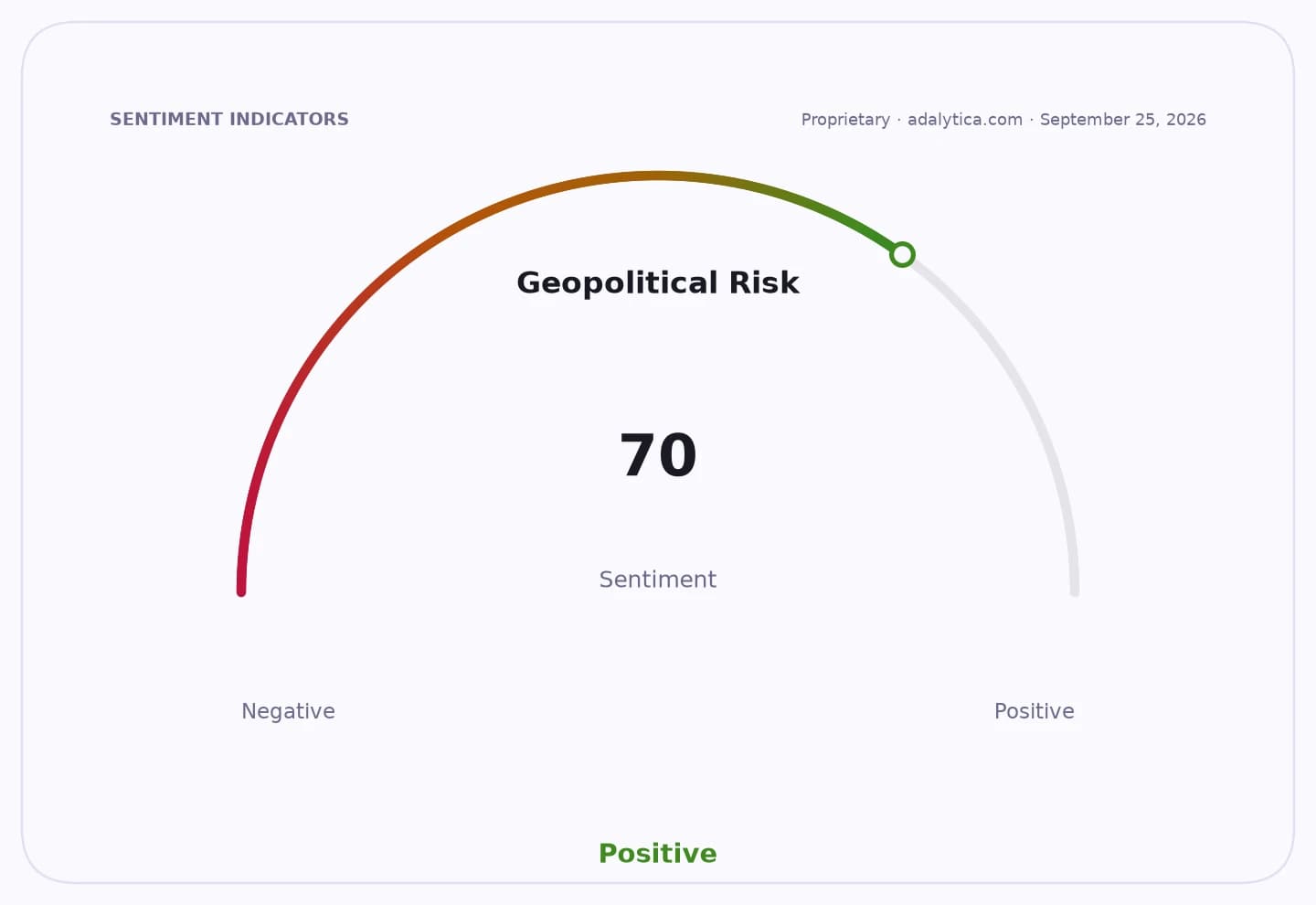
Sentiment IndicatorsⓘProprietary · adalytica.com · August 7, 2026
This is a snapshot — live sentiment, awareness and momentum for 130+ markets update continuously in the dashboard.Open AlphaPulse
For investors, this is the kind of move that can reset leadership across asset classes. Higher crude supports integrated producers, oil services and tanker names while squeezing refiners, airlines and consumer-sensitive sectors through higher input costs. It also complicates the policy outlook if energy inflation proves sticky, especially in Europe, where the region’s equity indexes are already responding with gains in the energy-heavy parts of the market.
The trading backdrop suggests the market is still underestimating how asymmetric the setup has become. Brent’s return to the low-80s comes after a period of weakness that had left energy positioning vulnerable to a sharp snapback. USO’s Adalytica trade signal shows sentiment at 77, labeled Greed, while the broader S&P 500 gauge is in Extreme Greed and the dollar is flashing Extreme Greed as well — a combination that often accompanies crowded positioning and rapid rotation when geopolitics intervene.
DCOILWTICO — macro contextadalytica.com
Explore this data interactively — full history, time series and cross-market comparisons.Open AlphaPulse
The rally is also showing up in exchange-traded proxies for the sector. XLE, the Energy Select Sector SPDR Fund, is trading near 58.16 after a strong run from earlier in the year, while Brent-linked BNO has surged far faster, reflecting the leverage that oil funds and producers have to rising crude. UNG, by contrast, remains weak, underscoring that this is an oil-driven inflation impulse rather than a broad energy rally.
That matters because the next leg is likely to be driven less by demand and more by risk premium. If shipping lanes remain tense or supply disruptions deepen, Brent can stay elevated even without a major demand shock. In that scenario, the market’s winners are the obvious cash-generating oil producers and energy infrastructure names, while the losers are the sectors that eat fuel costs daily and the consumers who eventually absorb them.
For investors, the thesis is straightforward: geopolitical oil spikes are rarely clean one-day events. They tend to create multi-week opportunities in energy equities, especially for those positioned before the market fully prices in persistent supply risk. If Brent holds above $80 and Europe keeps treating oil strength as an earnings tailwind, the trade is to stay overweight energy, not chase the index after the move.
| Entity | Gains | Losses |
|---|---|---|
| Energy majors | ▲Higher cash flow | ▼Less pressure on margins |
| European stock indexes | ▲Energy-sector lift | ▼Higher inflation risk |
| Airlines and refiners | ▲— | ▼Higher fuel costs |
| Oil ETF proxies like BNO/XLE | ▲Momentum trade | ▼Late longs if oil reverses |