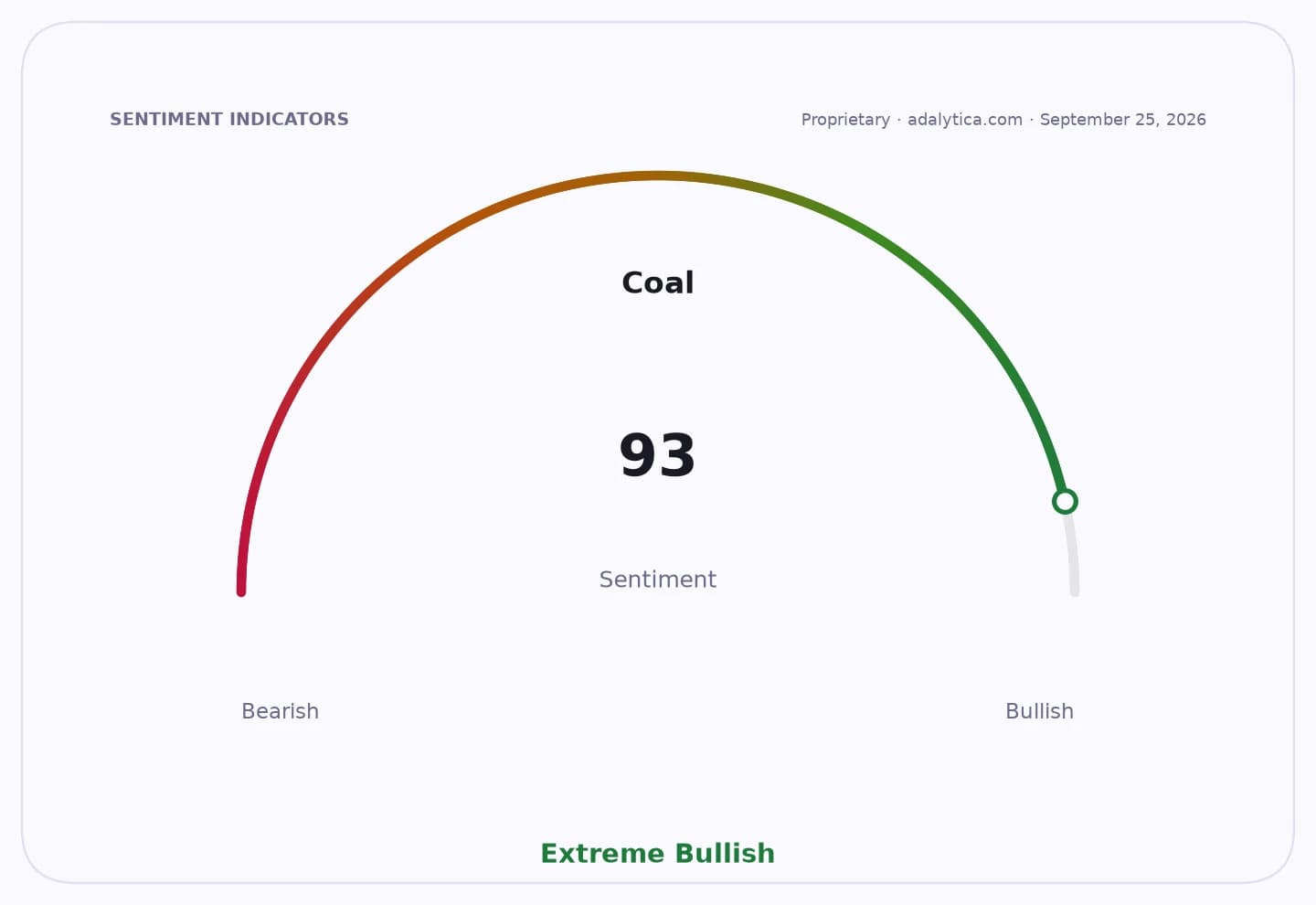
Brent and WTI are climbing again, with traders pricing in another round of supply risk after months of sharp swings that have kept crude near the center of the inflation and energy-equity trade.
Brent and WTI rise; WTI at $77.96, Brent at $83.47
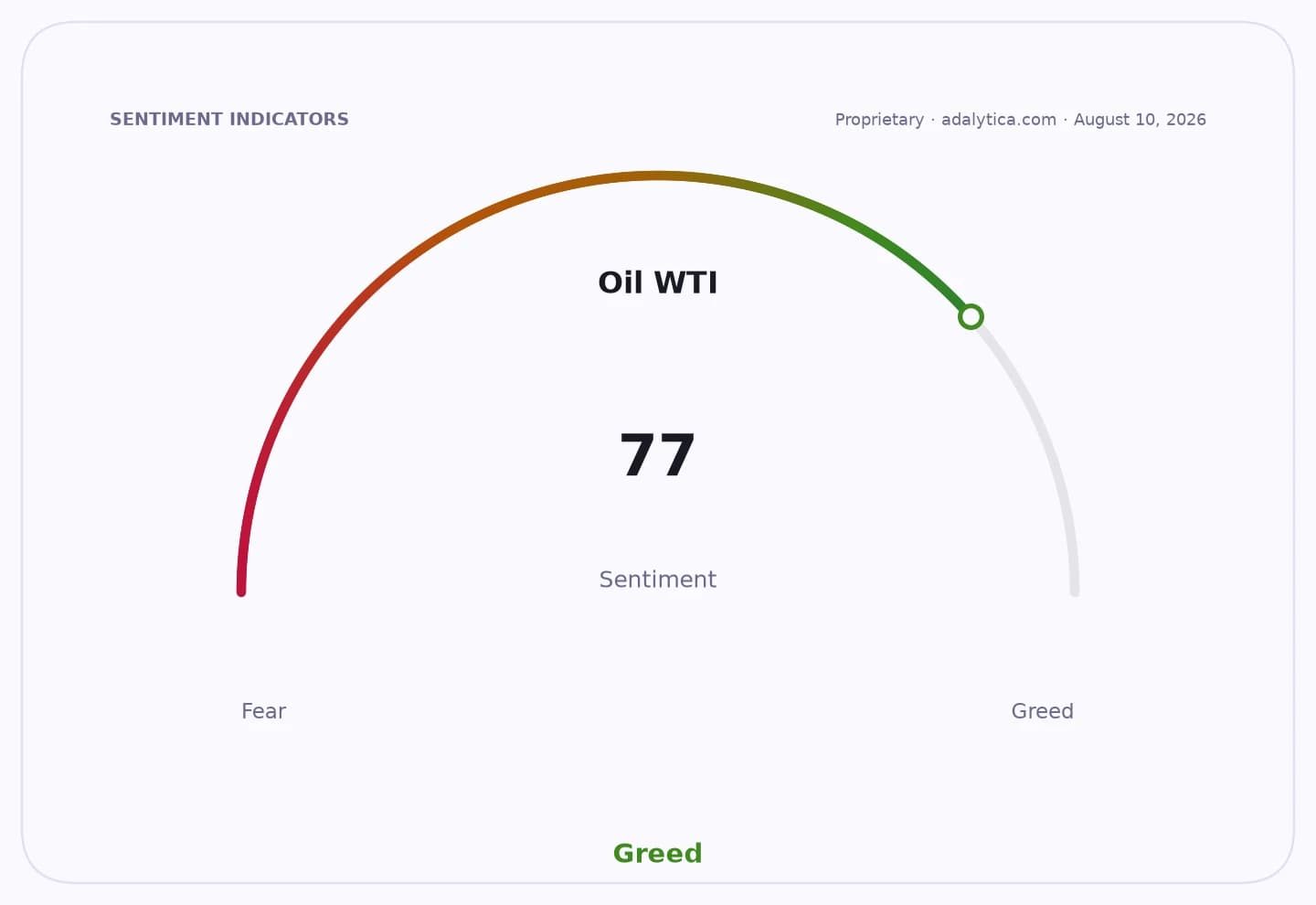
West Texas Intermediate was last at $77.96 a barrel on Aug. 10, while the WTI front-month forecast for Aug. 4 pointed to $84.71, after a volatile run that saw it surge above $100 earlier this year before sliding and rebounding. Brent finished at $83.47 on Aug. 10, compared with a forecasted $83.42 level in the market context, underscoring how closely the global benchmark is tracking renewed bullish positioning.
Sentiment IndicatorsⓘProprietary · adalytica.com · August 10, 2026
This is a snapshot — live sentiment, awareness and momentum for 130+ markets update continuously in the dashboard.Open AlphaPulse
The move matters because higher crude feeds directly into transport, plastics and broader input costs just as U.S. inflation remains elevated. The CPI forecast for July points to a 0.89% monthly increase, leaving the index at 335.512, a reminder that energy can still make the inflation picture less comfortable for the Federal Reserve and for consumers already facing sticky prices.
For investors, the significance is immediate. Energy shares have been supported by the rise in crude, with the XLE energy ETF closing at $57.50 on Aug. 7, above its 50-day moving average of $56.48 and well above its 200-day moving average of $52.43, though momentum has cooled recently as RSI readings slipped to 47.7. WTI-linked USO still shows a strong Adalytica trade signal at 77, labeled “Greed,” with awareness at 56, reflecting how quickly oil sentiment has swung back bullish.

The rally is also showing up in producer economics. Chevron’s latest filing said Brent averaged $92 a barrel in the first half of 2026 versus $72 a year earlier, while ConocoPhillips said second-quarter Brent averaged $104.52 and WTI $92.79, both sharply above 2025 levels. That kind of pricing support tends to lift cash flow, buybacks and capex plans across the sector, while pressuring refiners and consumers if crude stays elevated.
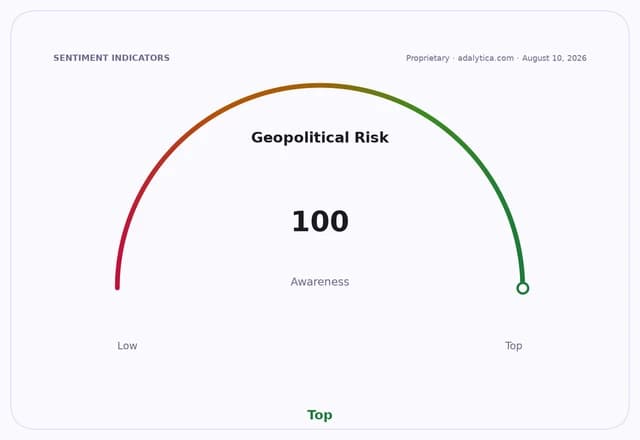
The backdrop is geopolitical risk, not a clean demand recovery. Market context points to disruption concerns around key shipping lanes such as the Strait of Hormuz, while Adalytica’s Global Stability Sentiment sits at 100, or “Extreme Greed,” suggesting traders see elevated tension and a higher probability of supply shock.
For now, the energy trade remains tied to whether the latest Brent and WTI strength becomes a sustained move above recent technical ranges or fades as supply normalizes. The next catalysts are fresh inventory data, any escalation in Middle East tensions and the next run of company guidance from oil majors and services firms.
| Entity | Gains | Losses |
|---|---|---|
| Oil producers | ▲Higher realized prices | ▼Price-sensitive demand |
| Energy ETF holders | ▲Rising crude exposure | ▼Cooling momentum |
| Consumers | ▲— | ▼Higher fuel and input costs |
| Refiners and transport users | ▲— | ▼Squeezed margins |