Britain’s sanctions on Iran Air and Islamic Republic of Iran Shipping Lines strike at the logistics network linking Tehran to Moscow, tightening pressure on the supply chain that Western governments say has helped move weapons into Russia’s war effort.
Britain sanctions Iran Air and shipping line
The move matters because it targets the arteries of cross-border military support, not just the end users. By going after an airline and a state shipping line, London is trying to raise the cost and friction of moving sensitive cargo, complicating Iran’s ability to sustain the flow of materiel that has become part of Russia’s war economy. For investors, the signal is broader than two blacklisted names: sanctions risk is deepening across the transport, insurance, ports and trade-finance channels that sit around sanctioned states.
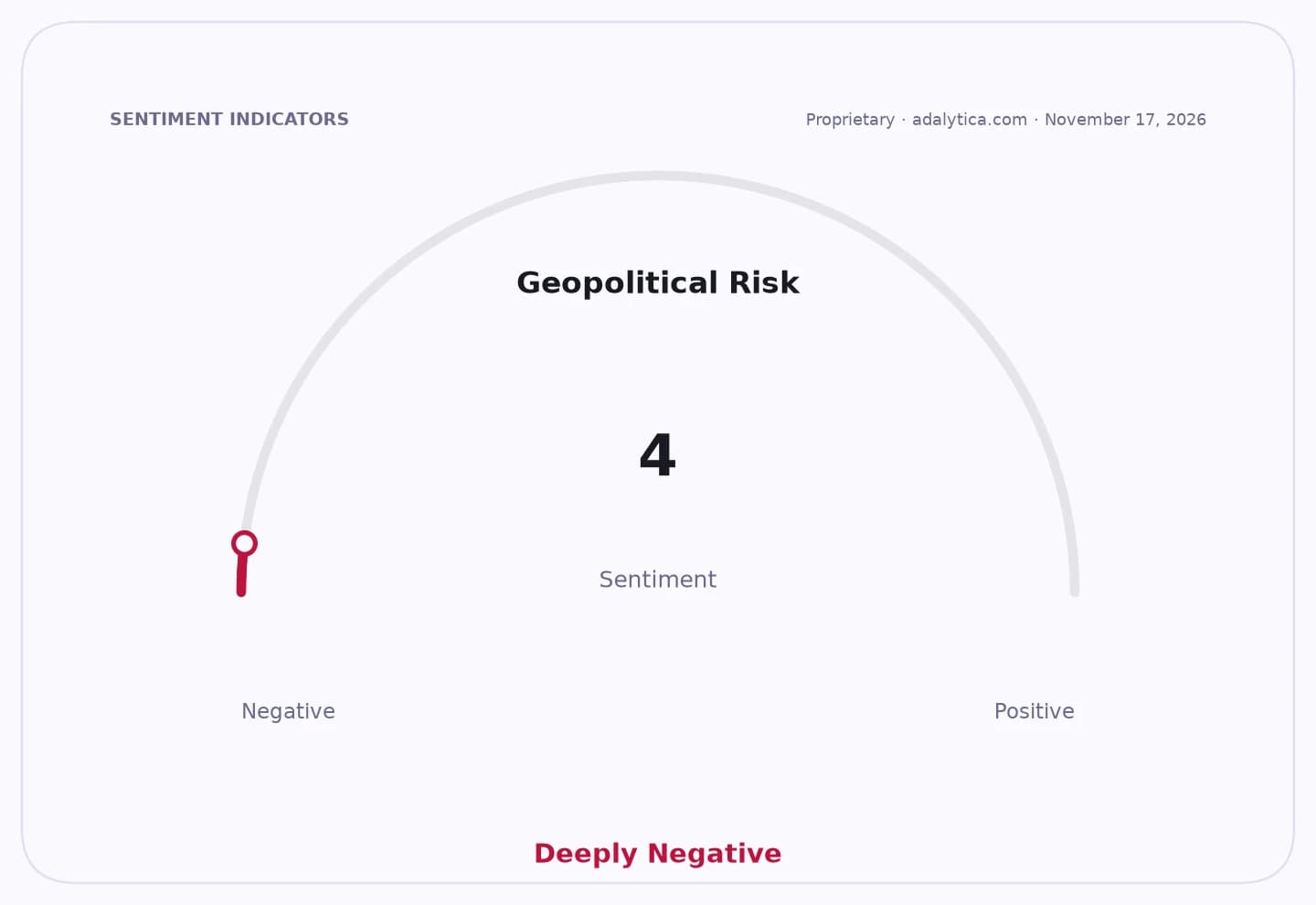
Sentiment Indicators
The policy also reinforces a more aggressive Western posture toward Iran’s external revenue and logistics networks. That comes as the US continues to tighten restrictions on Iran’s oil-income machinery, including sanctions on individuals and companies tied to crude sales and revenue management. Taken together, the measures show that allied governments are widening the pressure campaign from energy exports into the infrastructure that monetizes and moves sanctioned trade.
Markets should care because supply-chain sanctions can have second-order effects beyond the targeted entities. Freight routes, vessel coverage, insurance availability and counterparties all become more expensive and harder to clear through compliant channels. That is where the real economic bite lies: sanctions do not need to stop all trade to reduce its efficiency, squeeze margins and force rerouting through slower, pricier and more opaque paths.
Geopolitical Risk — 30-day sentimentadalytica.com
Explore this data interactively — full history, time series and cross-market comparisons.
The investment angle is that geopolitical fragmentation is becoming a durable market theme, not a one-off headline. Defense, surveillance, maritime security, compliance software and sanctions-screening firms are likely to keep seeing demand as governments lean harder on enforcement. At the same time, any business exposed to sanctioned trade corridors, emerging-market logistics or commodity shipping through high-risk jurisdictions faces a rising compliance premium.
For the broader market, the message is clear: the West is still willing to weaponize access to the financial and transport system to constrain adversaries. That should keep geopolitical risk elevated, support defense-related spending, and preserve volatility in energy, shipping and industrial supply chains as the sanctions map expands.
| Entity | Gains | Losses |
|---|---|---|
| UK / Western allies | ▲Stronger enforcement leverage | ▼Higher diplomatic friction |
| Defense and sanctions-tech firms | ▲More demand | ▼— |
| Iran Air / IRISL | ▲— | ▼Asset freezes, trade disruption |
| Russia-linked supply chains | ▲— | ▼Higher shipping and compliance costs |