Ukraine’s war economy is entering a more dangerous and more economically consequential phase: Moscow and Kiev are again striking each other’s critical transport links, while the European Union is tightening the screws on Russia with 140 new sanctions and fresh funding for Ukraine.
EU Sanctions, Ukraine Strikes Hit Russia Routes
That combination matters because it shows the conflict is no longer just a battlefield contest; it is an effort to constrain the physical logistics, energy revenues and financial channels that sustain both armies. The result is a deeper squeeze on Russian trade routes, a higher premium on energy and shipping disruption, and a stronger bid for defense, cyber and infrastructure spending across Europe.
Sentiment Indicators
The most immediate flashpoint is infrastructure. Russian strikes hit two key bridges in Kiev, disrupting traffic and, according to city officials, causing interruptions to heating and water in parts of the capital. Ukraine responded by striking the Crimean bridge again, with Russian-installed authorities saying traffic was suspended and local reports suggesting one of the symbolic arches collapsed. Whether or not the damage proves long-lasting, the message is clear: each side is targeting the arteries that move troops, fuel and commerce.
For investors, that is not just a war headline. It is a reminder that the conflict continues to add a geopolitical risk premium to Europe, keep pressure on industrial supply chains in the Black Sea region and reinforce the case for energy security. Attacks on Russian refineries and transport infrastructure also support the view that Moscow’s war financing is under steady pressure, especially as the EU targets refiners, banks, ecommerce platforms and entities linked to the shadow fleet that helps move Russian oil.
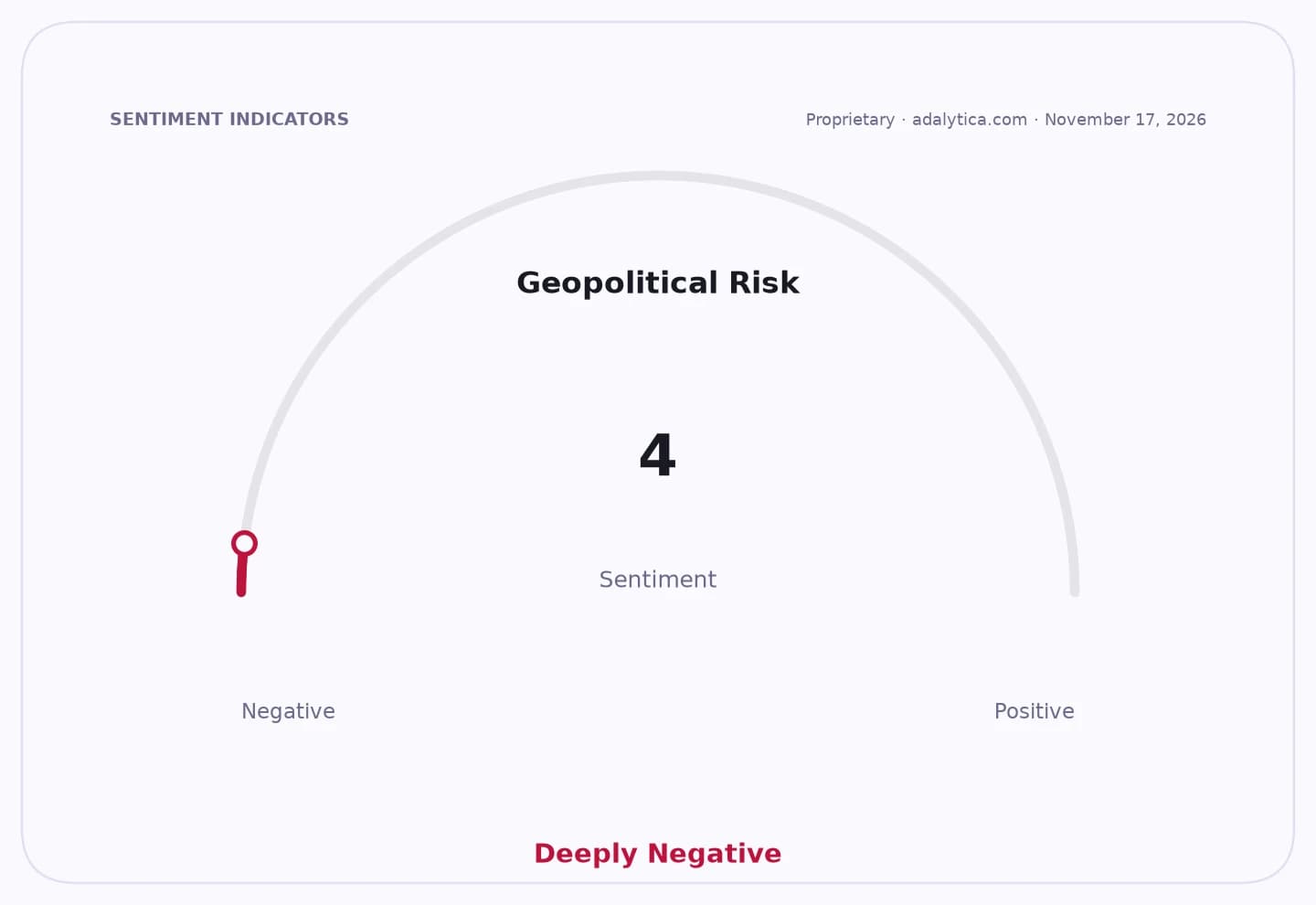
Geopolitical Risk — 30-day sentimentadalytica.com
Explore this data interactively — full history, time series and cross-market comparisons.
The sanctions package broadens that pressure. Brussels said the new measures cover Russia-linked firms in the Gulf and East Asia, along with cyber and disinformation actors. That widens the net beyond traditional banks and oil names and raises the cost of doing business for counterparties that still help Russia move goods, money and fuel. The EU’s separate approval of an €8 billion payment to Ukraine under its reconstruction and reform plan underscores the other side of the trade: Europe is not only punishing Russia, it is financing Ukraine’s survival and long-term alignment with the bloc.
Markets are already reading the escalation through the lens of scarcity and security. The USO oil fund remains well above its long-term trend even after recent pullbacks, while gold’s recent volatility still reflects a world where geopolitical shocks can reprice risk fast. Adalytica’s Global Stability Sentiment sits at “Extreme Fear,” a sign that the market is not pricing a stable ceasefire path. That fear is likely to keep capital flowing toward energy security, defense contractors, cyber hardening, logistics resilience and European infrastructure beneficiaries.
The bigger narrative is that peace talks remain fragile while the war keeps widening into finance, energy and infrastructure. Negotiations are still stalled, Washington is shuttling between Kiev, Moscow and European capitals, and the EU is preparing yet another sanctions round. Until there is a real political break, the investable theme is not de-escalation; it is resilience. I believe the market underestimates how long Europe will need to spend on defense, rebuild supply chains and police energy flows, and that keeps the multi-year opportunity in defense, infrastructure and security names firmly in play.
| Entity | Gains | Losses |
|---|---|---|
| EU defense and infrastructure contractors | ▲Higher spending tailwind | ▼Higher geopolitical risk |
| Ukraine reconstruction and utilities | ▲Fresh funding support | ▼Ongoing infrastructure damage |
| Russian energy exporters and shippers | ▲— | ▼Sanctions pressure, route disruption |
| Gold, oil and defense ETFs | ▲Risk-premium demand | ▼Peace-trade unwind risk |