Russia’s return to a 4% inflation rate may take a year longer than the government hopes, a delay that would keep borrowing costs elevated and slow the country’s economy well into the next decade.
Russia Inflation Target Seen Delayed to 2028

The International Monetary Fund now expects Russia to reach the Bank of Russia’s inflation target only in 2028, compared with the government’s 2027 goal, according to calculations reviewed by Izvestia. That difference is not just a forecasting squabble. It means the central bank could be forced to keep interest rates restrictive for longer, making credit more expensive for households, raising the cost of expansion for businesses and leaving growth dependent on tighter fiscal discipline and a stronger ruble.
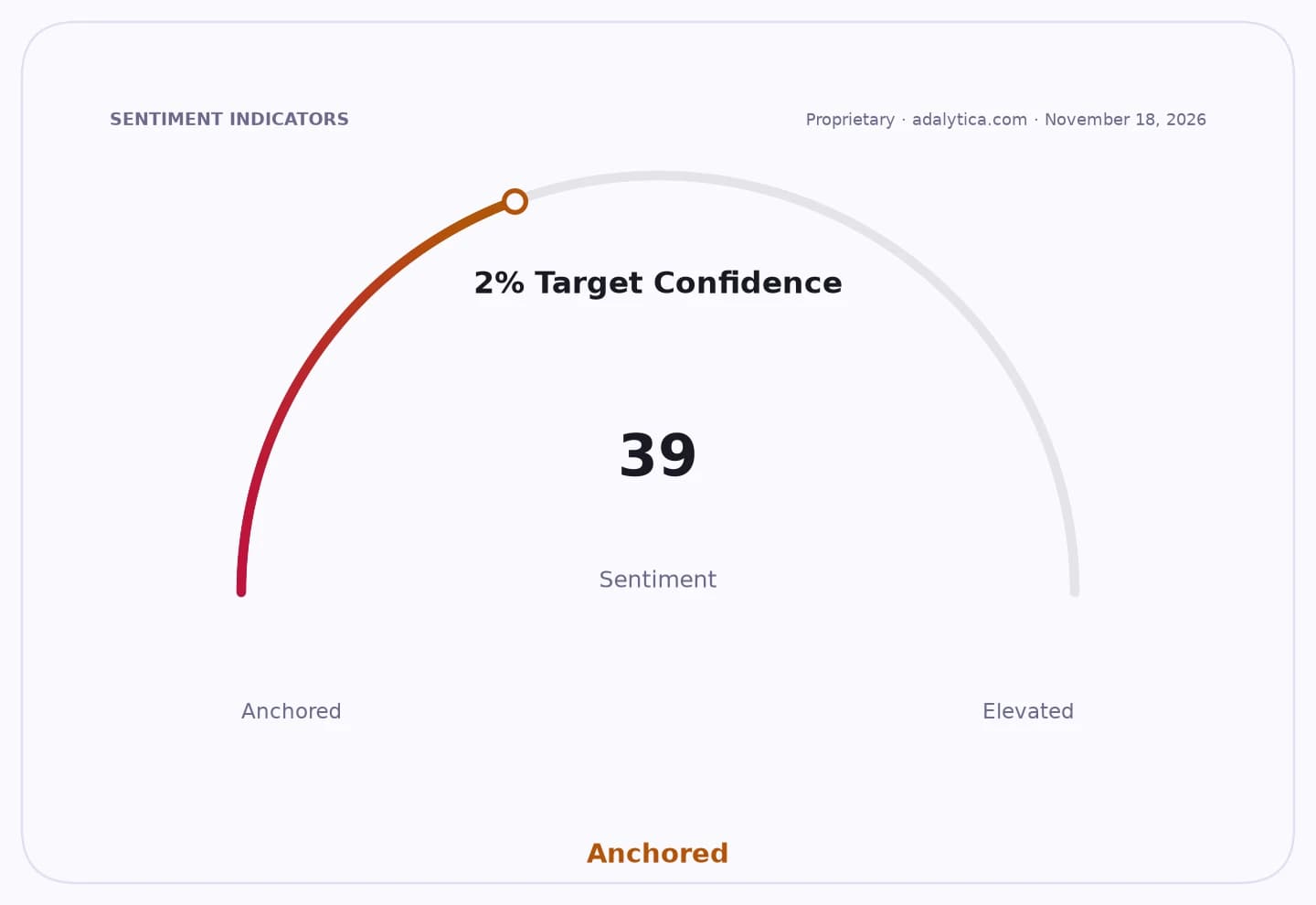
Sentiment Indicators
CPI
The IMF is actually a little more upbeat on the near term than the Russian authorities. It sees inflation at 6.4% in 2026, versus 6.8% in the Economy Ministry’s latest outlook and 7.1% to 7.6% in the central bank’s forecast range. But a milder next-year reading does not guarantee a faster return to target. The deeper issue is that Russia still has too much demand chasing too little supply.
Wages are rising quickly in several sectors, keeping consumer demand firm, while labor shortages prevent companies from lifting output at the same pace. Budget spending is also adding demand to an economy already under pressure from sanctions and disrupted trade flows. And after periods of ruble weakness, imported goods and anything tied to foreign currency become more expensive, feeding inflation further.
That is why the 4% target matters so much. For the central bank, inflation targeting is supposed to anchor expectations and keep prices rising in a predictable way. For savers, it helps preserve purchasing power. For investors and companies, it creates a more stable backdrop for planning. When inflation stays high, rate cuts arrive later, capital is scarcer and projects with long payback periods become harder to justify.
The evidence so far suggests the path back is still uneven. Russia’s inflation has remained above target since July 2023, and the government’s own forecasts have repeatedly missed the mark. For 2024, the Economy Ministry projected 4.5% inflation, but official data showed 9.5%. For 2025, it expected 4.5% again, while the actual reading has climbed to 5.6%. By Nov. 16, annual inflation had accelerated to 7.08%.
Fuel prices have been one of the biggest complications. Central bank adviser Kirill Tremasov said on Nov. 18 that without the spike in gasoline and diesel costs, inflation could have moved closer to 4% in 2026, even after higher value-added tax and a wider budget deficit. Stabilization in fuel markets has helped, but the bigger question is whether that relief lasts.
For investors, the message is straightforward: inflation that stays sticky keeps policy tight, and tight policy keeps the economy under pressure. The Bank of Russia expects its key rate to average 12.5% to 13.5% in 2027, down from 14% now. That is still high enough to restrain consumer spending, curb corporate investment and keep the budget under strain from debt service and subsidy costs.
The longer-term risk is social as much as financial. Higher prices hit lower-income households hardest because they spend more of their budgets on food, utilities and essentials. Even if deposit rates partly offset the damage for savers, families without a financial cushion have little protection. That can widen inequality and weaken consumption just as the economy needs steadier demand and more productive investment.
For long-term investors, the key takeaway is that Russia’s inflation problem is less about one bad month of prices and more about the interaction of wages, spending, currency weakness and supply constraints. Until those forces ease, the 4% target will remain a benchmark rather than a reality — and that argues for patience, selectivity and a careful eye on policy. Worth watching, but not easy money.
| Entity | Gains | Losses |
|---|---|---|
| Bank of Russia | ▲inflation credibility | ▼policy flexibility |
| Savers with deposits | ▲higher nominal yields | ▼real returns if prices rise faster |
| Households and consumers | ▲eventual price stability | ▼higher borrowing costs |
| Businesses and borrowers | ▲lower inflation in 2028+ | ▼delayed investment and expansion |