Sterling pushed through $1.36 against the dollar on Thursday as a fresh Treasury-related jolt hit the greenback, sharpening the case that the pound’s rally still has room to run while the dollar’s recent rebound starts to look fragile.
British pound tops $1.36 as dollar weakens
That matters because currency moves are now doing more of the heavy lifting for global portfolios than they were a few months ago. A weaker dollar eases financial conditions outside the US, boosts the translated earnings of multinational companies and can keep pressure on American import prices, while a stronger pound changes the calculus for UK stocks with overseas revenues, imported costs and foreign capital flows.
Sentiment IndicatorsⓘProprietary · adalytica.com · August 20, 2026
This is a snapshot — live sentiment, awareness and momentum for 130+ markets update continuously in the dashboard.Open AlphaPulse
The pound last traded at $1.36, after touching the same level again in the latest session, keeping it near the top of its recent range. The move comes after sterling had already clawed back from a mid-March low around $1.32, and it now sits above both its 50-day and 200-day moving averages, a sign the broader trend has turned more constructive. Conventional technical gauges also lean bullish: the pound’s relative strength index is in the mid-70s, typically an overbought reading, but one that often reflects persistent momentum rather than an immediate reversal in strong trends.
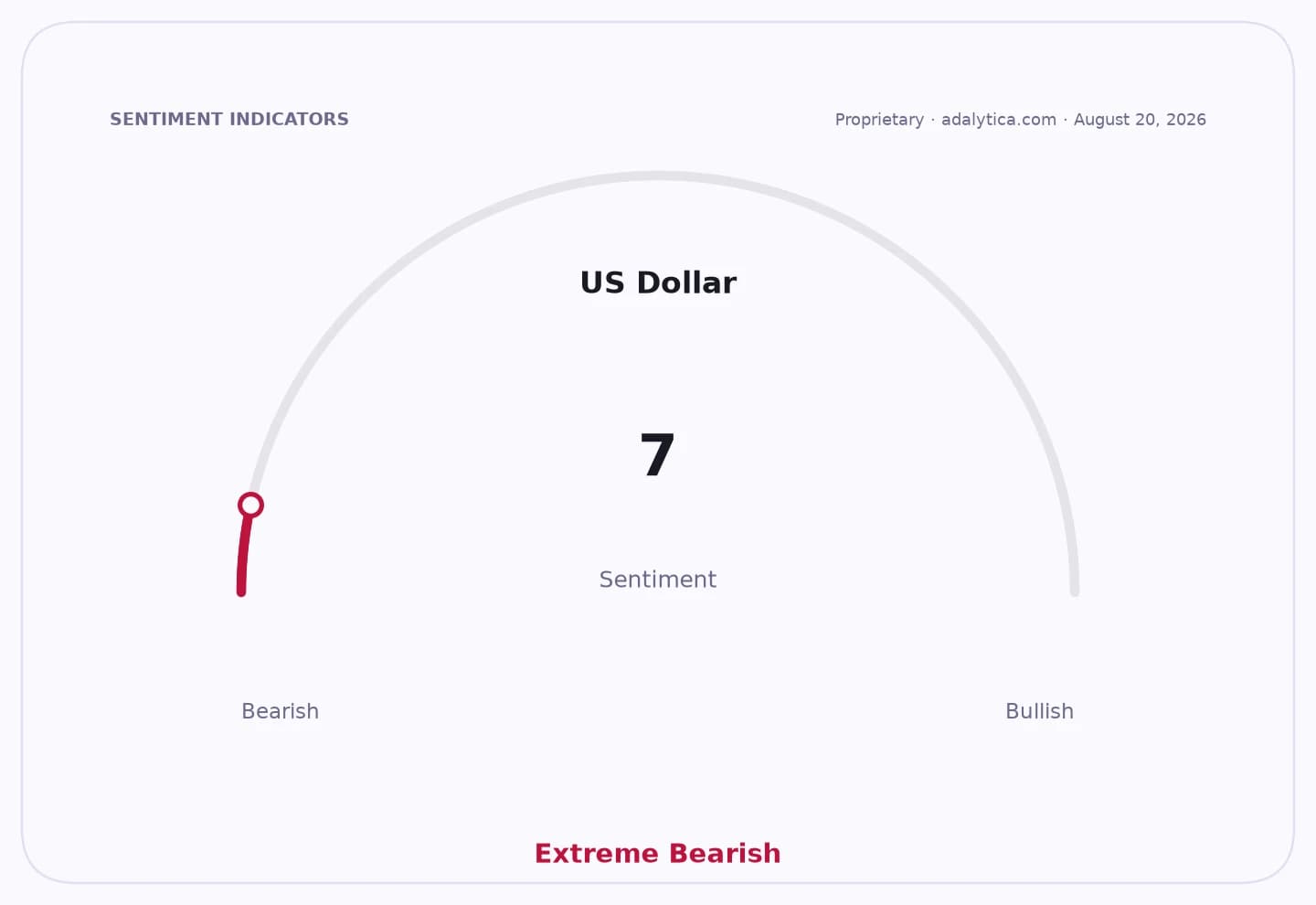
The dollar, by contrast, is flashing stress. The US Dollar Index was last near 98.8, down from a March peak above 100, and Adalytica’s US dollar trade signals show “Extreme Fear,” with sentiment slumping sharply over the past month. That dovetails with the market’s growing view that Washington’s policy mix is becoming less dollar-friendly, whether through fiscal uncertainty, Treasury market sensitivity or a broader unwinding of long-dollar positioning.
For investors, the key point is not just that GBP/USD has broken 1.36. It is that the breakout comes as the market underestimates how quickly capital can rotate when the dollar’s policy premium fades. A softer dollar tends to support risk assets, emerging markets and commodity-linked currencies, while sterling strength can reinforce flows into UK assets if investors see less currency drag ahead. The move also raises the bar for dollar bulls: they now need fresh evidence of US economic outperformance or tighter policy expectations to regain control.
That makes the next few sessions important. If GBP/USD can hold above 1.36 while the dollar index remains below 99, the path opens toward a test of the next resistance band around 1.37 to 1.38. If not, the pair could slip back toward the 1.35 area where the 50-day moving average sits. For now, though, the market message is clear: the dollar’s dominance is being challenged, and the pound is one of the cleanest ways to express that shift.
| Entity | Gains | Losses |
|---|---|---|
| British pound | ▲Breakout above $1.36 | ▼Exporters facing stronger currency |
| US dollar | ▲Near-term haven demand | ▼Broad FX bulls |
| UK consumers/importers | ▲Cheaper dollar-priced goods | ▼UK firms with foreign costs |
| US multinationals | ▲Translation boost abroad | ▼Import-heavy companies |




