Budget travelers are finding some of Europe’s biggest bargains this summer, and that matters because cheaper vacations can still mean healthy demand even as consumers get more cautious about spending.
Budget Travel Favors Value-Focused Online Travel Platforms

Beer priced under 3 euros and coffee that costs only a “shock price” are more than travel trivia. They are a sign that inflation is cooling in some popular destinations and that bargain-hunters are still willing to book trips when they believe they are getting value. For investors, that is an important distinction: in travel, the winning markets are not always the most expensive ones, but the ones that can keep rooms, tours and flights full without forcing consumers to trade down too far.
Sentiment IndicatorsⓘProprietary · adalytica.com · July 25, 2026
This is a snapshot — live sentiment, awareness and momentum for 130+ markets update continuously in the dashboard.Open AlphaPulse
The macro backdrop helps explain why this theme is resonating. U.S. inflation, while far below its peak, is still running well above pre-pandemic norms, with the consumer price index around 332.6 in June and a July forecast of 335.5. At the same time, the 10-year Treasury yield has climbed to about 4.75%, a reminder that financing costs remain elevated and that households are still feeling pressure from higher borrowing rates. In that environment, vacationers tend to become more selective, stretching budgets toward destinations where daily costs feel manageable.
That is exactly why the budget-travel story has legs. When food and drink prices are low relative to the tourist staples in pricier western European cities, travelers can lock in a trip without blowing up the rest of their spending plans. It also explains why cheaper destinations often outperform in periods of uncertainty: they benefit from both the desire to travel and the need to control total trip cost.
The stock market is telling a similar story, even if volatility has been sharp. Booking Holdings, Expedia Group and Trip.com have all recovered from deep selloffs, but the moves show investors are still weighing whether demand is durable or just bouncing around with consumer mood. Booking shares recently traded around $177, far below their 200-day moving average of about $185, while Expedia sat near $260, just under its 200-day average of roughly $245 after a strong rebound. Trip.com has also climbed back into the low $40s after a much tougher stretch earlier in the year. Those are not uniform verdicts; they are signs that investors are looking for the best operators in a travel market where value matters more than ever.
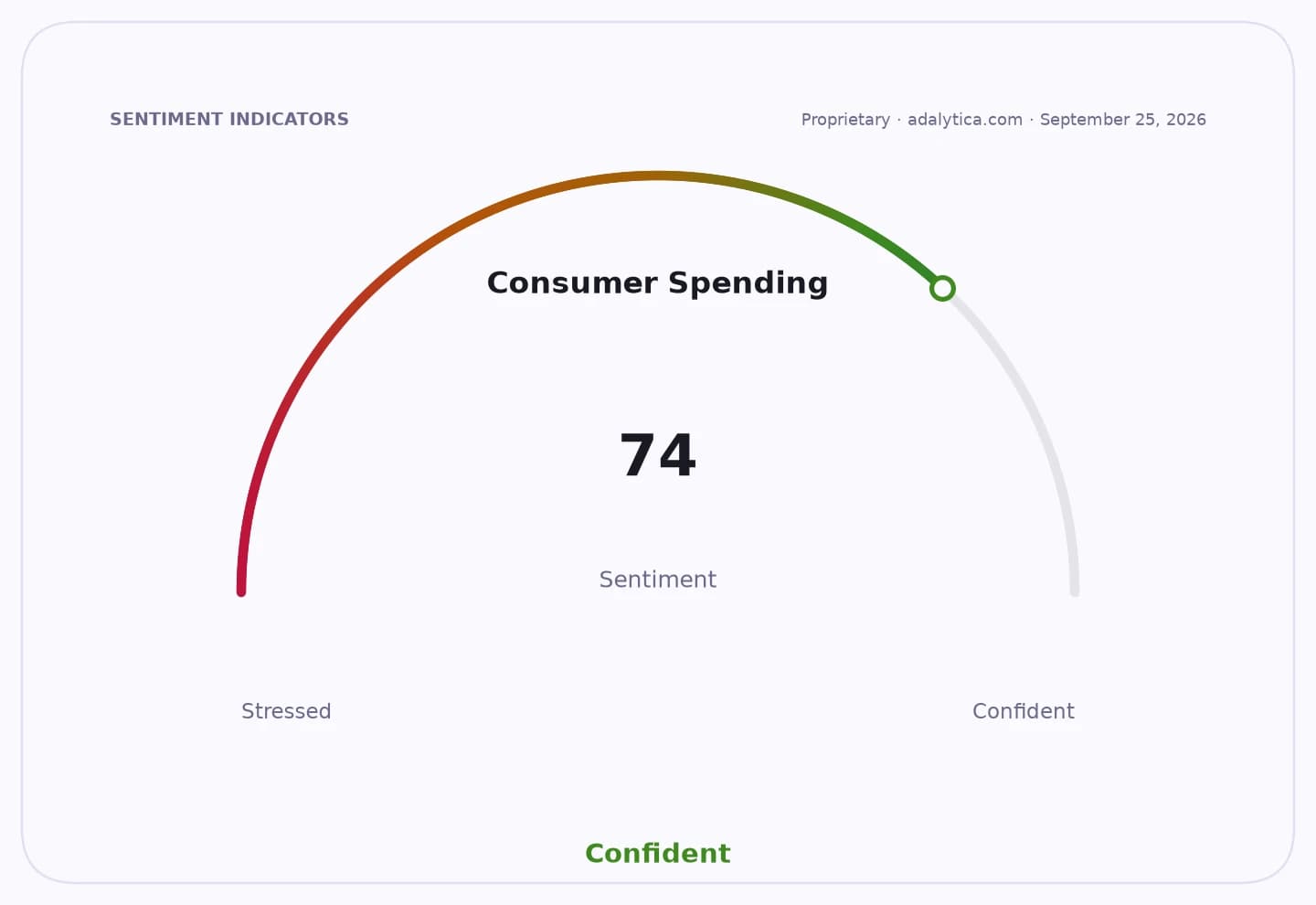
Consumer sentiment data reinforces the point. Adalytica’s Consumer Spending Sentiment snapshot shows fear, with awareness in extreme fear territory, suggesting households are still uneasy about discretionary purchases. That is not a great setup for premium, high-margin travel splurges, but it can actually favor destinations and companies that can offer a convincing value proposition. The same logic applies to travel platforms that can aggregate inventory across hotels, alternative accommodations, flights and activities, giving consumers an easy way to compare options and stretch each dollar.
For long-term investors, the bigger lesson is that value travel is not a fad. It is a recurring feature of a world where consumers are always comparing prices, and where even a modest drop in daily outlays can change a booking decision. Companies with strong brands, broad supply, and global reach should be able to keep benefiting as travelers chase the best mix of price and experience.
The cheapest vacation spots this year may be the places where beer is still under 3 euros and coffee feels like a steal, but the investment takeaway is broader: in travel, affordability can be a moat. Worth watching, and worth holding through the cycles.
| Entity | Gains | Losses |
|---|---|---|
| Budget travelers | ▲Lower trip costs | ▼Less pressure to splurge |
| Cheap European destinations | ▲More bookings | ▼Lower pricing power |
| Online travel platforms | ▲Higher value-driven traffic | ▼Premium-only demand |
| Expensive vacation hubs | ▲Fewer bargain hunters | ▼Cost-sensitive travelers |