Bulgaria’s housing market is losing momentum on volume, but not on price, and that split is the key signal for investors and homebuyers alike.
Bulgaria Housing Sales Fall as Prices Keep Rising
Property transactions dropped to 45,312 in the third quarter of 2026, down 22.1% from a year earlier and the weakest third-quarter reading since 2019, according to the country’s Registry Agency. For the first nine months of the year, sales fell to 129,431, about 30,000 fewer than a year ago and also the lowest nine-month tally since 2019.
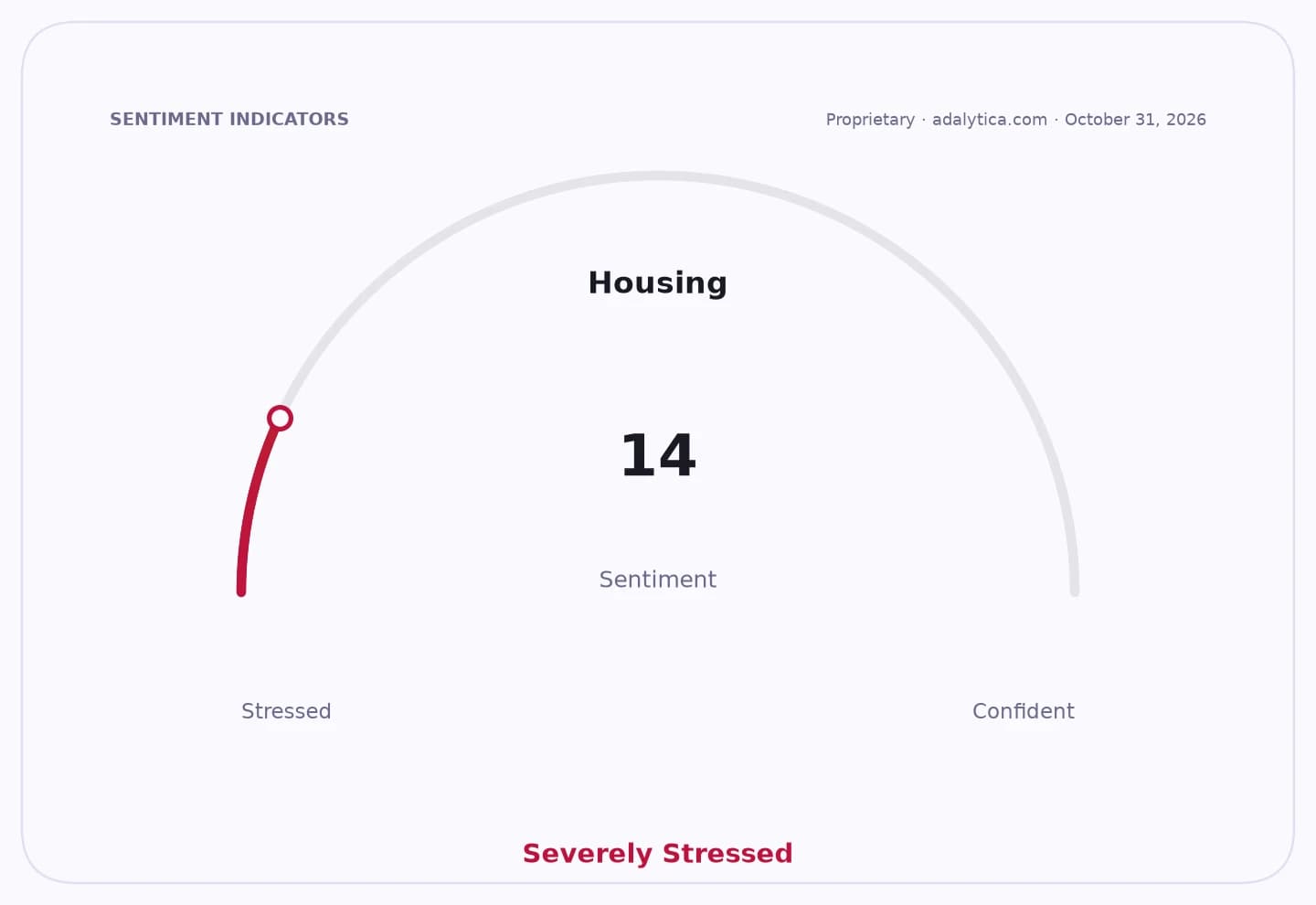
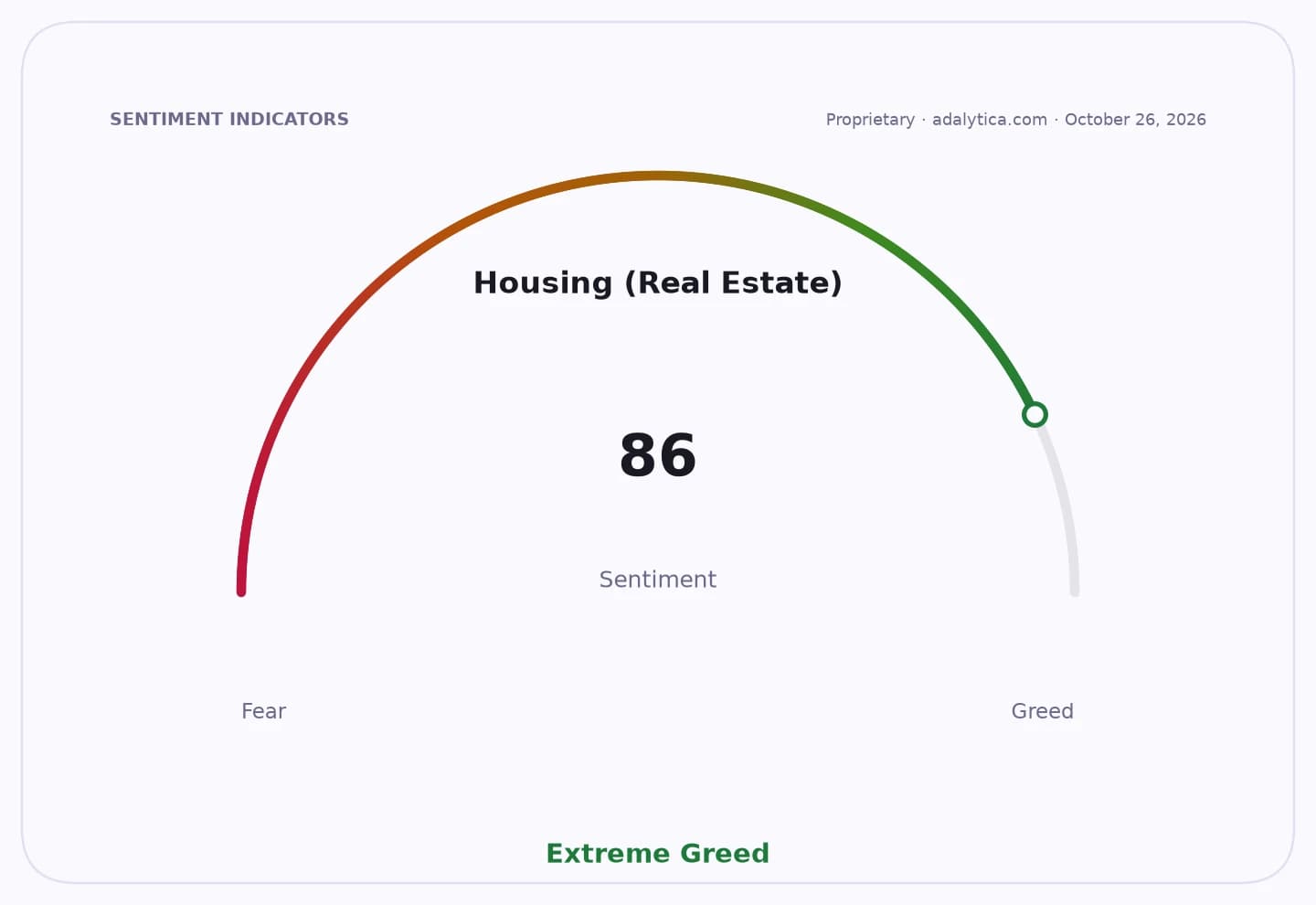
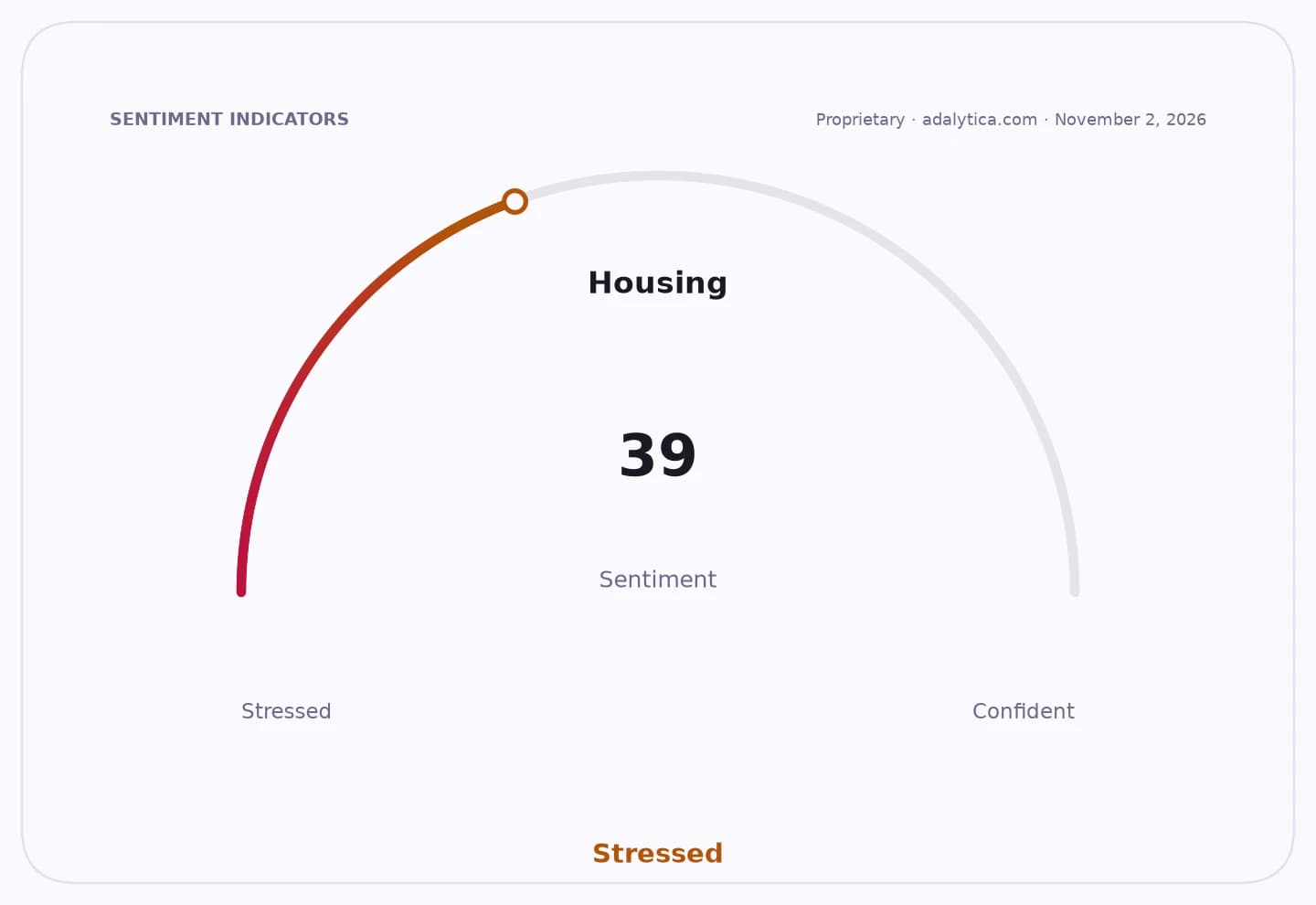
Sentiment Indicators
Housing
That matters because it shows a market that is not correcting in the way many would expect. Instead of prices easing to meet weaker demand, home values are still climbing. The National Statistical Institute said house prices rose 15.5% year over year in the second quarter and 4.5% from the prior quarter, a pace that keeps affordability under pressure even as activity slows.
The downturn is broad-based across Bulgaria’s biggest cities. Sofia saw 7,282 transactions in the third quarter and 23,685 in the first nine months, down 16.8% from a year earlier. Varna posted the steepest annual drop among the four major cities tracked in the report, with nine-month sales down 21.6%. Plovdiv and Burgas also declined.
For long-term investors, the most important implication is that this is less a collapse than a standoff. Buyers are pulling back and trimming budgets, while sellers are still anchoring to yesterday’s prices, said Mirislav Vladimirov of ERA Bulgaria. That kind of mismatch tends to freeze deal flow before it resets valuations, which is why developers are reportedly delaying new projects.
Financing will likely determine how long this can last. More than half of all transactions in Bulgaria are now done with bank credit, and the share is even higher in Sofia and other large cities. The European Central Bank has already raised rates twice this year, and while Bulgarian banks have not fully passed that through to mortgages yet, higher borrowing costs usually show up with a lag.
That makes 2027 the pivotal year. If mortgage rates rise further, transaction volumes could weaken again and price gains should cool. If lending conditions stay loose, Bulgaria’s housing market could remain stubbornly expensive despite falling turnover. Either way, investors in builders, lenders and property-linked assets should watch the gap between sales and prices closely, because it is often the first sign of a market that is becoming less liquid but not yet cheaper.
| Entity | Gains | Losses |
|---|---|---|
| Sellers | ▲Hold firm on pricing | ▼Lower turnover |
| Buyers | ▲Potential future bargaining power | ▼Current affordability |
| Developers | ▲Existing inventory support | ▼New project timing slows |
| Banks | ▲More mortgage-linked business | ▼Credit risk if rates rise |