German government bonds inched higher on Friday, a small move that still matters because it reflects investors’ continued willingness to own safe, high-quality debt even after a long run of rate volatility across global markets.
Bunds Rise Slightly as Safe-Haven Demand Holds
For long-term investors, the key point is that Bunds are still behaving like the market’s anchor in Europe. When prices rise, yields fall, and that tends to ease borrowing costs across the euro area, from governments to companies and households. It also signals that traders are not yet pricing a sharp rebound in inflation or a big shift toward tighter European Central Bank policy.
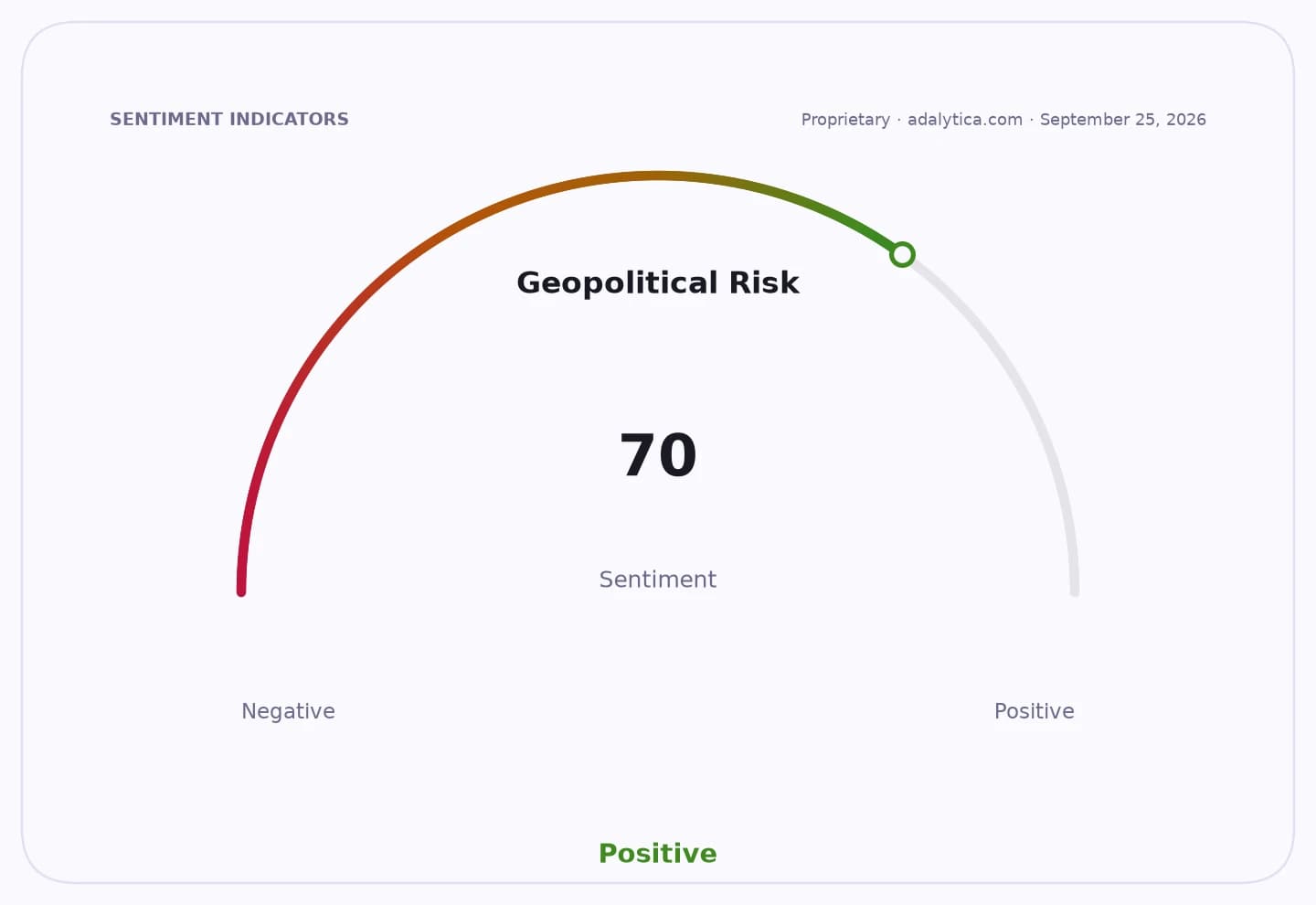
Sentiment IndicatorsⓘProprietary · adalytica.com · July 17, 2026
This is a snapshot — live sentiment, awareness and momentum for 130+ markets update continuously in the dashboard.Open AlphaPulse
The move was modest, but it came against a backdrop of broader caution in fixed income. U.S. Treasury yields remained elevated, with the 10-year note around 4.58% and the 2-year near 4.16%, showing that global bond markets are still wrestling with the path of growth, inflation and central bank easing. In that environment, even a slight rally in German debt suggests investors continue to view Bunds as a relative haven.
That matters economically because German bonds sit at the center of eurozone pricing. Their yields help set the benchmark for everything from corporate borrowing to sovereign funding costs across the bloc. A steady Bund market can give policymakers breathing room and reduce pressure on balance sheets, especially for rate-sensitive sectors such as real estate, utilities and infrastructure.
The broader investment implication is straightforward: bonds are not just about income, they are also about signaling. A firm Bund market usually tells you that investors are still demanding safety and are not fully convinced that growth is about to accelerate enough to force higher long-term rates. For equity investors, that can be supportive of valuation in rate-sensitive parts of the market, even if it also reflects lingering economic caution.
There is also a technical angle worth watching. The iShares 20+ Year Treasury Bond ETF, often used as a proxy for long-duration bonds, has been trading below its 200-day moving average, a reminder that the long end of the market remains fragile despite periodic rallies. German bonds may be firmer on the day, but the larger message is that investors are still balancing yield, inflation risk and growth uncertainty.
For investors with a multi-year horizon, the lesson is not to chase every tick in bond prices, but to respect what the market is saying about the economic backdrop. German Bunds remain a core defensive asset in Europe, and any sustained strength would reinforce the case for a steadier rate environment. That is worth watching, especially if you are building a diversified portfolio meant to compound through cycles rather than trade every headline.
| Entity | Gains | Losses |
|---|---|---|
| German Bund holders | ▲Slight price gains | ▼Lower yield income |
| Eurozone borrowers | ▲Easier funding conditions | ▼Less inflation pressure room |
| ECB doves | ▲Support for gradual policy stance | ▼Less urgency for tighter policy |
| Cash-focused investors | ▲Safety demand confirmed | ▼Miss out on higher-risk returns |