Burnout is emerging as a business risk, not just a workplace grievance, as employers struggle to keep pace with rapid technology shifts, artificial intelligence and geopolitical disruption.
Burnout Risk Rises for Employers
That was the core warning from Verónica Cuevas, a human-capital specialist with more than 20 years of corporate experience, who said companies that cling to traditional management models are feeding employee exhaustion and weakening productivity. Her message lands at a time when labor-market conditions remain relatively firm but worker stress appears elevated, creating a mismatch between headline employment strength and the quality of work experience inside firms.
Sentiment Indicators
Cuevas argued that corporate well-being programs still focus too narrowly on physical health and ignore emotional strain, even though mental health is now directly tied to output, retention and operating performance. She cited an International Labour Organization estimate that anxiety and depression cost roughly 12 billion workdays a year, a reminder that psychological strain carries a measurable macroeconomic cost, not just an HR one.
The issue matters because burnout hits companies through higher absenteeism, turnover, lower engagement and weaker execution — costs that are often harder to see than wage inflation but can be just as damaging. It also raises the stakes for leadership quality. Cuevas said managers account for 70% of employee satisfaction, underscoring why firms can spend on benefits, offices and perks yet still fail to improve morale if day-to-day management remains poor.
That helps explain why investors are increasingly treating employee well-being as a proxy for operational resilience. In labor-intensive businesses such as retail, restaurants, logistics and tech, staffing friction can translate into slower service, higher recruiting costs and lost revenue. Recent filings from large U.S. employers including Amazon, McDonald’s and Walmart have all pointed to hiring and retention pressures as material operating risks.
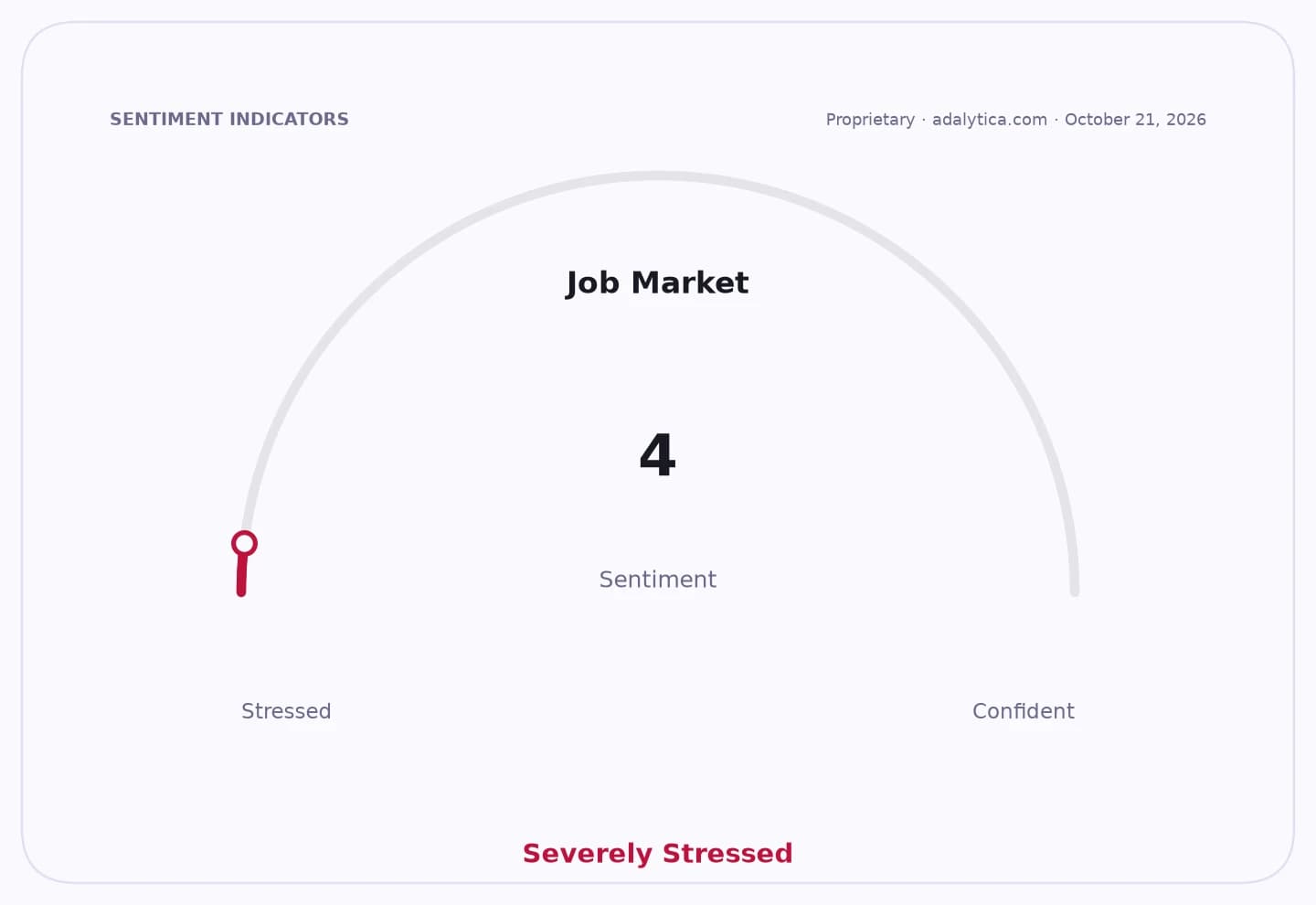
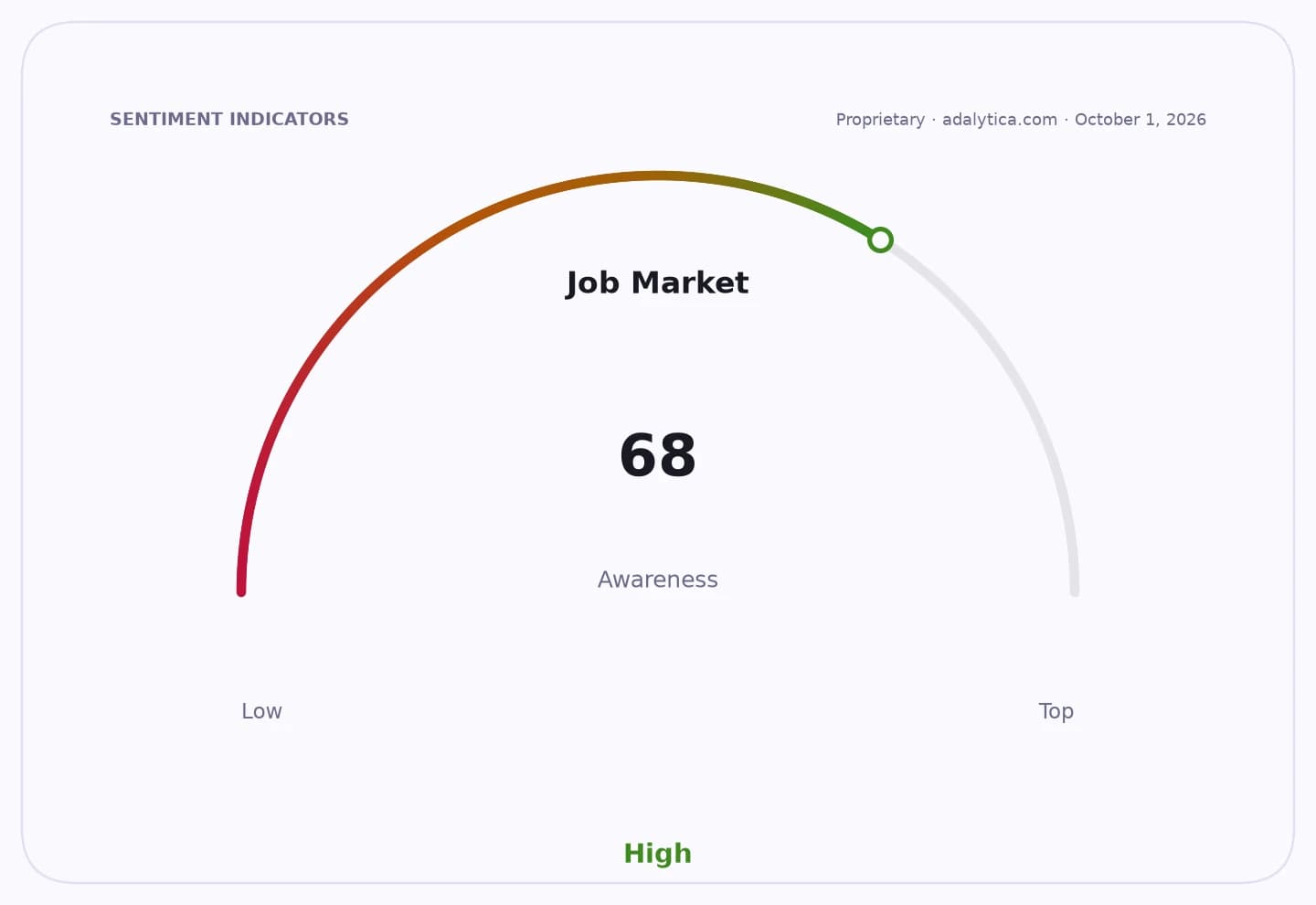
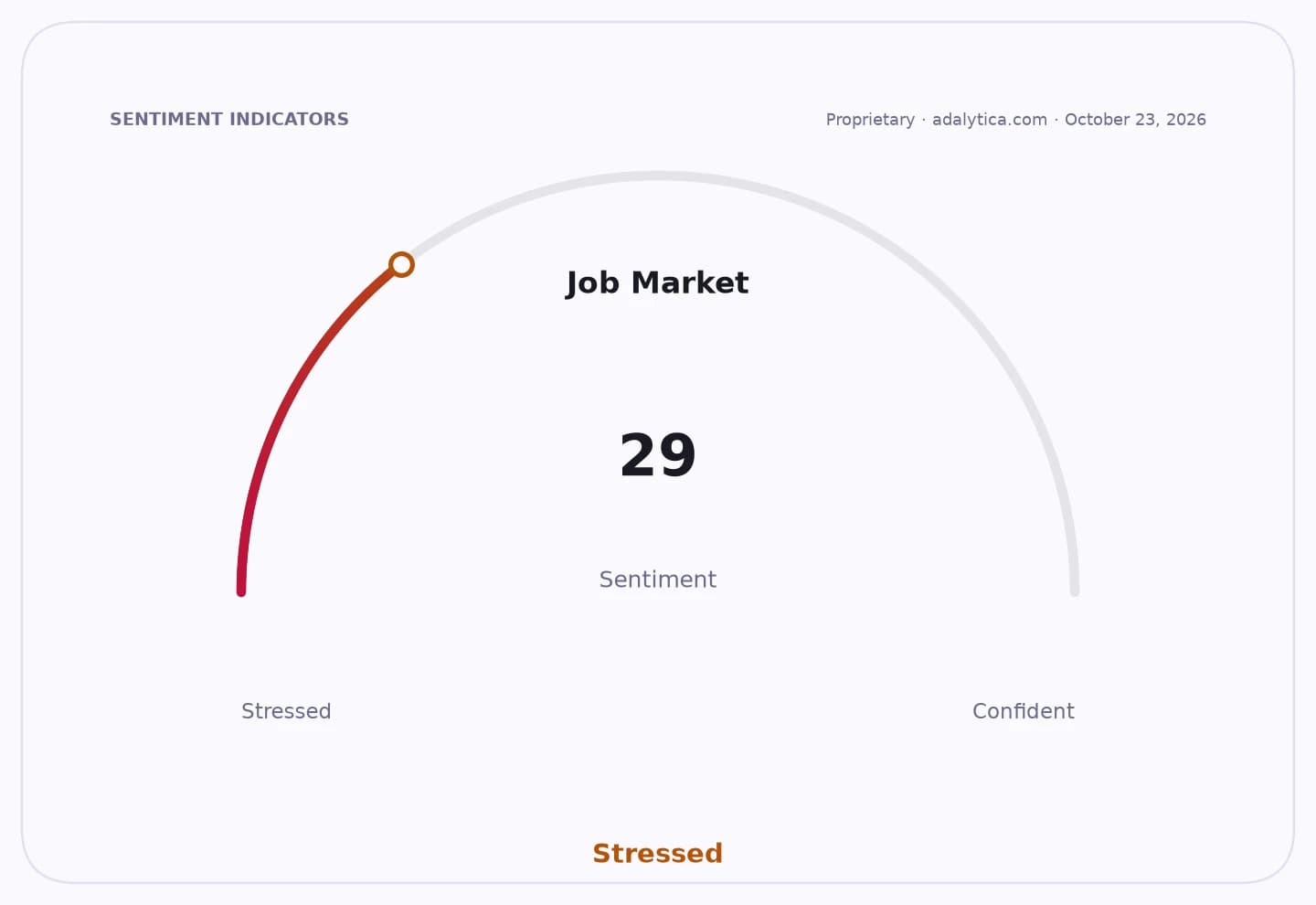
The broader market backdrop suggests the theme is not going away. Adalytica’s job-market sentiment gauge shows “greed” at 71, even as consumer confidence sentiment has collapsed to “extreme fear,” a combination that points to a labor market that is still functioning but under emotional strain. For companies, that means the next productivity battle may be won not by adding more headcount, but by redesigning work itself.
Cuevas’s pitch for her “Flourish” model and its app reflects the direction many employers are likely to follow: more technology-driven, personalized and preventive support rather than reactive wellness programs. For investors, the key question is which firms adapt early enough to protect margins and talent, and which are left paying for burnout through higher costs and weaker execution.
| Entity | Gains | Losses |
|---|---|---|
| Employees | ▲Better support | ▼Chronic exhaustion |
| Employers with strong leadership | ▲Higher retention | ▼Less disruption |
| Employers with rigid models | ▲Short-term cost control | ▼Higher burnout |
| Investors in labor-heavy firms | ▲Better execution if reforms work | ▼Margin pressure if turnover rises |