California has the smallest share of homeowners owing more on their mortgages than their properties are worth, underscoring how the state’s costly housing market has retained unusually strong equity even after the post-pandemic cooling.
California home prices reach 335.104 as equity stays strong
That matters because negative equity is one of the clearest fault lines in housing. When borrowers are underwater, they are more vulnerable to delinquency, forced sales and mortgage stress in a downturn. California’s position at the bottom of that list suggests a market that remains supported by long-run price appreciation and tight supply, even though affordability has worsened and transaction volumes have slowed.
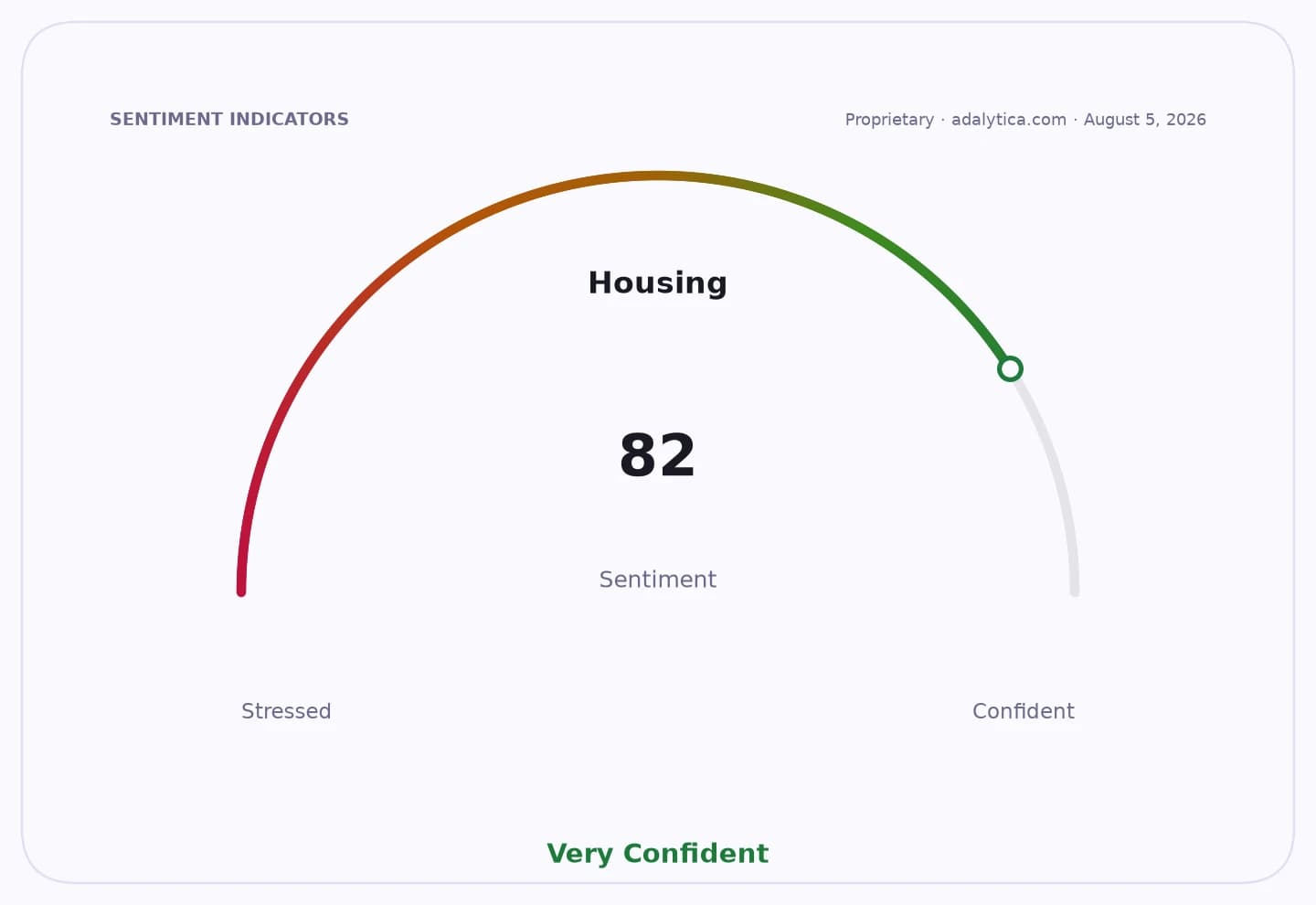
Sentiment IndicatorsⓘProprietary · adalytica.com · August 5, 2026
This is a snapshot — live sentiment, awareness and momentum for 130+ markets update continuously in the dashboard.Open AlphaPulse

The backdrop is a housing market that has not retraced the pandemic-era boom as sharply as many expected. California home prices have climbed from 292.683 in January 2023 to 335.104 in May 2026 on the supplied index, and the forecast points to 337.1537 in June. Even with the pace of gains moderating, that leaves a large buffer for many owners who bought before the latest cycle and for households that refinanced or put down substantial equity.
By contrast, the labor market offers less support than it did during the early recovery, with unemployment easing to 4.2% in June from 4.3% in April and May. That is still historically low enough to limit forced selling, but it also means the housing market’s resilience is being driven more by structural supply shortages and accumulated equity than by a roaring economy.
CSUSHPINSA vs HOUST — macro contextadalytica.com
Explore this data interactively — full history, time series and cross-market comparisons.Open AlphaPulse
For investors, the implication is that California housing remains a relative haven inside an otherwise fragile affordability landscape. Homebuilders tied to the state, including ITB components such as Lennar and other large-cap builders, benefit from low foreclosure risk and a homeowner base with more equity to trade up or remodel. At the same time, high prices and limited inventory continue to restrain turnover, which can cap transaction-related activity across brokers, mortgage originators and title companies.
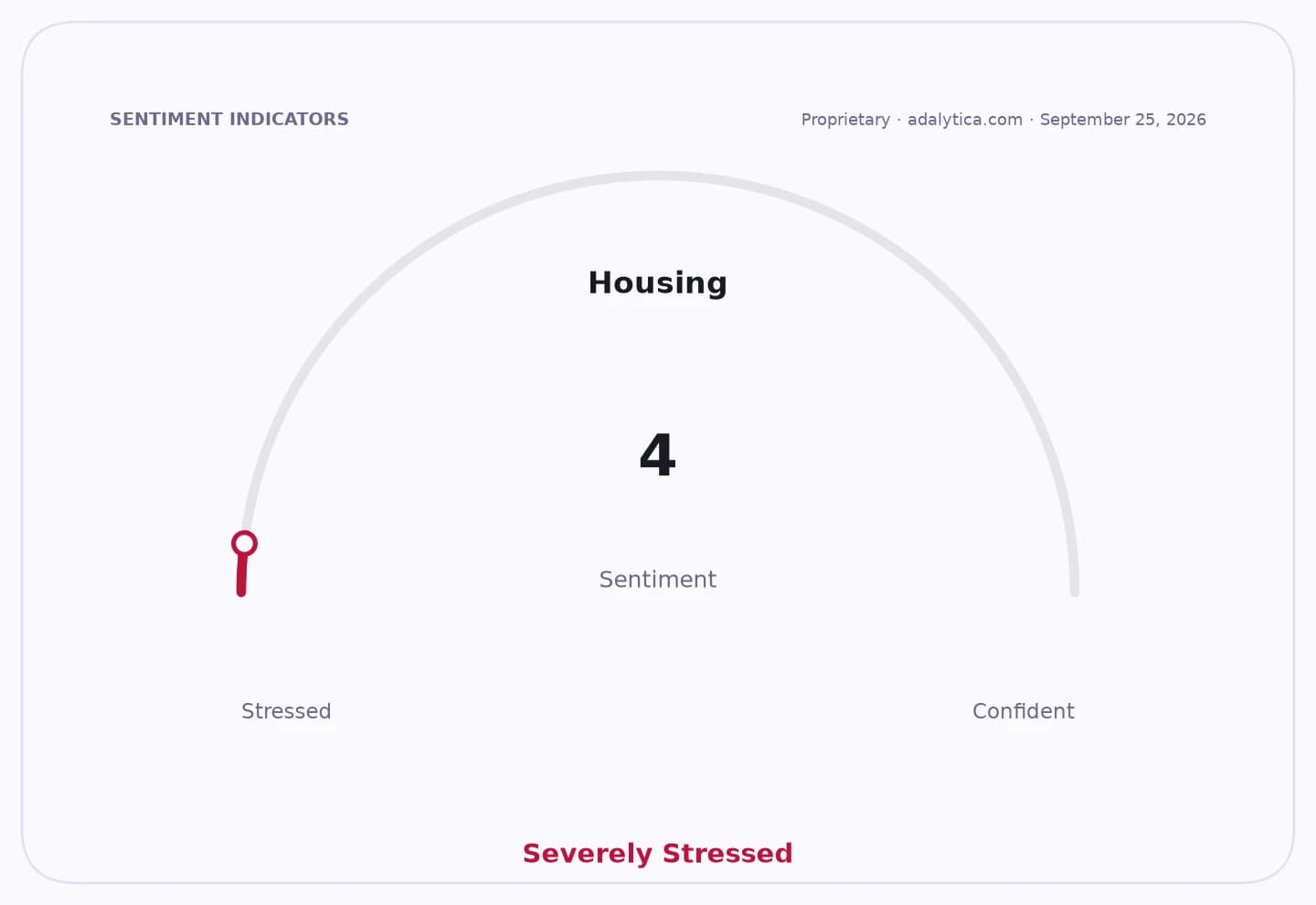
That creates a mixed setup. Builders and landlords can still lean on scarcity, but mortgage lenders and transaction-driven housing services face a market where owners are less likely to be forced sellers and more likely to stay put. The latest pricing data also help explain why housing sentiment has turned sharply more exuberant in Adalytica’s HOURE gauge, which shows “Greed” and “Extreme Greed,” even as broader equity sentiment is equally stretched.
The key risk is that California’s low underwater share can reverse quickly if unemployment rises or if prices soften after a long plateau. But for now, the message for investors is straightforward: California’s housing market is not just expensive, it is still anchored by substantial equity, and that lowers systemic stress while keeping supply tight.
| Entity | Gains | Losses |
|---|---|---|
| California homeowners | ▲Strong equity buffers | ▼Less mobility from high prices |
| Homebuilders | ▲Lower foreclosure risk | ▼Limited turnover |
| Mortgage lenders | ▲Fewer distressed loans | ▼Slower refinancing and purchase volumes |
| Housing buyers | ▲More stable market | ▼Higher entry costs |