Cambodia’s decision to buy 20 Chinese-made aircraft is more than a commercial order: it is another sign that Beijing is turning political alignment with Phnom Penh into durable economic leverage, and investors should read it as a template for how China is extending influence across Southeast Asia.
Cambodia aircraft deal boosts China's Southeast Asia leverage
That matters because the Cambodia-China relationship is no longer just diplomatic rhetoric about party-to-party ties between the Cambodian People’s Party and the Chinese Communist Party. It is becoming an industrial and strategic pipeline that reaches into aviation, infrastructure, security and now artificial intelligence. In a region where supply chains, tourism flows and capital allocation are being reshaped by geopolitics, the countries that can lock in Chinese financing, trade and technology access gain a clear advantage.
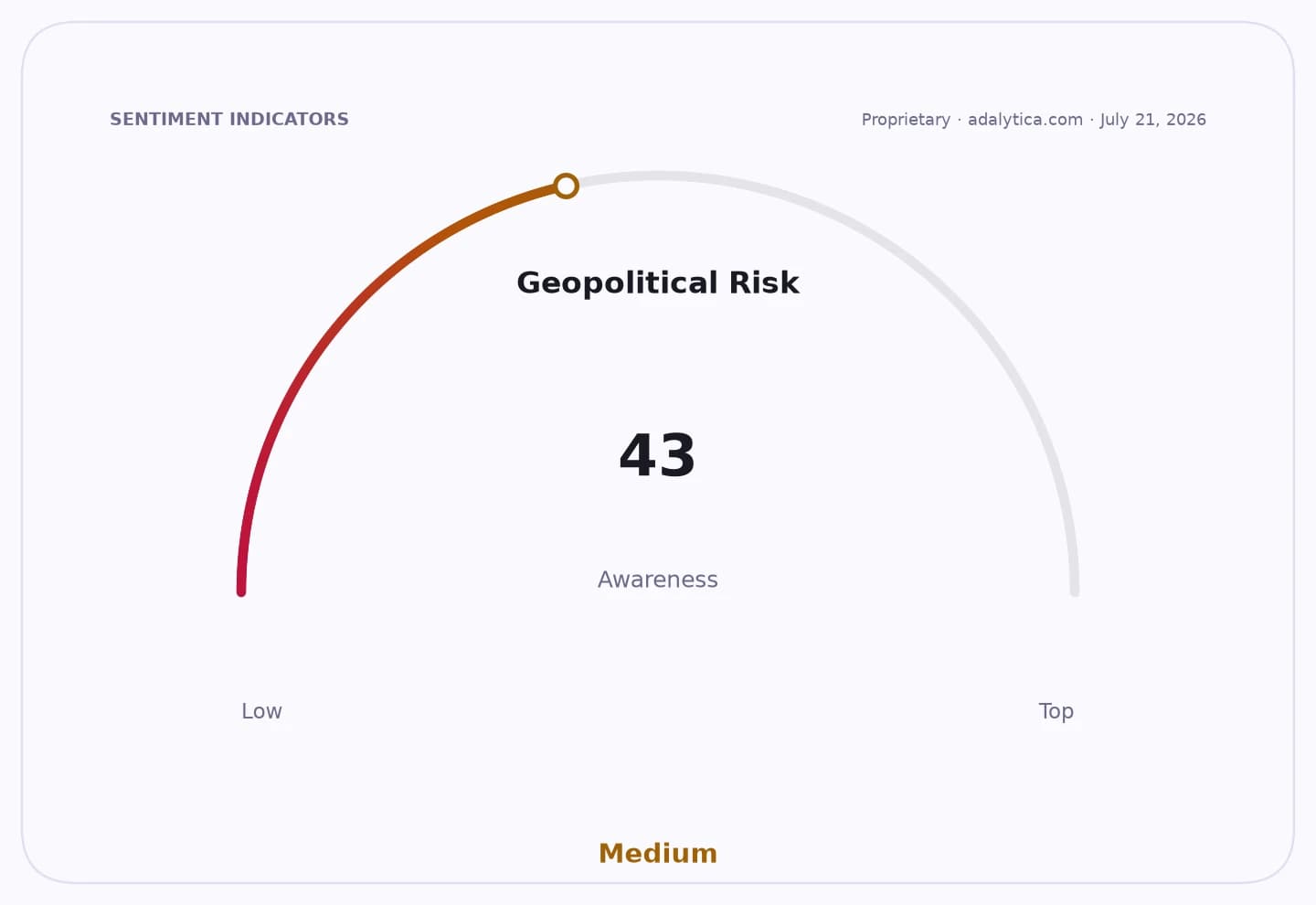
Sentiment IndicatorsⓘProprietary · adalytica.com · July 21, 2026
This is a snapshot — live sentiment, awareness and momentum for 130+ markets update continuously in the dashboard.Open AlphaPulse
The aircraft deal is especially important because it signals demand for Chinese manufacturing beyond China’s own borders. Cambodia’s order is reportedly China’s largest overseas aviation sale, giving Beijing a high-profile win in a sector long dominated by Boeing and Airbus. For Cambodia, the transaction can support fleet expansion, tourism capacity and connectivity at a time when regional travel patterns remain sensitive to border tensions and shifting visitor flows. For China, it is a soft-power and industrial-policy victory rolled into one.
Investors should not dismiss this as a niche emerging-markets headline. It reinforces the broader thesis that Chinese state-backed firms are finding new export markets just as Western scrutiny and trade frictions intensify elsewhere. That creates second-order winners in aerospace supply chains, maintenance, airport services, logistics and digital infrastructure tied to the rollout of AI and other strategic technologies. It also underscores how China is using commercial relationships to cement influence in smaller but strategically located economies.
The market backdrop is telling. Oil prices have swung sharply, with Brent and WTI volatility highlighting how geopolitics can quickly feed into transport and travel costs, while U.S. Treasury yields around 4.5% on the 10-year and 4.1% on the 2-year keep global financing conditions tight. In that environment, countries that can secure long-term bilateral support from China may be better positioned to fund growth than peers relying solely on more expensive market capital.
The regional stakes are rising as Cambodia sits amid frictions with Thailand and a broader Southeast Asian contest for tourists, trade and strategic favor. China’s role as a mediator while also deepening bilateral business ties gives Beijing a dual advantage: it can present itself as a stabilizer while expanding commercial reach. That is exactly the kind of asymmetric geopolitical positioning the market often underprices until it is too late.
For investors, the key takeaway is that China’s influence in Southeast Asia is moving from headline diplomacy to tangible capex, procurement and technology adoption. That supports a long-term bullish case for Chinese industrial exporters, aviation-adjacent businesses, AI infrastructure providers and logistics players exposed to the region. The best opportunities may lie not in the obvious megacaps, but in the suppliers and toll-road-style beneficiaries that profit every time geopolitical alignment turns into actual orders.
The market is underestimating how quickly these party-to-party relationships can become investable economic channels. Cambodia’s latest deal is a reminder that in the next phase of the China story, influence is monetized through hardware, infrastructure and data platforms — and early positioning matters.
| Entity | Gains | Losses |
|---|---|---|
| China’s aerospace exporters | ▲Bigger overseas orders | ▼Western OEM market share |
| Cambodia’s government | ▲Cheaper strategic financing | ▼Bargaining leverage with rivals |
| Regional tourism/logistics firms | ▲More connectivity demand | ▼Border-tension uncertainty |
| Boeing/Airbus rivals | ▲— | ▼Chinese aircraft momentum |




