Ottawa is preparing to borrow unprecedented sums through off-budget transactions that will not show up in the headline deficit, a shift that could leave Canada’s fiscal position far looser than the government’s prudence pitch suggests.
Canada budget borrowing rises on Crown loans

The Carney government’s latest budget projects non-budgetary transactions will add $110.4 billion to borrowing requirements in fiscal 2029, driven largely by loans, investments and advances to enterprise Crown corporations. That is a dramatic change from fiscal 2022, when such transactions actually reduced borrowing by $5.9 billion, and it helps explain why debt-servicing costs are set to rise to $85.5 billion by fiscal 2031 from $53.5 billion in fiscal 2026.
Sentiment Indicators
For investors, the key issue is not accounting convention but funding needs. Once the budget deficit and these off-budget items are combined, Ottawa’s total borrowing requirement is projected to jump to $103.9 billion in fiscal 2026 and $169 billion in fiscal 2028, the latter excluding the pandemic emergency years would be the largest on record. That means more supply of Canadian government debt to be absorbed by markets, even if the official deficit looks modest.
The shift also weakens the value of the deficit as a guide to fiscal restraint. The government says the deficit will ease to 1.3% of GDP by fiscal 2031 from 1.8% this year, but the Parliamentary Budget Officer estimates the broader financial requirement will be 4.4% of GDP this year, rising to 4.8% in fiscal 2028 before easing to 3.5% in 2031. In other words, the borrowing burden is much larger than the headline deficit implies.
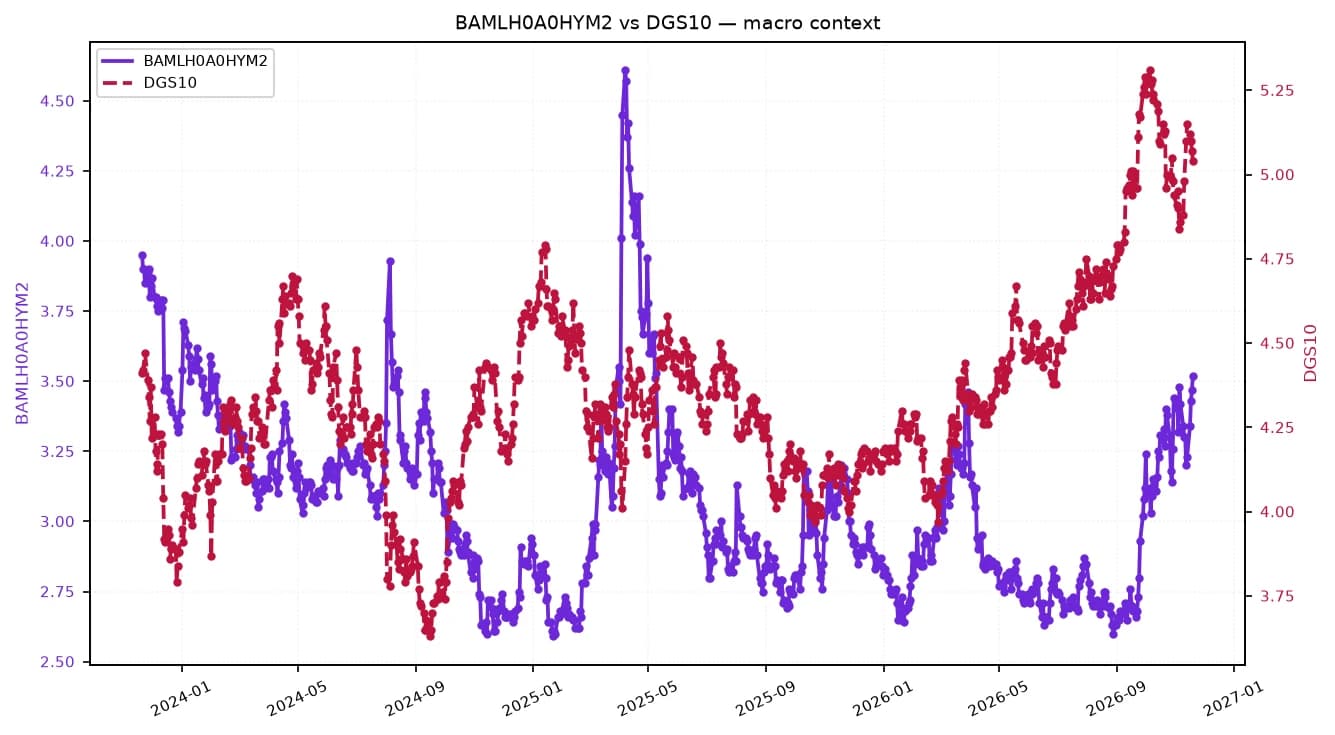
That matters for bond investors because more financing pressure usually means greater sensitivity to rates and term premiums, even in a market that has recently shown mixed technical signals. The 10-year Canadian yield has been hovering around 4.9%, while the 2-year sits near 3.8%, leaving a still-positive but narrow curve. Canadian bond ETF FXC has slipped below its 50-day and 200-day moving averages, while broader rate-sensitive debt proxies have also been uneven, reflecting caution around fiscal and rate risks.
The budget gives little detail on how Ottawa expects the Crown corporation lending to pay off, but it does point to a near doubling of income from enterprise Crown corporations to $26.1 billion in fiscal 2031 from $13.1 billion in fiscal 2026. If those bets work, the government could later book higher revenue and limit the damage to the deficit. If they do not, the borrowing will remain, along with the interest bill.
For now, the story is that Canada’s fiscal expansion is larger than the deficit line suggests, and markets will have to price the shadow debt as well as the headline one.
| Entity | Gains | Losses |
|---|---|---|
| Enterprise Crown corporations | ▲More loans and capital | ▼Greater scrutiny of returns |
| Federal government | ▲Potential future revenue uplift | ▼Higher borrowing and interest costs |
| Bond investors | ▲More issuance opportunities | ▼Bigger Canadian debt supply |
| Taxpayers | ▲Possible profits if investments pay off | ▼Higher long-term servicing burden |