A quarter of Canadians now own crypto, underscoring how digital assets have moved from the fringe into a mainstream portfolio sleeve even as regulators tighten reporting rules and risk appetite shifts with markets.
Canada crypto ownership hits 25% in Ontario survey
That 25% ownership rate from an Ontario survey matters because it shows demand is proving durable in a country where households are already juggling elevated borrowing costs, volatile commodity prices and persistent inflation pressures. When ownership reaches one in four adults, crypto stops being a niche bet and starts behaving more like a consumer-finance and market-structure story: more trading, more custody demand, more tax reporting and more pressure on platforms that can capture activity without breaking compliance rules.
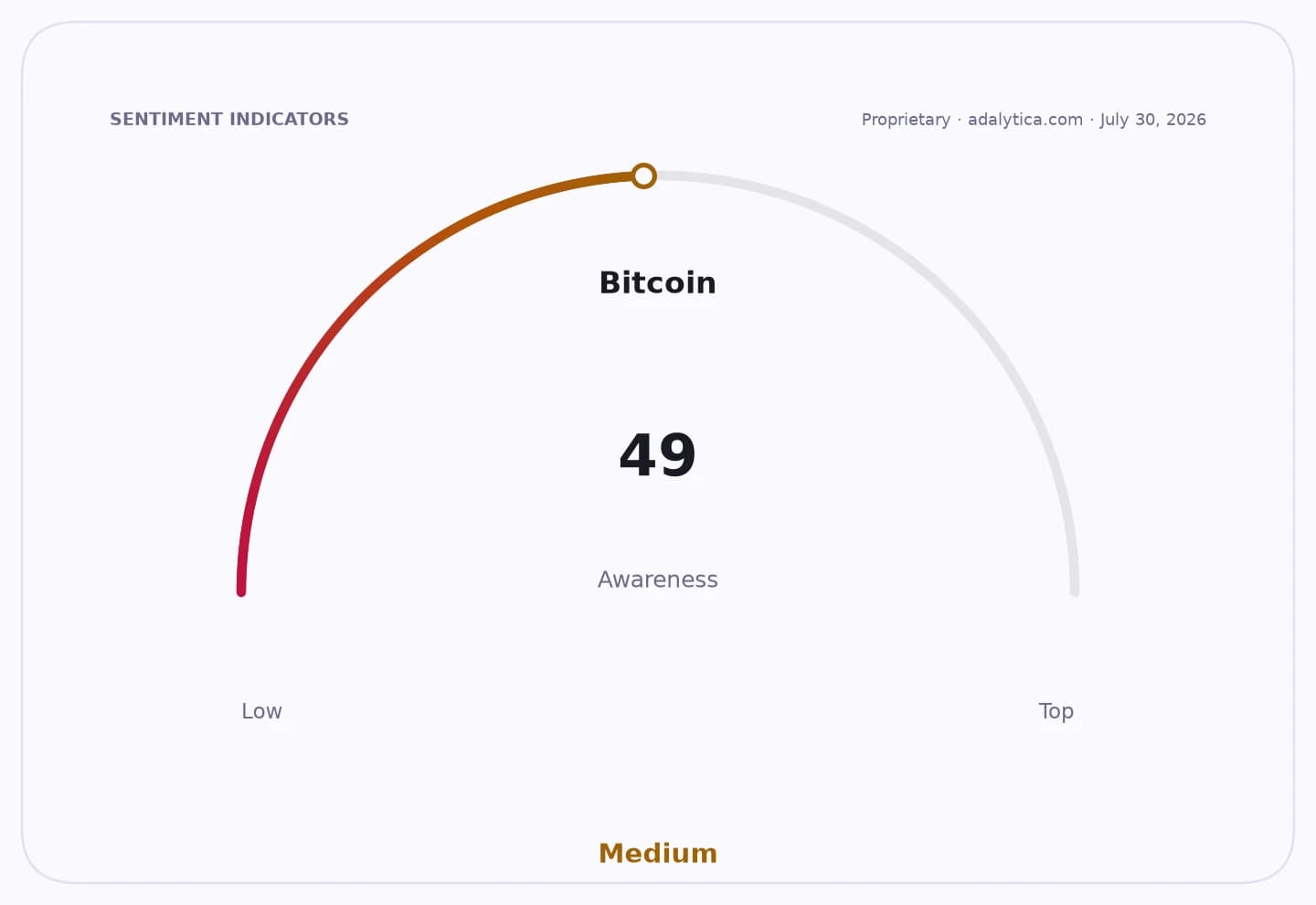
Sentiment IndicatorsⓘProprietary · adalytica.com · July 30, 2026
This is a snapshot — live sentiment, awareness and momentum for 130+ markets update continuously in the dashboard.Open AlphaPulse
The timing is important. Canada’s central bank policy rate remains high at 3.63%, while the 10-year U.S. Treasury yield sits near 4.61%, a backdrop that keeps investors alert to both inflation hedges and speculation in hard-asset proxies. Oil near the high-$80s also reinforces the inflation narrative that has historically supported interest in Bitcoin and other tokens as alternative stores of value. At the same time, Adalytica’s Bitcoin sentiment gauge shows fear, not euphoria, which suggests this is not a late-cycle retail blowoff but a broader base of ownership that can deepen when prices stabilize.
For investors, that is the key asymmetry. Wider ownership means the next leg of growth is less about raw onboarding and more about monetizing existing users through trading, staking, custody and payments. Coinbase Global and MicroStrategy remain the most obvious liquid proxies for renewed participation, while Robinhood’s crypto-heavy retail model also benefits if casual investors keep treating digital assets as a regular part of their portfolios. In Canada, the same trend supports exchanges and payment rails that can offer compliant access rather than chase volume on the margins.
Regulation is becoming part of the bullish case, not just the risk. New tax reporting rules tied to the OECD framework are pushing the market toward licensed, auditable platforms and away from shadow activity. That tends to favor scale players with strong compliance infrastructure and cross-border capabilities, while squeezing smaller venues that cannot absorb the cost of reporting and licensing.
The bigger narrative is straightforward: crypto ownership in Canada is no longer a speculative footnote, it is a durable consumer adoption trend taking shape in a more regulated market. If participation keeps rising while policy gets clearer, the winners will be the platforms that own distribution, custody and compliance. For investors, that argues for leaning into the picks-and-shovels of the crypto economy rather than betting only on token prices themselves.
| Entity | Gains | Losses |
|---|---|---|
| Coinbase Global | ▲More compliant trading flow | ▼Smaller unlicensed venues |
| Robinhood | ▲Higher retail crypto activity | ▼Low-volume price chop |
| Canadian exchanges | ▲Mainstream adoption | ▼Informal platforms |
| Canadian regulators | ▲Better tax visibility | ▼Shadow-market operators |




