Food inflation has cooled lately, but the relief for shoppers may prove temporary if rising farm costs keep feeding through to grocery prices.
Canada food inflation may rise as farm costs climb
That’s the key takeaway from Canada’s latest inflation data, where consumer food inflation slowed to 2.8% in August, the third straight monthly deceleration and the weakest pace since early 2024. At the same time, farm input costs jumped more than 11% in the second quarter from a year earlier, according to Statistics Canada — a sharp increase that history says usually shows up later at the checkout.
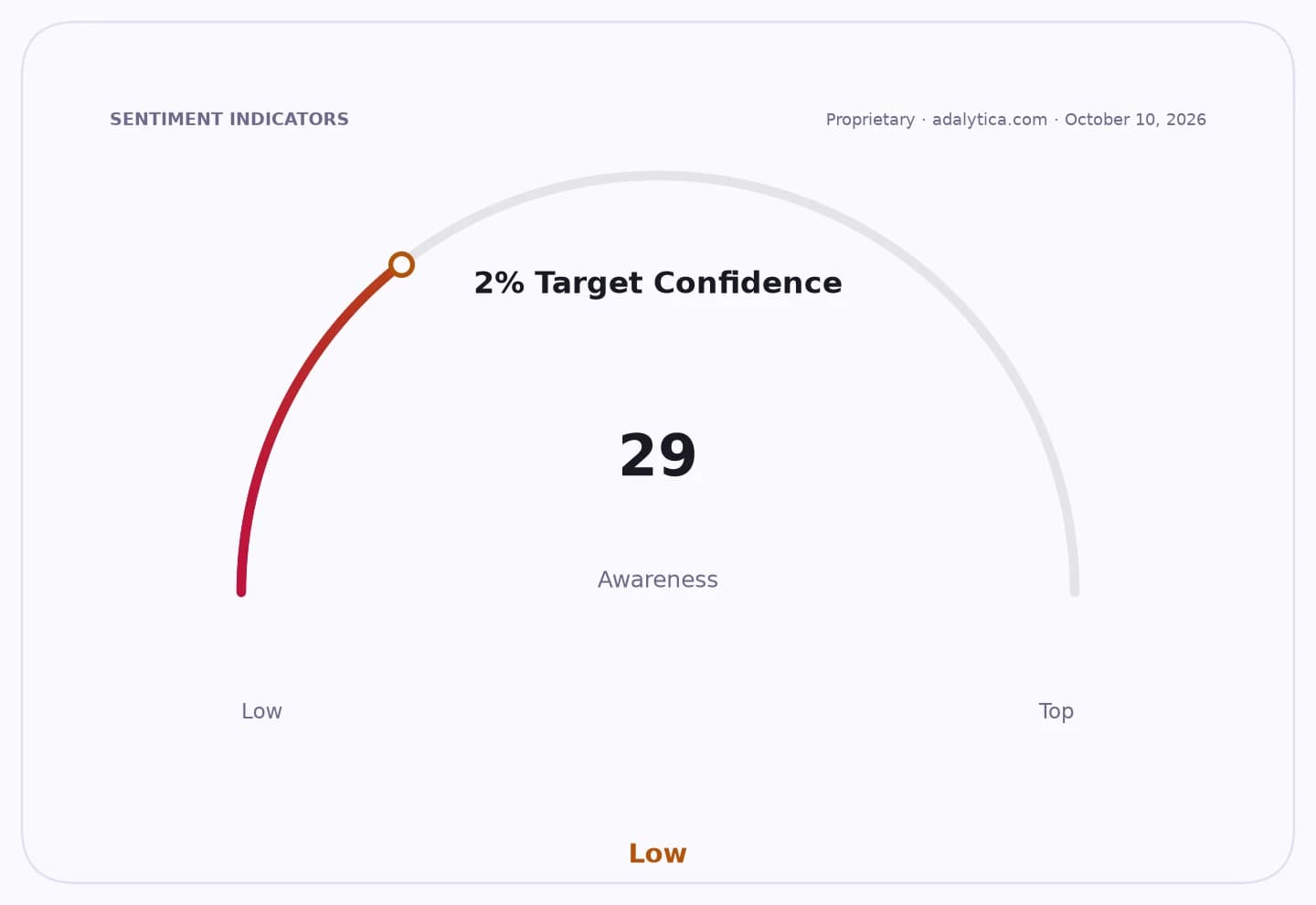
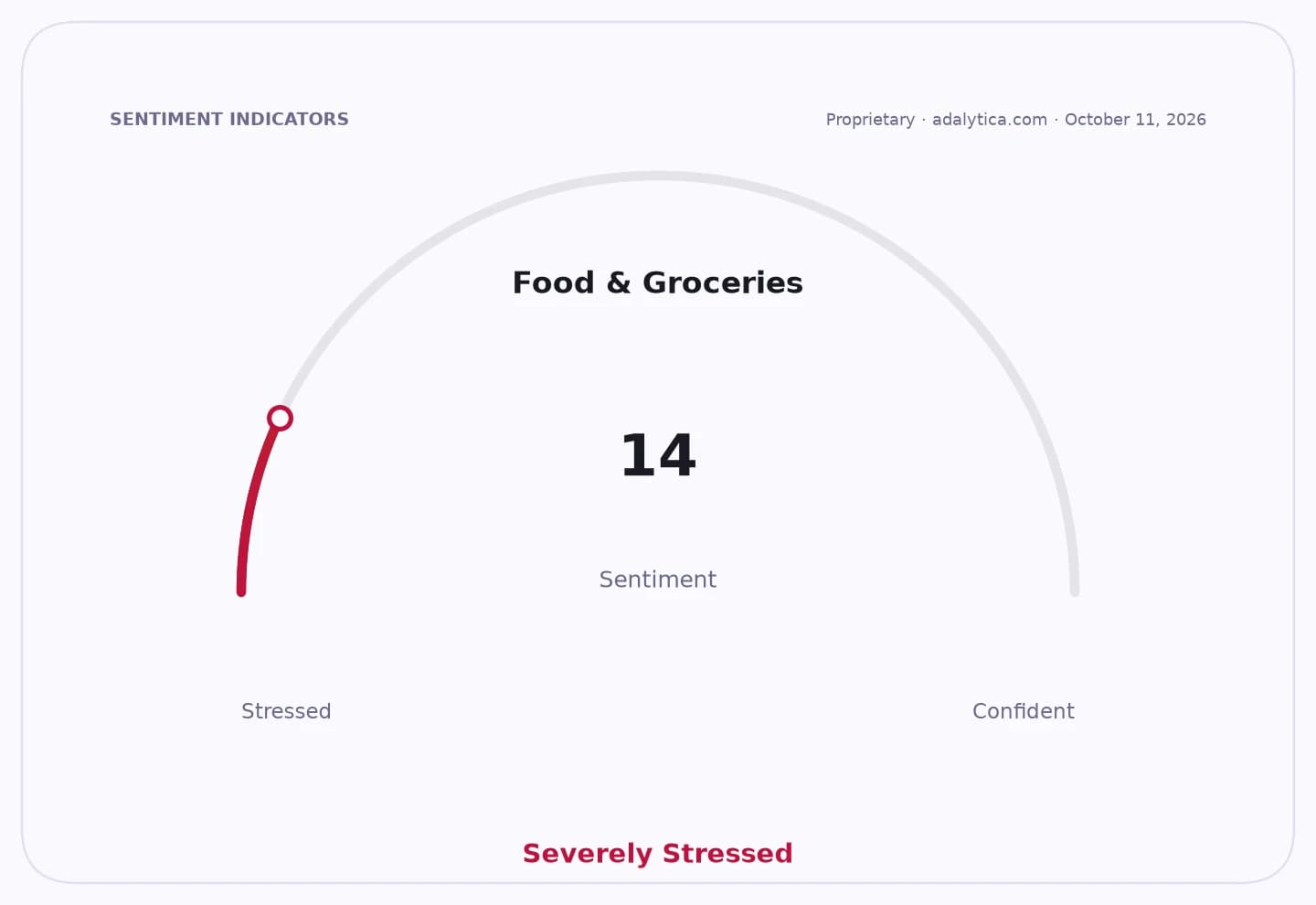
Sentiment IndicatorsⓘProprietary · adalytica.com · October 10, 2026
This is a snapshot — live sentiment, awareness and momentum for 130+ markets update continuously in the dashboard.Open AlphaPulse
Why does that matter? Because farm costs are a leading indicator for food prices. Farmers do not absorb diesel, fertilizer and machinery expenses forever. If those costs stay elevated, grocery chains, packaged-food makers and restaurant suppliers eventually have less room to keep prices contained, especially in a business where margins are already tight.
The latest spike is being driven by fuel and fertilizer, two of the most important inputs in food production and both sensitive to geopolitical shocks. The reporting points to fallout from U.S. President Donald Trump’s war with Iran as one source of pressure, which is exactly the kind of external shock that can ripple through energy markets, shipping lanes and agricultural supply chains all at once. When diesel is near record levels, the impact reaches far beyond the farm gate.
The numbers underscore how unusual this move is. According to Statistics Canada, only twice in the past 25 years have farm costs climbed faster on an annual basis: during the 2008 oil-price surge and in early 2022, when Russia’s invasion of Ukraine shook commodity markets and global supply chains. Those were not periods when food inflation stayed calm for long.
That makes the current lull in consumer prices look less like a new normal and more like a delay. Statscan’s farm-cost data only run through the second quarter, so they already lag current conditions. With diesel prices still close to historic highs, the pressure is likely building rather than easing. In other words, the consumer data may be flattering the near-term picture just as producer costs are setting up the next round of pricing pressure.
For investors, the story is straightforward: food makers, grocery retailers and restaurant operators could face a tougher second half if they cannot pass along higher input costs. Companies with strong brands, scale and pricing power will be better placed to protect margins. Smaller operators, or those exposed to commodities and transportation costs, may have to absorb more pain.
There’s also a broader macro angle. Persistent food-price pressure can complicate central banks’ efforts to declare victory over inflation, especially when households are still sensitive to grocery bills. Even modest food inflation matters because it hits consumers where they notice it most, and that can weaken discretionary spending elsewhere.
The lesson for long-term investors is not to chase the latest monthly inflation reading. Food inflation often turns with a lag, and the farm-cost data suggest the lag may be running out. If input costs keep climbing, today’s calm at the cash register could become tomorrow’s inflation headache. Worth watching closely.
| Entity | Gains | Losses |
|---|---|---|
| Farmers | ▲higher selling prices later | ▼higher diesel and fertilizer costs |
| Grocery chains | ▲short-term pricing stability | ▼future margin pressure |
| Food manufacturers | ▲time to adjust pricing | ▼higher input and logistics costs |
| Consumers | ▲brief relief at checkout | ▼renewed food inflation ahead |