Canada’s merchandise trade balance widened to a four-year high in June, with a $3.9 billion surplus underscoring how a weaker currency is improving export competitiveness and giving the economy a modest external tailwind.
Canada Trade Surplus Hits $3.9 Billion in June

The result matters because trade has become one of the few channels supporting Canadian growth at a time when domestic demand remains sensitive to high borrowing costs and uneven business investment. A cheaper Canadian dollar makes goods from energy to manufactured products more competitive abroad, while also making imports relatively more expensive — a combination that can lift nominal export revenues and narrow the drag from foreign purchases.
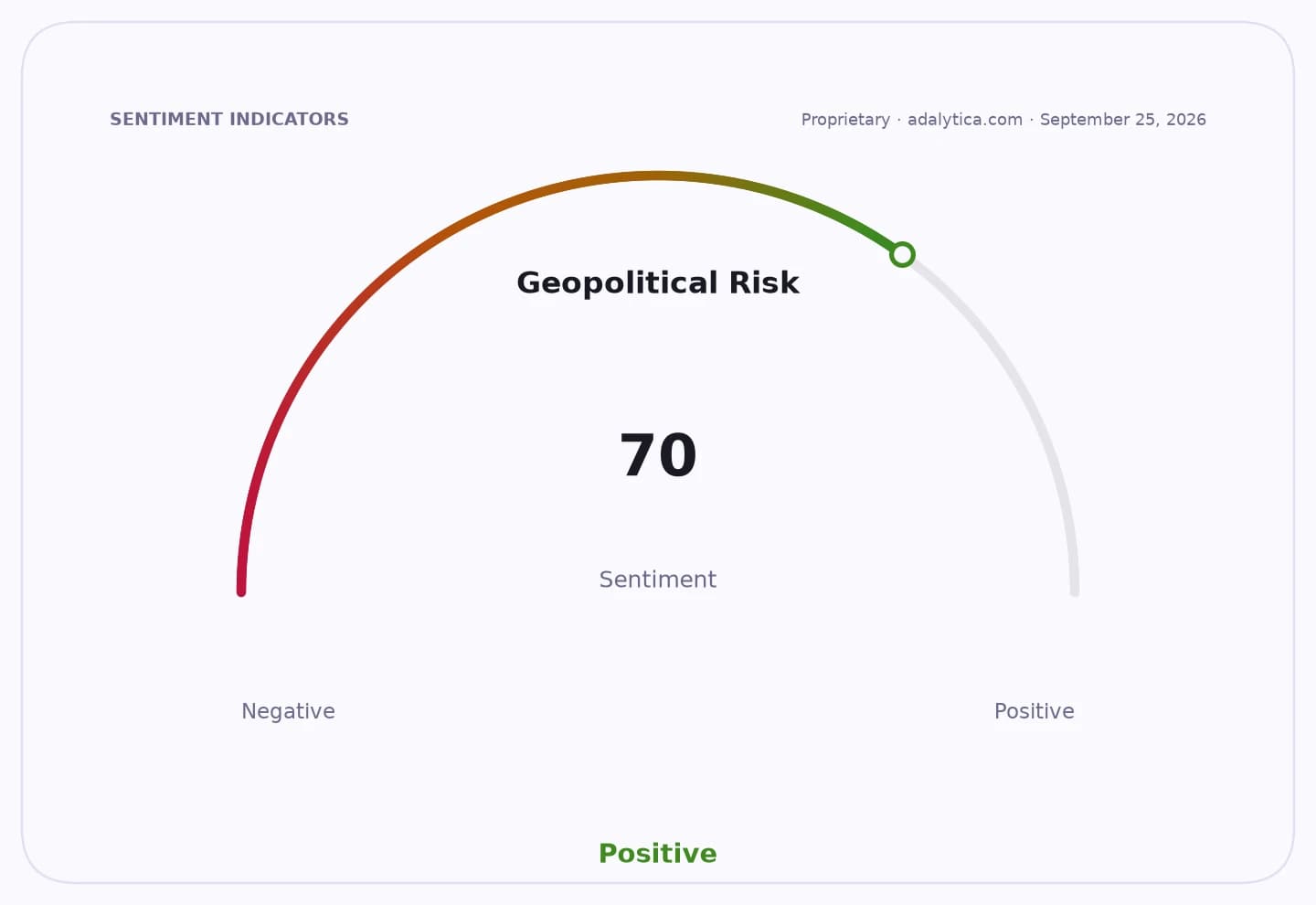
Sentiment IndicatorsⓘProprietary · adalytica.com · August 4, 2026
This is a snapshot — live sentiment, awareness and momentum for 130+ markets update continuously in the dashboard.Open AlphaPulse

The June reading follows a $4.2 billion surplus in May and extends a run of improved trade outcomes, even as global growth remains uneven. Exports rose 0.9% in the prior month, and the broad message from the data is that currency depreciation is doing some of the work policymakers and businesses had hoped for. For Canada, which relies heavily on trade with the U.S. and is exposed to swings in commodity demand, that can translate into a firmer contribution to GDP and a less negative current-account backdrop.
For investors, the key question is whether this is a temporary currency effect or the start of a more durable improvement in external balances. The Canadian dollar’s weakness supports exporters and Canadian-listed companies with foreign sales, while pressuring import-heavy retailers and firms that source components from abroad. It also gives the Bank of Canada a more complicated backdrop: a weaker currency can boost growth, but if it feeds import costs, it can also complicate the inflation picture.
The market has already reflected some of that shift. The FXC currency ETF has hovered below its 200-day moving average, with recent trading showing a subdued momentum profile even as the trade story improved. By contrast, Canadian National Railway has continued to outperform, a reminder that investors are favoring companies with leverage to North American trade flows and operating resilience. The broader narrative is that Canada’s external sector is getting help from the exchange rate just as domestic demand is losing some steam.
That said, the surplus is still vulnerable to a reversal if the currency strengthens, commodity prices soften or U.S. demand slows. If June proves to be a peak rather than a plateau, the trade boost could fade quickly. For now, though, the weaker dollar is giving Canada a cleaner trade picture — and investors a reason to watch the currency as closely as the shipment data.
| Entity | Gains | Losses |
|---|---|---|
| Canadian exporters | ▲Better price competitiveness | ▼Margin pressure from currency swings |
| Canada’s trade balance | ▲Wider surplus | ▼Import-cost inflation risk |
| FXC / Canadian dollar bears | ▲Lower FX valuations | ▼Unwound short-term strength |
| Importers / retailers | ▲— | ▼Higher landed costs |