Canada’s labor market weakened further in October, with unemployment rising and jobs falling for a third straight month, sharpening the policy dilemma for the Bank of Canada even as economists still expect another rate increase.
Canada unemployment rises as jobs fall again
Consumer Confidence
The unemployment rate climbed to 6.7% and employment fell by 4,700, underscoring a cooling economy that is starting to look less like a soft landing and more like a slowdown that could test consumers and lenders heading into year-end. The latest numbers add to evidence that higher borrowing costs are already biting, but they also keep inflation worries alive enough that markets are still pricing a tighter policy response.
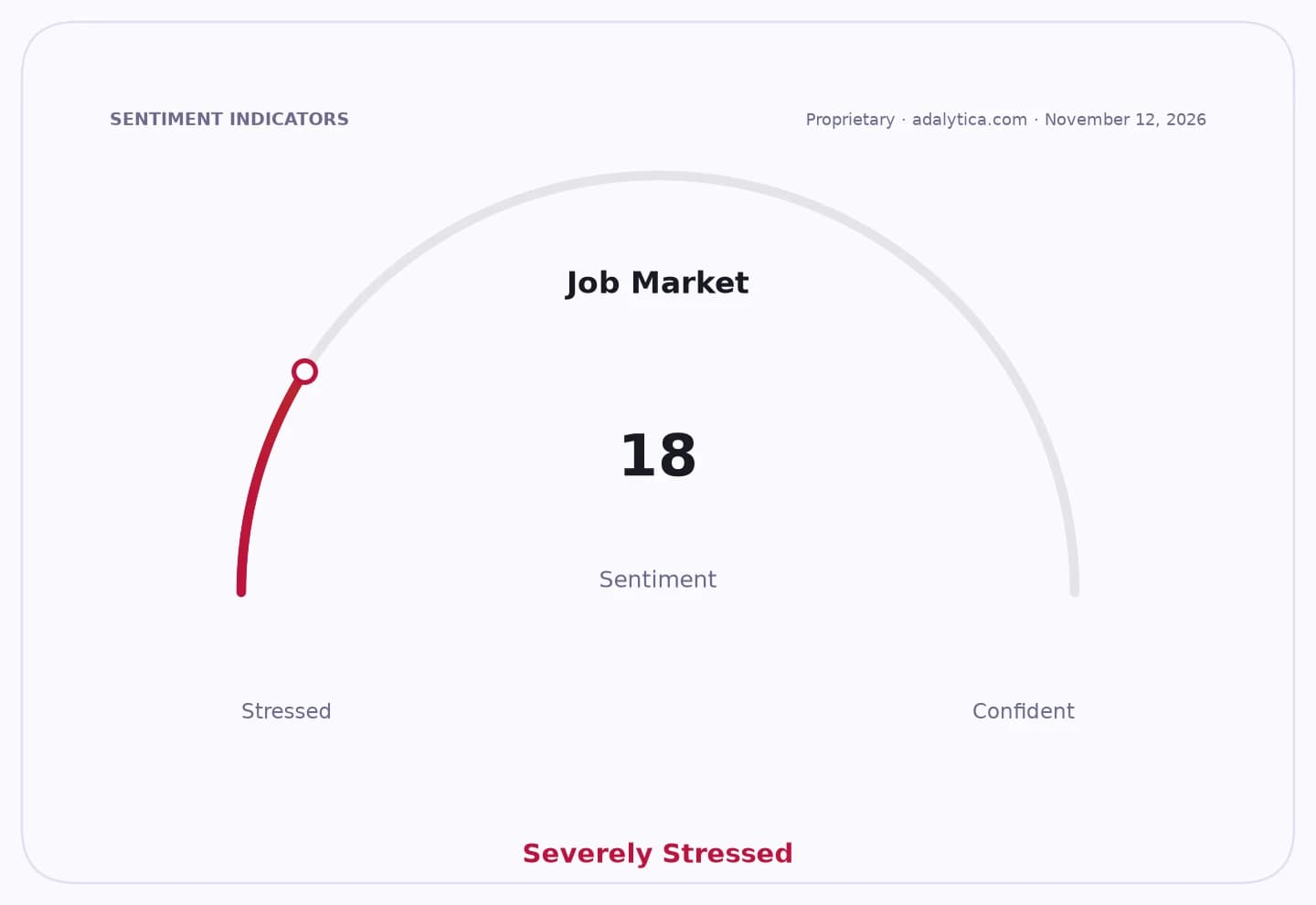
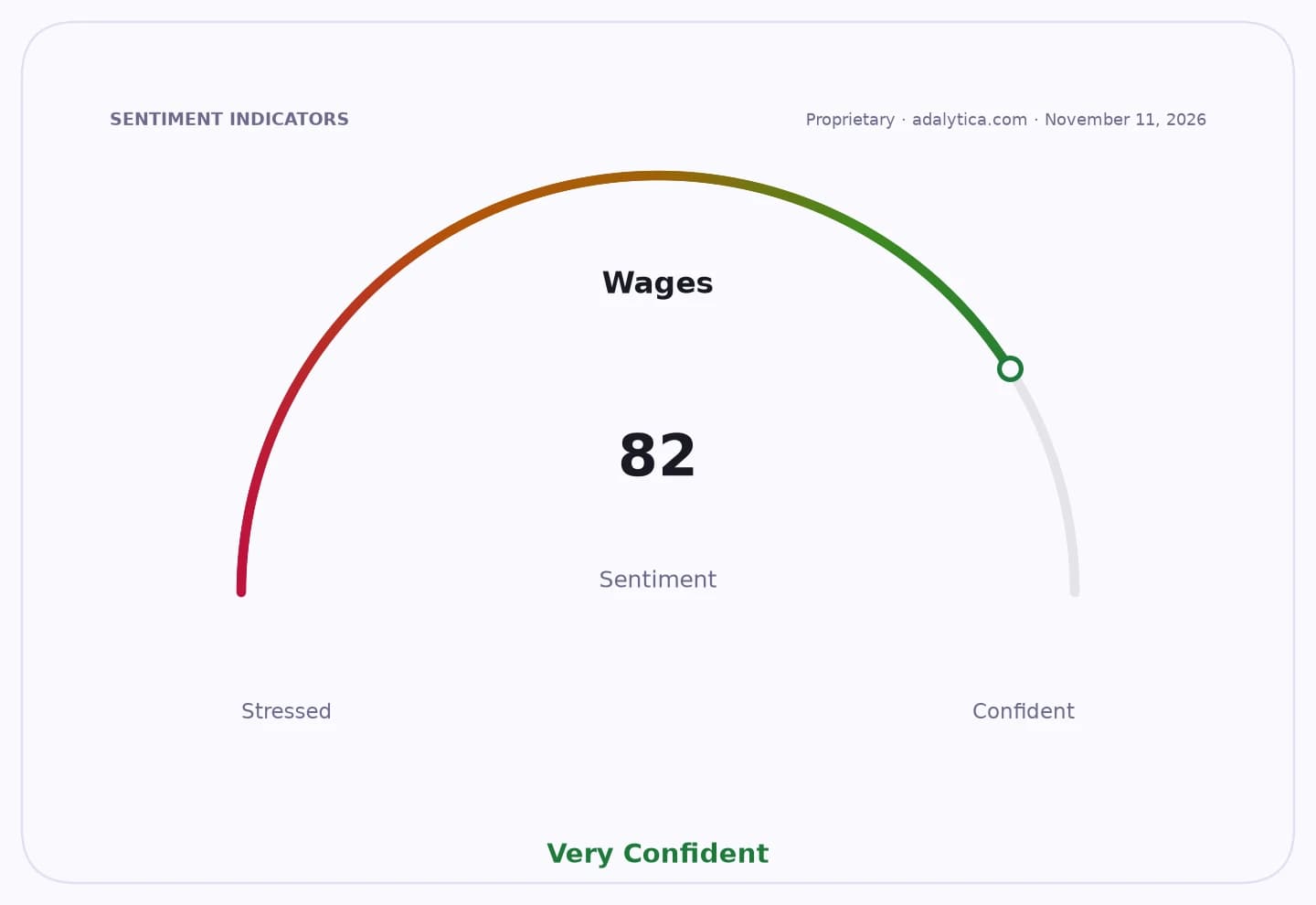
Sentiment Indicators
That tension is what matters most for investors. A weaker job market would normally argue for caution from the central bank, yet the risk that inflation expectations stay elevated means policymakers may still feel compelled to tighten further rather than pause too early.
The backdrop is particularly important for Canada’s banks, which are exposed to mortgage stress, credit quality and slower loan growth if unemployment keeps rising. Royal Bank of Canada, Toronto-Dominion Bank and Bank of Nova Scotia were among the major lenders whose shares have been tracking broader expectations for rates, growth and household debt service.
Adalytica’s consumer confidence recession gauge showed deepening fear, while its measure of confidence in the Bank of Canada’s inflation target pointed to extreme concern, highlighting how quickly sentiment can swing when labor data weaken and inflation remains sticky. That combination leaves the central bank facing a narrower runway as it weighs growth risks against price pressures.
For now, the labor report strengthens the case that Canada’s economy is losing momentum, but it does not fully remove the odds of another rate move. The next inflation readings and Bank of Canada commentary will determine whether October’s job losses become the start of a broader easing in policy pressure or simply a pause before more tightening.
| Entity | Gains | Losses |
|---|---|---|
| Borrowers | ▲Lower recession odds if slowdown deepens | ▼Higher debt-service strain if rates rise |
| Bank of Canada | ▲More evidence of cooling labor demand | ▼Less room to tighten without harming growth |
| Canadian banks | ▲Potentially lower bad-loan risk if rates peak soon | ▼Slower loan growth, higher credit stress |
| Job seekers | ▲More pressure for wage moderation later | ▼Higher unemployment and weaker hiring |