Canadian borrowers may be approaching a turning point in mortgage pricing, with National Bank chief economist and strategist Stéfane Marion saying 5-year fixed rates look increasingly attractive as borrowing costs near what he believes could be their peak.
Canadian borrowers weigh 5-year fixed mortgage rates

That view matters because the choice between fixed and variable mortgages is now tied less to a simple bias toward lower initial payments and more to a broader call on Bank of Canada policy, bond yields and household resilience. If Marion is right that 5-year fixed rates are already close to their high-water mark, borrowers who lock in now could avoid paying more if rates stay elevated or rise again.
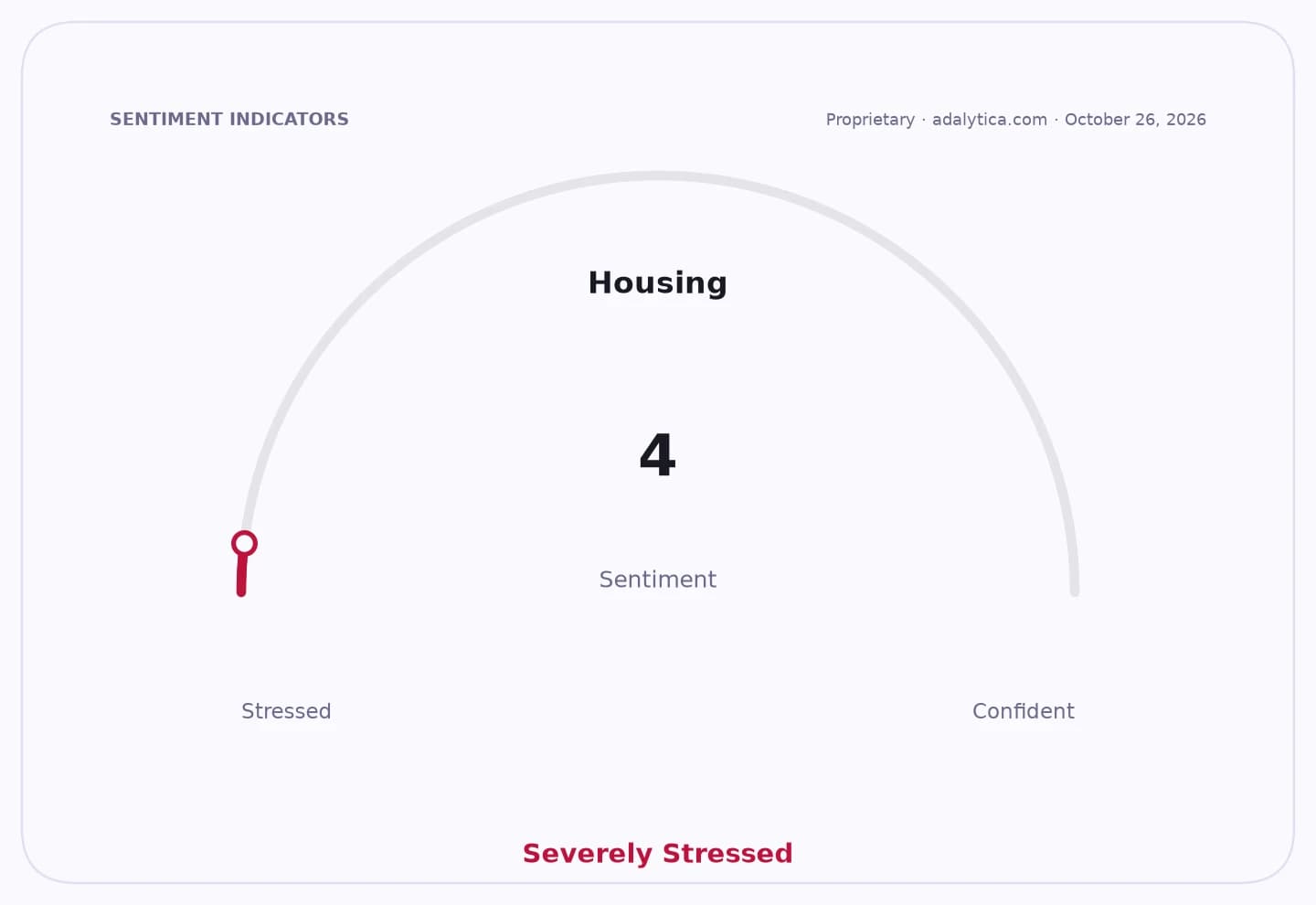
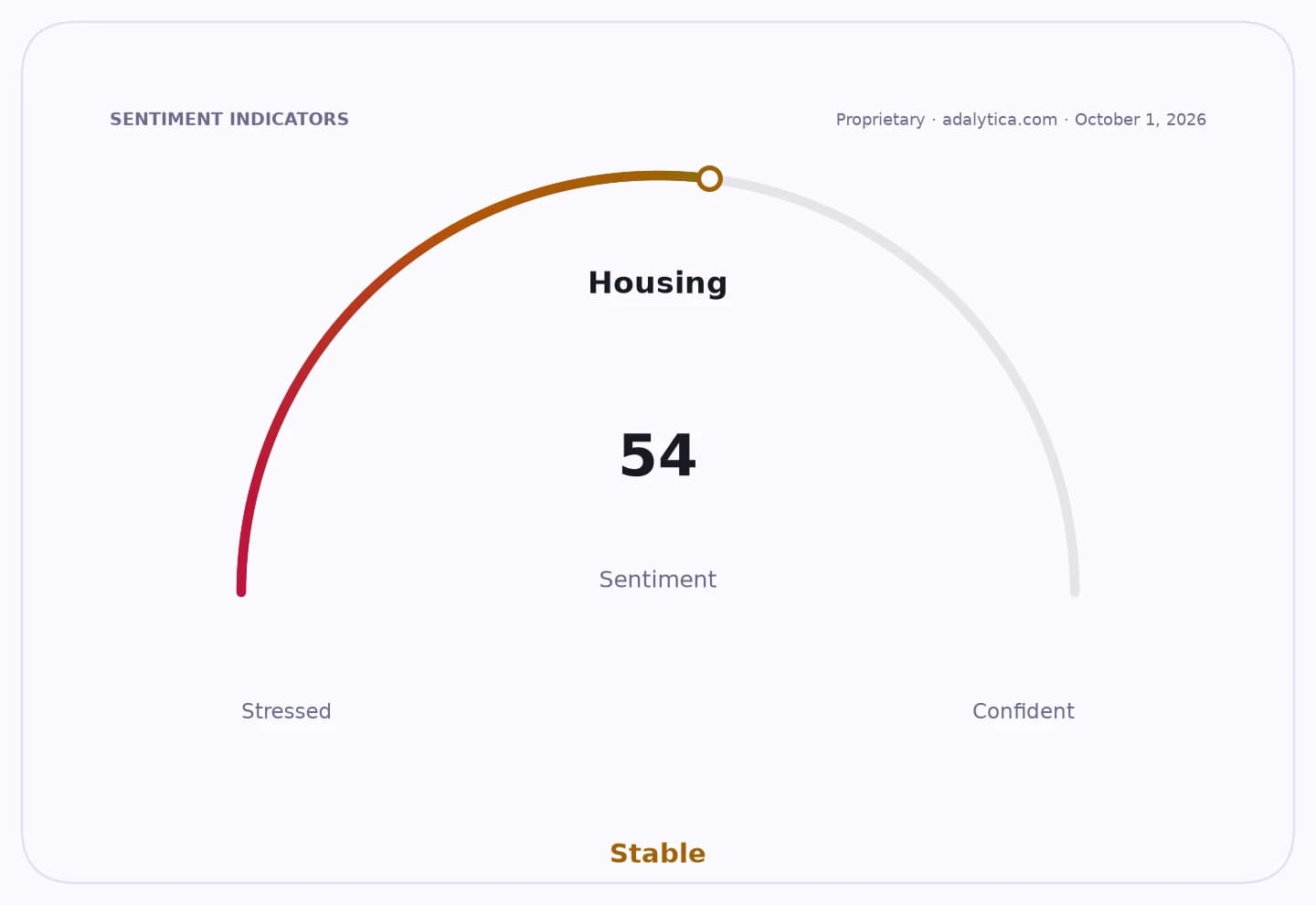
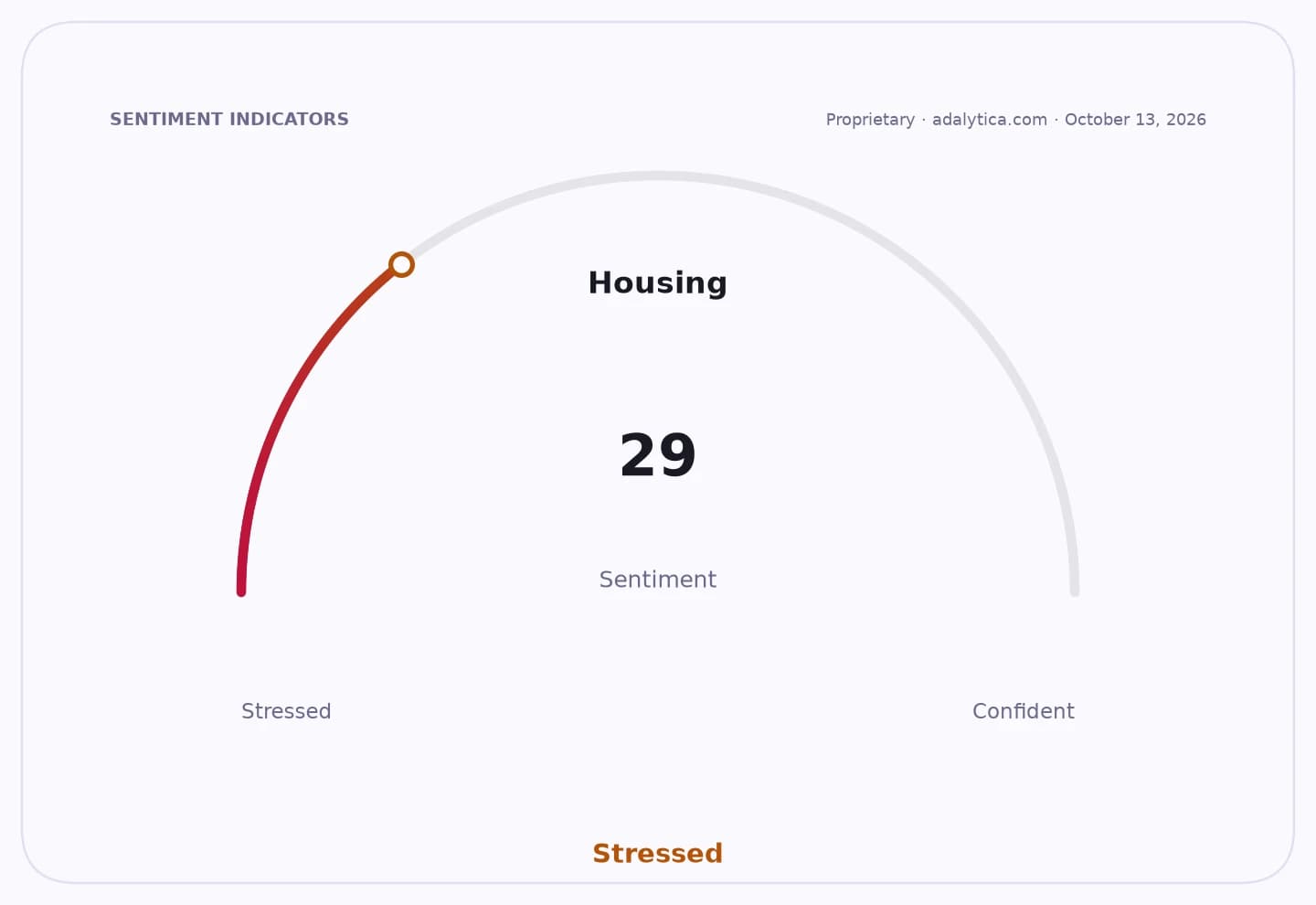
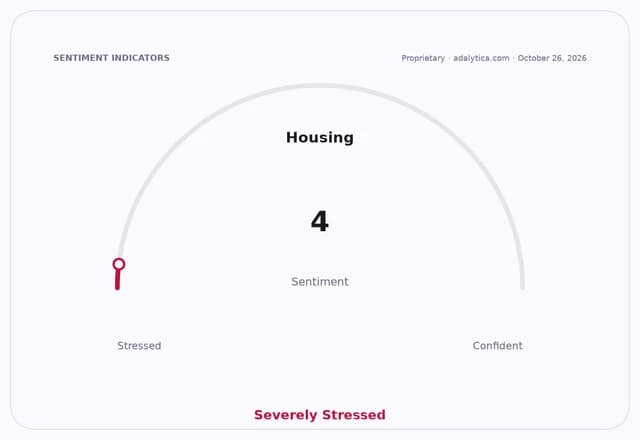
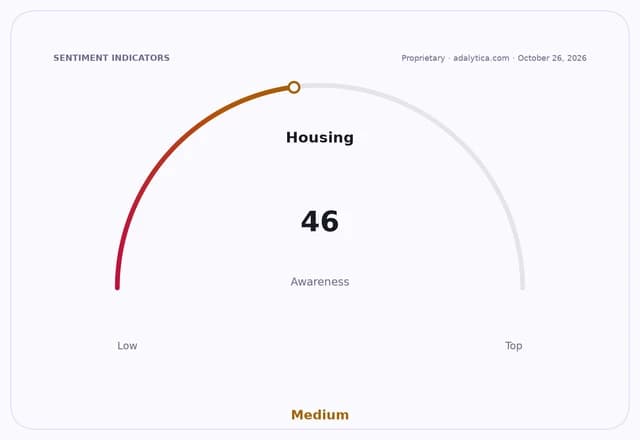
Sentiment IndicatorsⓘProprietary · adalytica.com · October 26, 2026
This is a snapshot — live sentiment, awareness and momentum for 130+ markets update continuously in the dashboard.Open AlphaPulse
Speaking at Mortgage Professionals Canada’s national conference in Calgary, Marion said his own forecast favors 5-year fixed borrowing because he sees room for only three more Bank of Canada hikes. He added that variable-rate mortgages could still make sense for some households if the tightening cycle proves shallow, but warned against a rate increase at the central bank’s Oct. 28 meeting given economic uncertainty and the sensitivity of Canadian households to higher debt-service costs.
The call lands at a delicate moment for the housing market and lenders. Bond yields have risen sharply, pushing fixed mortgage pricing higher even as the broader economy faces slower growth and tighter financial conditions. That combination tends to cool housing activity by sidelining buyers, freezing would-be sellers and raising refinancing stress for households already carrying large balances.
For investors, the implication is twofold. Mortgage brokers and lenders could see continued demand for fixed-rate products if borrowers decide the cycle is close to peaking, even as higher rates reduce affordability and suppress transaction volumes. At the same time, any Bank of Canada move in October would carry outsized significance for banks, mortgage originators and housing-linked equities because the market is already highly sensitive to further changes in borrowing costs.
The debate also reflects a broader policy trade-off. A more hawkish central bank might help contain inflation, but it would deepen pressure on indebted households and housing demand. A pause, by contrast, would support affordability at the margin and could stabilize the mortgage market, though it would not reverse the damage already done by the sharp run-up in yields and lending rates.
For now, Marion’s message is that borrowers should not assume better mortgage pricing is coming soon. If his forecast proves right, the next move in policy may matter less than the fact that fixed rates are already close to their ceiling.
| Entity | Gains | Losses |
|---|---|---|
| Borrowers locking 5-year fixed rates | ▲Rate certainty | ▼Potentially higher upfront cost |
| Variable-rate borrowers | ▲Flexibility if hikes are limited | ▼Greater payment risk |
| Mortgage lenders/brokers | ▲Demand for fixed products | ▼Lower housing turnover |
| Bank of Canada hawks | ▲Inflation-fighting credibility | ▼Household debt stress |