The Canadian dollar is heading into Friday with domestic jobs data on deck, but the bigger market mover is likely to be the U.S. payrolls report, which could reshape expectations for interest rates on both sides of the border.
Canadian dollar, FXC at 69.70 ahead of U.S. payrolls

That matters because currencies do not trade on headlines alone; they trade on growth differentials, rate paths and what investors think central banks will do next. For the loonie, a solid Canadian labor print may help at the margin, but a stronger-than-expected U.S. jobs number would probably keep the dollar bid and pressure FXC, the ETF tracking the Canadian dollar, which has already slipped to about 69.70 after trading near 72.40 earlier this year.
The setup is straightforward. Canada’s unemployment rate has held around 4.2% to 4.3% in recent months, according to the data provided, and the July forecast points to a slight improvement to 4.18%. That suggests a labor market that is cooling only gradually, not cracking. But the U.S. is the real anchor for the Canadian dollar because American labor strength or weakness tends to steer Treasury yields, the dollar and global risk appetite.
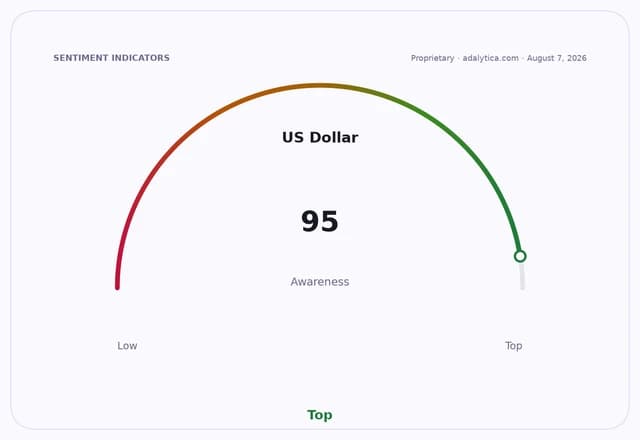
Right now, that backdrop is not especially friendly for the loonie. The 2-year U.S. yield is hovering around 4.18%, while the 10-year sits near 4.63%, levels that tell investors rates are still high enough to keep the dollar attractive. Adalytica’s U.S. dollar trade signals are flashing “Extreme Greed,” a reminder that positioning is already tilted toward greenback strength. When the market is that one-sided, payrolls can either reinforce the move or trigger a sharp rethink.
For investors, the key question is not whether the Canadian dollar moves a few tenths on Friday. It is whether this report changes the broader story for rates, growth and cross-border capital flows. A firm U.S. jobs number would likely keep the Federal Reserve in no rush to ease, which supports the dollar and leaves Canadian assets facing a firmer currency headwind. A softer payrolls print, by contrast, could ease pressure on FXC and give Canada a bit more room to breathe, especially if domestic employment data also surprises to the upside.
FXC itself is still trading below its 200-day moving average of about 70.49, even as the 50-day average has been gradually flattening near 69.53. That is not a dramatic trend, but it does show how much the currency has been boxed in by rate expectations and U.S. dollar strength. For long-term investors, the message is simple: Friday’s Canadian jobs report matters, but the U.S. payrolls number is the one most likely to set the tone for the loonie into the next leg of the cycle. Worth watching, especially if you own Canadian equities, U.S.-listed Canadian ETFs or any portfolio with meaningful currency exposure.
| Entity | Gains | Losses |
|---|---|---|
| U.S. dollar | ▲Strong payrolls, higher yields | ▼Softer jobs data |
| Canadian dollar | ▲Weak U.S. payrolls, softer dollar | ▼Strong U.S. payrolls |
| FXC holders | ▲Lower U.S. dollar pressure | ▼Further loonie weakness |
| Importers into Canada | ▲Stronger loonie | ▼Higher U.S. dollar costs |




