Capital City Bank Group is leaning on higher-quality credit assets to support income growth, even as regional lenders remain under pressure to prove that loan books can expand without a rise in credit losses.
Capital City Bank Group cites quality credit assets
Board Chair Bill Smith said quality credit assets are influencing the bank’s income growth, a framing that matters because net interest income remains the core earnings engine for smaller lenders. For investors, the message is that Capital City Bank is trying to preserve profitability by prioritizing credit quality over aggressive loan growth, a trade-off that can help protect margins and capital if the economy softens.
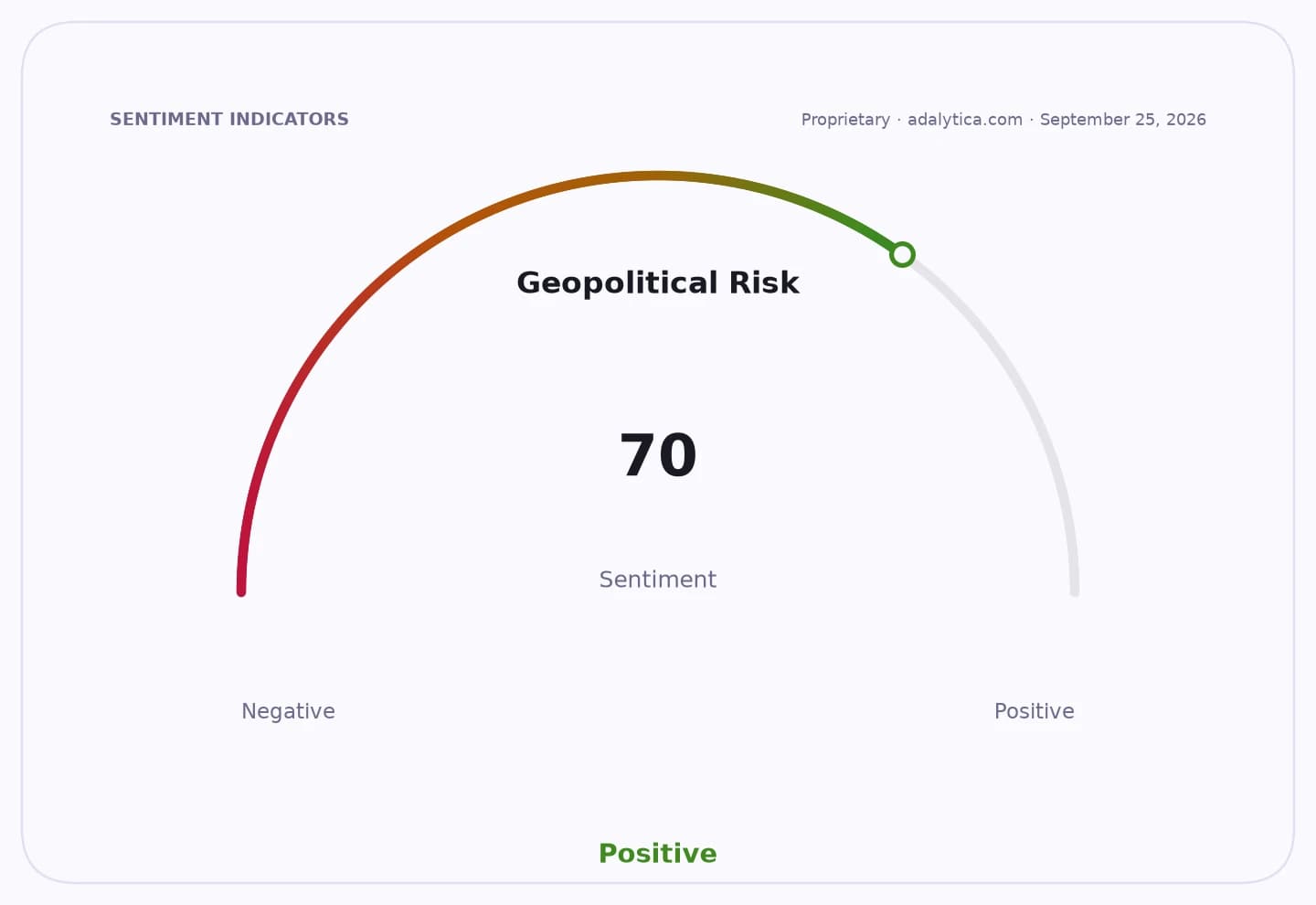
Sentiment IndicatorsⓘProprietary · adalytica.com · August 1, 2026
This is a snapshot — live sentiment, awareness and momentum for 130+ markets update continuously in the dashboard.Open AlphaPulse
That focus comes as bank credit quality is getting more scrutiny across the industry. Fitch has warned that U.S. credit conditions are increasingly tied to confidence in AI investment, while consumer sectors and private credit are showing strain, underscoring how lenders are being asked to stay selective at a time when credit risk is unevenly distributed.
Capital City Bank’s latest filing suggests it is still controlling asset quality carefully. Nonperforming assets totaled $13.4 million in the most recent quarter, while the allowance for credit losses stood at $31.0 million, indicating the bank is keeping reserves in place as it watches borrower performance. The company also said it continues to monitor markets closely and make only minor adjustments to underwriting without taking on excessive rate risk.
The stock has been steady to firmer alongside that message. Capital City Bank shares closed at $64.81 on July 31, below the recent July 16 high of $70.99 but still above the 50-day moving average of $65.39 and the 200-day moving average of $60.77, a sign the trend remains constructive despite a recent pullback. RSI readings have cooled to 37.8 from overbought levels earlier in July, while MACD has slipped below its signal line, suggesting momentum has softened after the earlier run-up.
For investors, the key question is whether the bank can keep growing income without sacrificing loan discipline. If credit quality stays intact, the bank should have more room to defend returns; if the broader credit backdrop worsens, the market is likely to reward lenders with the cleanest books and punish those exposed to weaker borrowers. The next catalyst will be whether Capital City Bank can show that quality credit assets continue to translate into stable earnings in the next round of results.
| Entity | Gains | Losses |
|---|---|---|
| Capital City Bank Group | ▲Better income mix | ▼Faster loan growth |
| Conservative lenders | ▲Lower credit risk | ▼Higher-yield risk-taking |
| Borrowers with strong credit | ▲Easier access to loans | ▼Limited leverage from tighter underwriting |
| Weak-credit borrowers | ▲— | ▼Stricter approvals |