Caribbean security fears are starting to show up where they always matter most: in bookings, valuation and the market’s appetite for travel exposure.
Caribbean security fears reshape travel demand
The region’s tourism model has long depended on a simple bargain — sun, beaches and political stability in exchange for foreign spending. That bargain is getting weaker as rising crime and safety concerns erode confidence in the Caribbean, even as parts of Latin America such as Brazil and Colombia lean into tourism as an engine of growth. For investors, that split is crucial: travel demand is no longer just a function of consumer income or airfare, but of geopolitics, public security and destination risk.
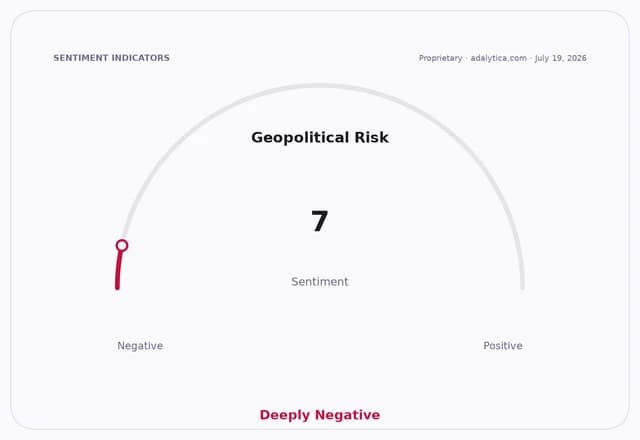
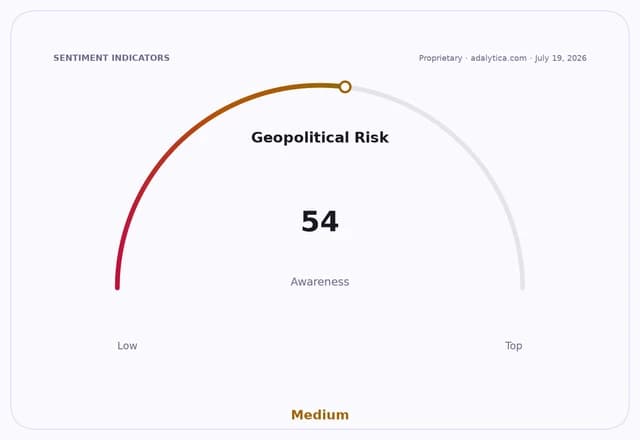
Sentiment IndicatorsⓘProprietary · adalytica.com · July 19, 2026
This is a snapshot — live sentiment, awareness and momentum for 130+ markets update continuously in the dashboard.Open AlphaPulse
That matters economically because tourism is one of the Caribbean’s most important sources of hard currency, jobs and public revenue. When travelers shift away from perceived-risk destinations, the hit ripples through hotels, airlines, car rentals, excursions, restaurants and local governments. It also changes capital allocation: countries that can credibly market safety can win share, while those that cannot risk losing pricing power, occupancy and foreign exchange inflows.
Booking Holdings and Expedia sit in the middle of that flow. Their platforms monetize global travel demand, but destination risk can redirect those flows quickly. Booking’s shares have been under pressure, falling to $181.68 on July 17 from $184.61 a day earlier and far below the levels seen earlier this year, even though the stock remains above its 50-day moving average. Expedia, by contrast, has held up better, with shares at $268.77 on July 17 after trading near $270, still well above both its 50-day and 200-day moving averages. The divergence suggests the market is still sorting out which travel names can best absorb geopolitical disruption and which are more exposed to route and destination mix shifts.
Geopolitical Risk vs BKNGadalytica.com
Explore this data interactively — full history, time series and cross-market comparisons.Open AlphaPulse
The broader macro setup is reinforcing the point. Adalytica’s Global Stability Sentiment sits at 7, or “Extreme Fear,” while S&P 500 trade signals show “Fear” at 30, signaling a market that is more sensitive to instability than it was earlier in the year. That environment tends to favor travel companies with better diversification and digital reach, while punishing operators and countries tied to a single risk profile. Airlines are feeling the strain too: American Airlines has slipped to $14.98 after touching $16.52 earlier this month, a reminder that any disruption in route demand can hit the carriers that depend on discretionary leisure travel.
The investment implication is straightforward: this is a destination-selection trade, not a broad tourism trade. The market underestimates how quickly security perceptions can reprice Caribbean demand and how fast that demand can migrate toward safer Latin American alternatives. I believe the better asymmetric opportunities lie in the platforms and infrastructure that capture rerouted spending, not in the places losing it. Watch for any policy push to improve security in the Caribbean, but until then, investors should prefer diversified online travel intermediaries and avoid assuming every beach market will recover on the same timetable.
| Entity | Gains | Losses |
|---|---|---|
| Brazil and Colombia | ▲Inbound tourism share | ▼Caribbean rivals |
| Booking Holdings / Expedia | ▲Re-routed travel bookings | ▼Destination-specific demand shock |
| Caribbean hotels and local economies | ▲Security reforms, if credible | ▼Occupancy, pricing power, FX inflows |
| Airlines serving leisure routes | ▲Safer destination mix | ▼Route volatility, weaker fare power |