Chile’s 2026 growth outlook has been cut again, with the IMF now penciling in just 0.6% expansion, underscoring a weakening economy that is set to trail almost all of Latin America and leave policymakers with little room to maneuver.
Chile 2026 growth forecast cut to 0.6%

The downgrade matters because it confirms that Chile’s slowdown is no longer a temporary wobble tied to one sector, but a broader macro drag from weaker mining output and soft domestic demand. The IMF’s latest forecast, down from 1.8% in July and 2.4% in April, lands just below Chile’s finance ministry estimate of 0.7% and far beneath the 2.2% pace the fund sees for the region as a whole.
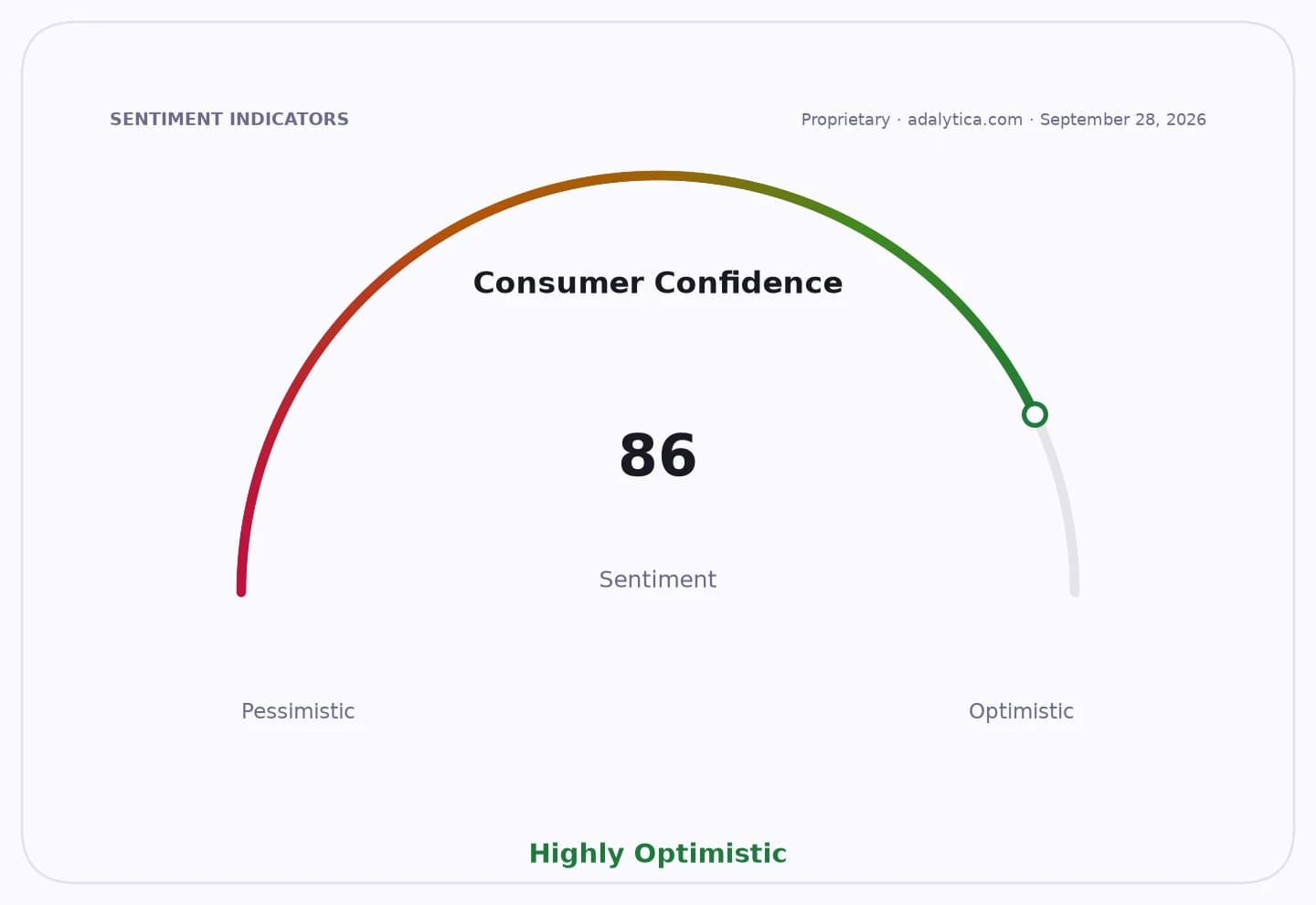
Sentiment IndicatorsⓘProprietary · adalytica.com · October 14, 2026
This is a snapshot — live sentiment, awareness and momentum for 130+ markets update continuously in the dashboard.Open AlphaPulse

That would make Chile the second slowest-growing economy in Latin America in 2026, ahead only of Bolivia, which the IMF expects to contract 3%. By contrast, the fund sees Paraguay growing 4.6%, Peru 3%, Ecuador 2.7%, Brazil and Colombia 2.2% each, Argentina 2.1%, Mexico 1.5% and Uruguay 1.3%.
For investors, the message is that Chilean assets are being priced against a much weaker domestic demand backdrop. Bank of Chile’s American depositary shares closed at $39.10 on Oct. 13, below both the 50-day average of $41.05 and the 200-day average of $39.29, while its RSI reading of 33.3 points to a market that has turned cautious. SQM shares finished at $62.83, also under their 50-day average of $71.02 and 200-day average of $74.92, reflecting pressure on a key Chilean export proxy.
The fund’s labor-market and inflation view adds to the drag. It expects unemployment to average 9.5% in 2026 and 9.6% in 2027, while inflation is seen at 3.5% next year after 3.7% in 2026, suggesting growth remains too weak to generate a clean rebound in hiring or spending. The current-account deficit should narrow to 0.3% of GDP in 2026, but that improvement comes mostly from slower activity rather than a healthier expansion.
The revision also sharpens the policy challenge for the next administration, which the IMF says will preside over average growth of about 2% across its term, below the 2.5% penciled in by the finance ministry. Economists at OCEC-UDP said the cuts reflect Chile’s poor 2026 performance so far, particularly the steep contraction in mining and the weakening of internal demand.
More broadly, the IMF’s global report argues that the world economy remains resilient but uneven, with technology investment, fiscal support and trade rerouting masking damage from energy shocks and geopolitical tensions. For Chile, which is more exposed to commodity cycles than many peers, that global resilience is not enough to offset the domestic slowdown.
With the 2027 forecast at 2.6% and inflation still near target, the key risk for Chilean markets is that growth stays mediocre long enough to keep pressure on earnings, credit demand and consumer activity. Upcoming local data and any further policy signals from the central bank or finance ministry will be watched for signs that the downgrade is bottoming out rather than deepening.
| Entity | Gains | Losses |
|---|---|---|
| Chilean exporters | ▲weaker peso support | ▼domestic demand |
| Bank of Chile | ▲loan book resilience if rates ease | ▼slower credit growth |
| SQM | ▲some commodity linkage | ▼Chile growth proxy sentiment |
| Chile consumers | ▲possible inflation easing | ▼jobs and spending growth |