AI is beginning to alter employment patterns in China in a way that is visible enough to make workers, policymakers and investors take notice, even as US-China tech tensions deepen and Washington moves to constrain Beijing’s access to advanced AI hardware and tools.
China AI automation pressures white-collar jobs

The most important development is not a single layoff announcement but the broader economic shift: companies in the world’s second-largest economy are already using AI to automate parts of white-collar work while policy pressure from the US is accelerating China’s incentive to build more of its own stack. That combination matters because it points to a faster reallocation of labor, capital and supply chains across the AI ecosystem, with consequences for wages, productivity and corporate margins.
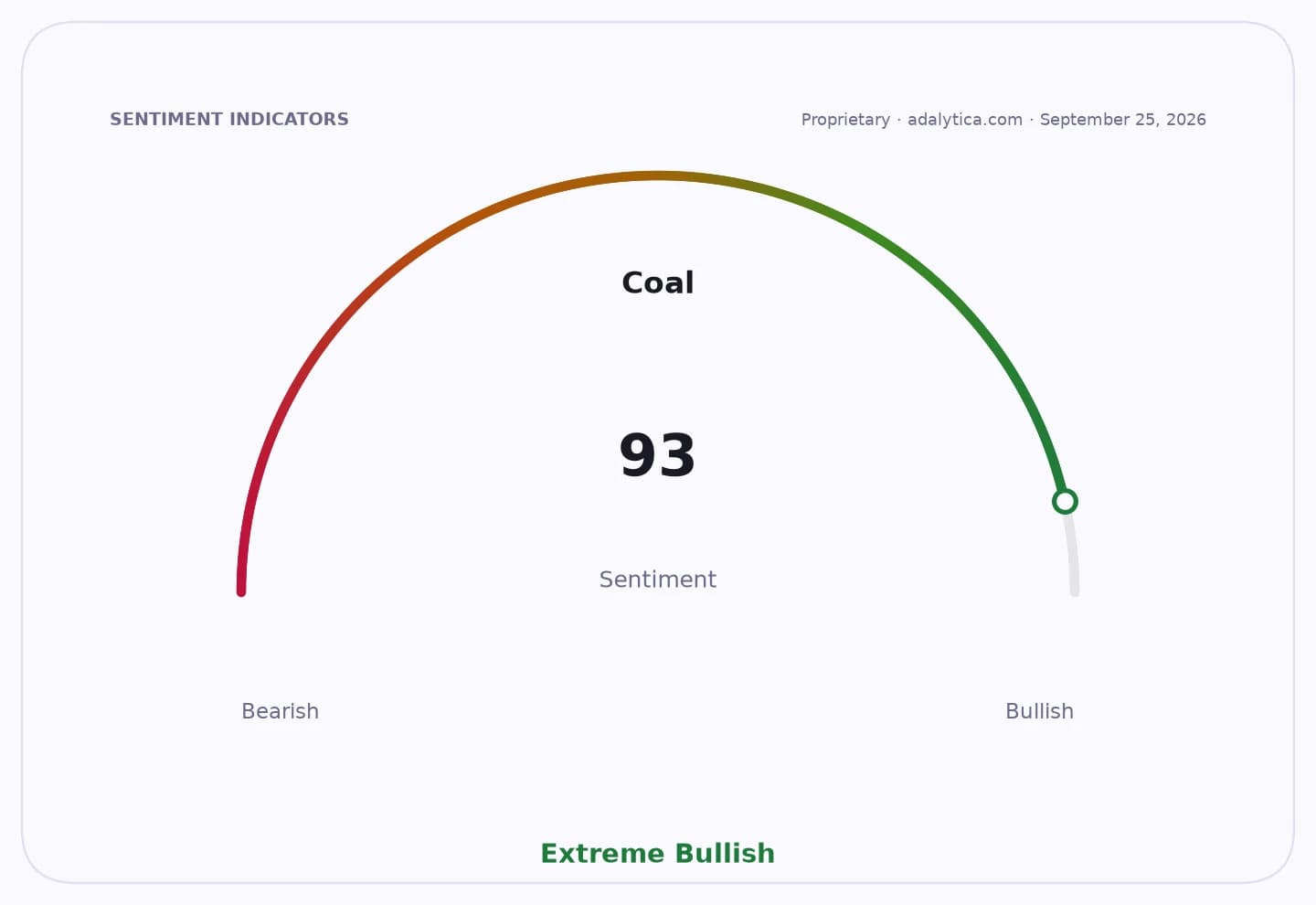
Sentiment IndicatorsⓘProprietary · adalytica.com · August 1, 2026
This is a snapshot — live sentiment, awareness and momentum for 130+ markets update continuously in the dashboard.Open AlphaPulse
China’s labor market remains large, but the direction of travel matters. When AI begins replacing routine tasks in sectors such as customer service, sales, administration and software support, the impact is felt first in job churn rather than headline unemployment. That can restrain hiring, reduce demand for lower-value knowledge work and widen the gap between firms able to deploy AI efficiently and those that cannot. For an economy already grappling with weak domestic demand and pressure on private-sector confidence, productivity gains from AI may come with a near-term cost in employment stability.
The geopolitical backdrop is reinforcing the trend. The US ban on Chinese humanoid robots, framed as a national security measure, underscores how quickly AI competition has become an industrial-policy issue. Rather than slowing China’s AI push, restrictions may be pushing firms to automate more aggressively at home and lean harder into domestic model development. Beijing’s release of a 2.8 trillion-parameter AI model for free fits that strategy: open-weight distribution can accelerate adoption, lower costs and broaden access for Chinese companies, even as it heightens security concerns abroad.
That is why investors are watching both the labor implications and the market winners. AI adoption can compress headcount needs and lift margins for software, cloud and platform companies that sell automation tools, while hurting labor-intensive services and firms slow to retool workflows. The effect is visible in US markets too: Microsoft, Nvidia and other AI leaders remain central to the infrastructure build-out, but their valuations now depend on whether the AI cycle keeps translating into revenue growth faster than the cash burn needed to sustain it.
The technical picture in US megacap AI names shows the market is still pricing in that race, though with plenty of volatility. Microsoft’s shares have swung sharply in recent weeks, while Nvidia remains well above its longer-term average despite pullbacks, reflecting continued investor belief that AI spending will stay elevated. At the same time, broader trade-related gauges point to persistent tension rather than resolution. Adalytica’s US-China Relations Sentiment gauge is neutral, but awareness is at “Extreme Fear,” a sign that investors see the rivalry as a live portfolio risk even when day-to-day sentiment improves.
For China, the bull case is that AI becomes a productivity offset to a slowing economy, helping firms do more with less and supporting a new generation of domestic champions. The bear case is that automation arrives faster than the labor market can absorb displaced workers, pressuring consumption and intensifying social and political scrutiny. For investors, the key question is whether AI is first a margin story or a demand story. In China, it may be both.
What happens next will hinge on three catalysts: further US export controls, the pace of domestic AI adoption across Chinese enterprises and whether companies can turn productivity gains into revenue rather than just staff cuts. If the current pattern holds, the biggest sign of AI disruption in China may not be a dramatic unemployment spike, but a quieter and more durable reshaping of the jobs market.
| Entity | Gains | Losses |
|---|---|---|
| Chinese AI firms | ▲Faster adoption, lower costs | ▼More scrutiny abroad |
| Workers in routine white-collar roles | ▲— | ▼Automation pressure |
| US AI chipmakers | ▲Continued infrastructure demand | ▼Export-control risk |
| China’s domestic tech sector | ▲Policy support, local demand | ▼Reliance on constrained hardware |