China’s call for BRICS to take “practical steps” against unilateralism and trade protectionism is a sign the bloc is trying to turn political alignment into a more usable economic platform just as global trade friction deepens.
China urges BRICS practical steps on trade

That matters because Beijing is not just making a diplomatic point; it is laying the groundwork for more commerce, more investment flows and potentially more supply-chain re-routing among BRICS members and their partners. In a world of tariffs, sanctions and tighter industrial policy, any bloc that can reduce transaction costs, expand market access and ease cross-border investment becomes more relevant to companies and investors looking for growth outside the US-led system.
Sentiment IndicatorsⓘProprietary · adalytica.com · September 19, 2026
This is a snapshot — live sentiment, awareness and momentum for 130+ markets update continuously in the dashboard.Open AlphaPulse

The message came from Wang Shouwen, China’s international trade representative and vice minister of commerce, at a BRICS-related meeting in Hangzhou focused on a new China centre for special economic zones. The centre, launched after President Xi Jinping announced the plan at the BRICS Leaders’ Meeting in Kazan in October 2024, is meant to provide a practical mechanism for cooperation rather than another broad statement of intent.
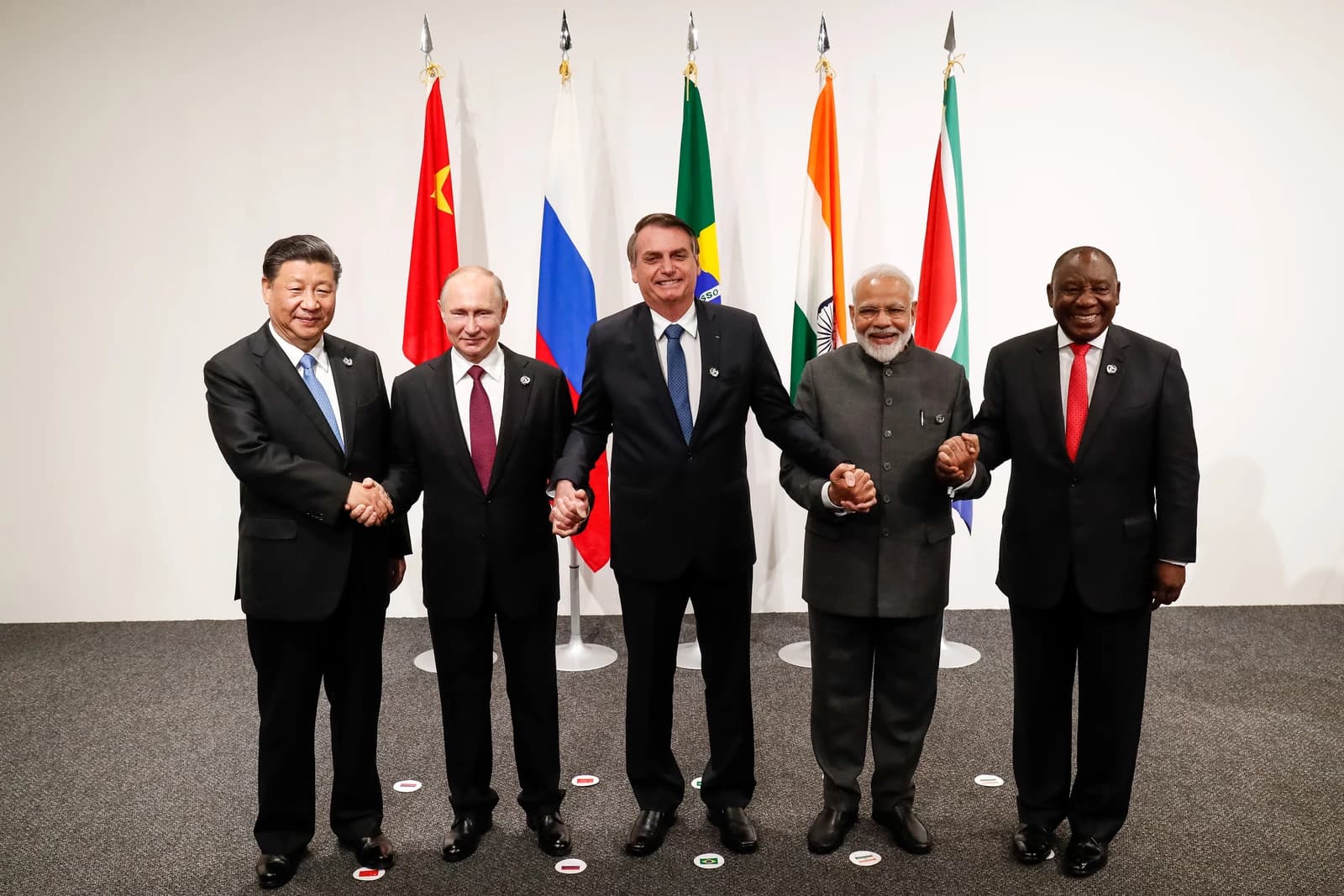
That distinction matters. BRICS has grown from its original five members into a nine-country grouping that now includes Brazil, Russia, India, China, South Africa, Ethiopia, the UAE, Egypt and Iran, with Thailand and several other economies joining as partners. The broader the network becomes, the more it can function as a parallel channel for trade, financing and industrial coordination, especially for countries seeking to hedge against Western pressure.
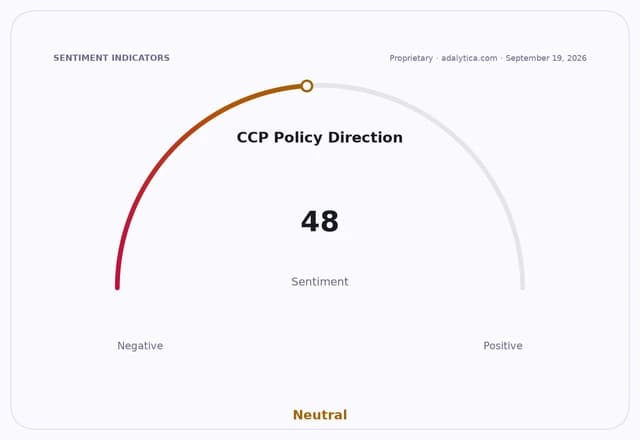
For investors, the immediate implication is not a sudden rerating of BRICS assets, but a stronger case for exposure to the infrastructure of deglobalization: logistics, ports, industrial parks, export-processing zones, payment rails and companies tied to South-South trade. The message also reinforces why China remains central to any emerging-market allocation. The FXI China ETF is still trading below its 50-day moving average near 35.15 and under its 200-day average around 36.28, showing that sentiment has not fully caught up to policy efforts to stabilize external demand. By contrast, the EEM emerging-markets ETF has held above both its 50-day and 200-day averages, suggesting investors are beginning to price in a broader rotation toward developing-world growth.
The market backdrop makes the timing even more important. A stronger dollar and renewed trade fragmentation usually weigh on risk assets, but they can also accelerate capital spending in markets that want to diversify export routes and manufacturing bases. That is where the opportunity sits. If BRICS cooperation becomes more operational through special economic zones, digital trade and green-industry projects, the winners may be less the bloc’s headline names and more the toll-road businesses around them: infrastructure developers, industrial suppliers and transport networks.
Thailand’s role as a BRICS partner is also worth watching. Its effort to act as a bridge between BRICS and ASEAN, APEC and other regional groups underscores the real investment angle here: the bloc is trying to connect production hubs, not just issue communiqués. For multinational companies, that could mean more options for factory placement and procurement. For investors, it could mean new beneficiaries in Southeast Asia, the Gulf and parts of Africa that can capture redirected trade and manufacturing investment.
The bigger narrative is straightforward: protectionism is not killing globalization, it is changing its geography. China wants BRICS to become one of the main lanes of that rerouting, and the new center in Hangzhou is an early attempt to build the institutions that can support it. If that agenda gathers traction under Brazil’s 2025 BRICS chairmanship, the market may eventually have to price BRICS less as a political slogan and more as an investable trade bloc.
| Entity | Gains | Losses |
|---|---|---|
| China | ▲Wider trade influence | ▼Less reliance on Western markets |
| BRICS partners | ▲New investment channels | ▼Exposure to tariff friction |
| Emerging-market infrastructure firms | ▲Zone and logistics demand | ▼Slower global trade routes |
| Western-led trade system | ▲— | ▼More fragmentation and competition |